Philippines Secure Crucial Victory Over Iran, Keeping Quarter-Final Hopes Alive in AFC Women’s Asian Cup Group A Finale.

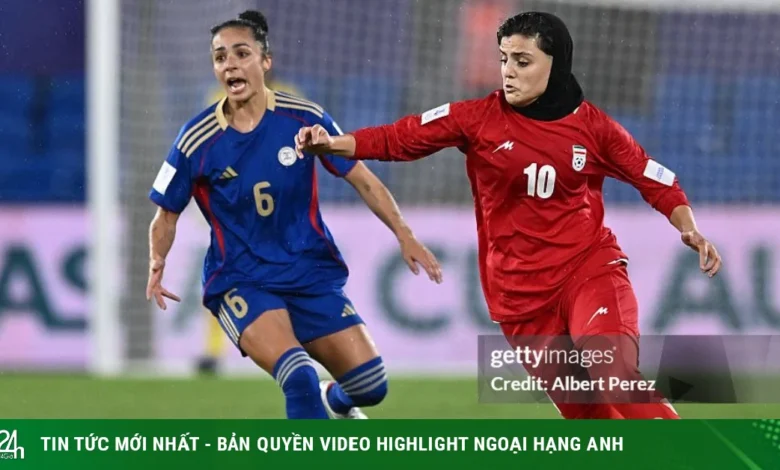
The Philippine Women’s National Football Team, reigning SEA Games champions, delivered a commanding performance on Sunday, March 8, 2026, overcoming Iran with a decisive 2-0 victory in their final Group A fixture of the AFC Women’s Asian Cup. This crucial win, secured through goals from Sara Eggesvik and Chandler McDaniel, propelled the Filipinas into a strong position in the race for one of the coveted "best third-placed" team spots, offering a pathway to the tournament’s quarter-finals. The match, held at a yet-to-be-disclosed venue, was a high-stakes encounter for both nations, each desperate to salvage their continental campaign after suffering two consecutive defeats in their opening group stage matches. For the Philippines, this triumph underscored their growing prowess on the Asian stage and highlighted their ambition to break new ground in women’s football.
Match Report: A Battle for Survival and Qualification
Entering the final group stage fixture, both Iran and the Philippines found themselves in a precarious position, having failed to secure any points from their previous encounters. Their aspirations for direct qualification had evaporated, leaving the "best third-placed" team route as their sole hope for progression to the knockout stages. This scenario imbued the match with an intense, do-or-die atmosphere, transforming it into a de facto playoff for continental survival.
First Half Dominance and Breakthrough
From the opening whistle, the Philippine squad, often referred to as the Filipinas, displayed a palpable intent to dominate proceedings. Their tactical setup, likely emphasizing fluid attacking movements and high pressing, appeared to unsettle their West Asian opponents. The early exchanges saw the Filipinas dictating the tempo, exhibiting greater composure on the ball and creating several promising forays into Iran’s defensive third. While Iran showed flashes of resilience, particularly in their defensive organization, they struggled to maintain possession for extended periods or launch meaningful counter-attacks against the well-drilled Philippine midfield.
The sustained pressure from the Southeast Asian champions eventually paid dividends in the 29th minute. It was the former Norway U23 international, Sara Eggesvik, who broke the deadlock, unleashing a precise strike that found the back of the net. Eggesvik, known for her midfield dynamism and vision, capitalized on an offensive opportunity, providing the Philippines with a vital lead and a much-needed morale boost. This goal not only rewarded the Filipinas’ early efforts but also injected a surge of confidence into their play, enabling them to assert further control over the remainder of the first half. Iran, despite falling behind, demonstrated commendable resolve, preventing the Philippines from extending their lead before the halftime whistle.
Second Half Consolidation and Clinical Finish
The second half commenced with the Philippines maintaining their assertive posture, fully aware that a single goal lead against a determined opponent might not be sufficient. The pressure exerted on Iran’s backline intensified, as the Filipinas pushed for a second goal to solidify their advantage and potentially improve their goal difference – a critical factor in the "best third-placed" team calculations. Iran, for their part, responded by adopting a more conservative approach, prioritizing defensive stability to thwart the relentless Philippine attacks. Their strategy appeared to be an attempt to absorb pressure and possibly exploit any Philippine overcommitment with swift counter-punches.
However, the Filipinas’ tactical discipline and sustained offensive drive proved too much for the Iranian defense to contain. In the 82nd minute, Chandler McDaniel, a forward whose predatory instincts are well-regarded, delivered the decisive blow. Her goal, a testament to the team’s persistence and clinical finishing, effectively sealed the victory for the Philippines, extending their lead to 2-0. The late goal not only secured the three points but also provided a more comfortable margin, significantly bolstering the team’s confidence as they awaited the outcomes of other group matches. The final whistle confirmed a well-deserved victory for the Philippines, marking a significant moment in their AFC Women’s Asian Cup campaign.
Tactical Analysis: A Clash of Ambition
The match served as a fascinating tactical study, showcasing the contrasting approaches of the two teams. The Philippines, under the guidance of their coaching staff, likely adopted an aggressive, possession-based strategy, leveraging the technical skills of players like Eggesvik and the attacking prowess of McDaniel. Their ability to press high, win back possession quickly, and transition effectively from defense to attack was evident throughout the match. This proactive approach is characteristic of their recent rise in regional football, building on the momentum of their SEA Games triumph. The team’s midfield control allowed them to dictate play, while their wingers and forwards created consistent threats, stretching the Iranian defense.

Iran, representing West Asian football, presented a more conservative and disciplined setup. Faced with a technically proficient Philippine side, their strategy likely centered on defensive solidity, attempting to frustrate the opponent and minimize goal-scoring opportunities. While their defensive line showed moments of resilience, particularly in the first half, they struggled to transition into effective attacking phases. The lack of sustained pressure on the Philippine defense meant their forwards were often isolated, limiting their ability to create clear-cut chances. This performance, while showing glimpses of individual talent, highlighted the challenges West Asian teams often face when competing against the more developed footballing nations in the East and Southeast Asia regions.
The Road to the Knockouts: Best Third-Place Scenarios
The AFC Women’s Asian Cup tournament format allows for the progression of the top two teams from each of the three groups (A, B, C), along with the two best third-placed teams across all groups, into the quarter-finals. This "best third-placed" rule adds an extra layer of tension and calculation to the final group stage matches, as goal difference and total points become paramount.
Following their 2-0 victory, the Philippines concluded their Group A campaign with three points from three matches, and a goal difference of -2. This result provisionally placed them at the top of the ranking for third-placed teams. However, their qualification was far from guaranteed, as the outcomes of other groups still loomed large.
The current standings for third-placed teams immediately after the Philippines’ match were:
- Philippines: 3 points / 3 matches, Goal Difference -2
- Vietnam: 3 points / 2 matches, Goal Difference 0
- Uzbekistan: 0 points / 2 matches, Goal Difference -6
A critical match yet to be played was Vietnam against Japan in Group C. The implications of this fixture for the Philippines were significant.
- If Vietnam wins or draws against Japan: With 3 points from 2 matches and a neutral goal difference, a draw would give Vietnam 4 points (and potentially a better GD than -2), securing their place as a best third-placed team or even second place in their group. A win would almost certainly propel them to at least second place, if not top the group, pushing them beyond the third-place calculation. In either scenario, this would likely keep the Philippines in contention, depending on Uzbekistan’s final game.
- If Vietnam loses to Japan: This is where the situation becomes complex. If Vietnam loses, their goal difference would likely worsen considerably, potentially dropping below the Philippines’ -2. For instance, a 0-3 loss would give Vietnam a GD of -3, placing them behind the Philippines. If Vietnam were to lose by a significant margin (e.g., 0-4 or more), it could push them below both the Philippines and potentially Uzbekistan, depending on Uzbekistan’s final match result.
Uzbekistan’s final match would also be crucial. If Uzbekistan managed to secure a victory in their last game, they too could accumulate points and challenge the Philippines’ provisional standing, making goal difference a decisive tie-breaker. The Philippines, therefore, had to anxiously await the results of these remaining fixtures, knowing that their fate was, to some extent, out of their hands. However, their strong performance and two-goal margin against Iran had undoubtedly given them a significant advantage over other contenders for the "best third-placed" berths.
Philippines’ Ascendance: From SEA Games Champions to Continental Contenders
The victory against Iran is more than just three points for the Philippines; it is a powerful affirmation of their remarkable journey and significant strides in women’s football. Their status as reigning SEA Games champions speaks volumes about their regional dominance, but their ambition extends far beyond Southeast Asia. The coaching staff and players have consistently expressed their desire to establish the Filipinas as a formidable force on the continental stage.
This particular victory against a resilient West Asian opponent demonstrates the team’s tactical maturity and mental fortitude. Players like Sara Eggesvik, with her international experience from Norway’s youth setup, and Chandler McDaniel, a consistent goal threat, embody the blend of talent and professionalism that defines this Philippine squad. Their disciplined defense, dynamic midfield, and clinical attack have become hallmarks of their play. This win not only keeps their AFC Women’s Asian Cup dream alive but also serves as a crucial building block for future campaigns, including the ultimate goal of qualifying for the FIFA Women’s World Cup. The development program for women’s football in the Philippines has clearly borne fruit, with increased investment in grassroots football, professionalization of the national league, and exposure to international competitions.

Iran’s Campaign: A Learning Curve in West Asian Football
For the Iranian national team, this AFC Women’s Asian Cup campaign, culminating in three group stage defeats, will undoubtedly be a period of reflection. While they demonstrated moments of defensive organization and individual skill, particularly against the Philippines, their overall performance highlighted the significant gap that still exists between West Asian nations and the established powerhouses of Asian women’s football.
Iran’s participation in tournaments of this caliber is crucial for their long-term development. Exposure to higher levels of competition provides invaluable experience for their players and coaching staff, identifying areas for improvement in tactical awareness, physical conditioning, and technical execution. Despite the disappointing results, the team’s resilience, particularly in the face of sustained pressure, suggests a foundation upon which to build. Continued investment in women’s football infrastructure, youth development programs, and increased international exposure will be vital for Iran to bridge this gap and become more competitive in future continental championships. Their presence in the tournament, despite the outcome, remains an important symbol of the growing reach of women’s football across all regions of Asia.
Broader Implications for Southeast Asian Women’s Football
The strong showing by the Philippines, coupled with Vietnam’s competitive performances in their group, underscores a significant trend in Asian women’s football: the rising influence of Southeast Asian nations. For years, East Asian powerhouses like Japan, China, and South Korea, along with Australia, have dominated the continental landscape. However, countries like the Philippines, Vietnam, and Thailand are increasingly demonstrating their capability to challenge the traditional hierarchy.
This shift is a testament to targeted development programs, increased funding, and a growing passion for women’s football in the ASEAN region. The success of one nation often inspires others, creating a virtuous cycle of improvement and competitiveness. The prospect of multiple Southeast Asian teams reaching the knockout stages of the AFC Women’s Asian Cup would not only boost regional pride but also enhance the collective FIFA rankings of these nations, potentially paving an easier path for future World Cup qualification bids. The tournament is a critical stage for showcasing this regional progress and solidifying Southeast Asia’s place as a growing force in global women’s football.
Looking Ahead: The Quarter-Final Stage
Should the Philippines successfully navigate the "best third-placed" team scenario and secure a spot in the quarter-finals, they would face an even more formidable challenge. The knockout stages of the AFC Women’s Asian Cup typically feature the continent’s elite, including former champions and consistent FIFA Women’s World Cup qualifiers. Potential opponents could include the likes of Japan, Australia, China, or South Korea, all of whom possess world-class talent and extensive tournament experience.
For the Filipinas, reaching this stage would be a monumental achievement, regardless of the quarter-final outcome. It would provide invaluable experience against top-tier opposition, expose their players to high-pressure environments, and further elevate their international profile. The momentum gained from such a run could be transformative for the team’s long-term trajectory and their aspirations for future FIFA Women’s World Cup qualifications. The quarter-finals are not merely about winning; they are about learning, growing, and proving that the Philippines belongs among Asia’s footballing elite.
Tournament Context and Significance
The AFC Women’s Asian Cup is more than just a continental championship; it is the primary qualification tournament for the FIFA Women’s World Cup. The stakes are incredibly high, as teams battle not only for regional supremacy but also for a chance to represent Asia on the global stage. The 2026 edition continues to showcase the rapid growth and increasing competitiveness of women’s football across Asia. From the established giants to the emerging forces, every match is a testament to the dedication, skill, and passion of the athletes involved. The tournament also plays a vital role in inspiring the next generation of female footballers and further embedding the sport within Asian communities. The quality of play, the strategic depth, and the dramatic narratives unfolding on the pitch contribute significantly to the global appeal and development of women’s football.
Final Score: Iran 0-2 Philippines
Goal Scorers:
- Sara Eggesvik (Philippines, 29′)
- Chandler McDaniel (Philippines, 82′)
Starting Lineups:
Iran:
Yazdani (Goalkeeper), Motevalli, Imani, Amineh, Sarbali, Shaban, Makhdoomi, Zolfi, Sadeghi, Didar, Pasandideh.
Iran’s lineup suggested a focus on defensive compactness and perhaps a reliance on quick transitions, though they struggled to execute the latter.
Philippines:
McDaniel, Frilles, Cowart, Long, Beard, Guy, Guillou, Sawicki, Pino, Ramirez, Eggesvik.
The Philippines’ lineup featured a mix of experienced players and emerging talents, indicative of their deep squad and attacking intentions. Players like Long and Beard likely anchored the defense, while Pino and Ramirez provided midfield creativity alongside Eggesvik, feeding strikers like McDaniel and Frilles.
The football community now eagerly awaits the concluding results from other groups, particularly the crucial Vietnam vs. Japan fixture, to determine the final composition of the AFC Women’s Asian Cup quarter-finals. For the Philippines, their hard-fought victory has ensured their presence in this tense waiting game, a testament to their unwavering spirit and burgeoning talent.
Related posts: