Getafe Secures Crucial 2-0 Victory Over Real Betis in Tense La Liga Encounter, Boosted by Soria’s Heroics and Clinical Finishing.

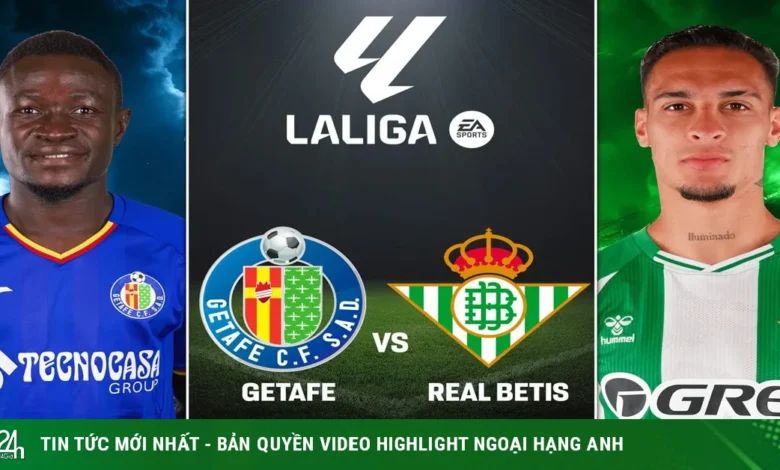
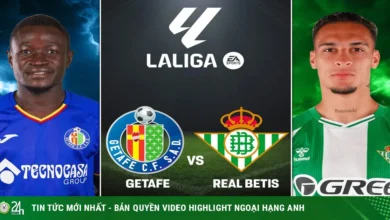
In a pivotal La Liga clash on Saturday, March 8, 2026, Getafe clinched a significant 2-0 victory over Real Betis at the Estadio Coliseum, marking a crucial moment in both teams’ seasons. The home side’s triumph was propelled by clinical finishes from Kiko Femenia and Martín Satriano in the first half, but it was the exceptional performance of goalkeeper David Soria, particularly his repeated denials of Real Betis’s attacking efforts, including those from substitute Antony, that ultimately sealed the win. This result, occurring in Round 27 of the Spanish top flight, has significant implications for Getafe’s battle to climb away from the relegation zone and Real Betis’s aspirations for European qualification.
Match Overview: A Tale of Two Halves and Goalkeeping Brilliance

The encounter, played under a clear evening sky at Alfonso Pérez, kicked off at 22:15 local time. Getafe, known for their tenacious and often disruptive style, took an early lead and doubled it just before the break, establishing a commanding 2-0 advantage by halftime. While Real Betis mounted a relentless offensive in the second half, introducing key attacking talents like Antony, they found themselves repeatedly thwarted by the impenetrable form of David Soria.
Getafe’s starting XI featured David Soria in goal, a defensive line of Djené, Abqar, Duarte, and Romero, a midfield composed of Iglesias, Arambarri, Milla, and Kiko Femenía, supporting forwards Martín Satriano and Luis Vázquez. Real Betis countered with Valles between the posts, Ortiz, Bartra, Gómez, and Firpo in defense, Altimira, Fidalgo, and Deossa in midfield, and a front three of Chimy, Cucho, and Abde. The strategic selections indicated Getafe’s intent to be defensively solid and capitalize on transitions, while Betis aimed for control and penetration.
First Half: Getafe’s Clinical Edge and Early Drama

The match began with a cautious approach from both sides, but the intensity quickly escalated. In the 2nd minute, Real Betis showed early intent when center-back Abqar’s forward pass was intercepted by Fidalgo. Though Fidalgo’s subsequent shot from distance lacked the power to truly trouble Getafe custodian Soria, it signaled Betis’s willingness to press high and seek opportunities.
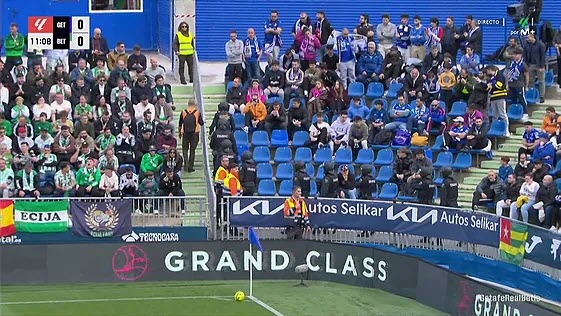
A contentious moment arose around the 7th minute during a Getafe corner. Play was halted when the referee spotted an incident in the stands behind the Betis goal, causing a brief but noticeable delay. Players from both teams were asked to remain calm and move away from the area, while the referee consulted with technical staff to ensure safety. This interruption injected an early element of tension into the proceedings, but after a few minutes, the game resumed without further issue.
Getafe began to find their rhythm, utilizing the flanks to create dangerous situations. In the 19th minute, a promising move down the left wing saw Satriano, fresh off his impressive goal against Real Madrid, deliver a superb cross into the box. The ball narrowly eluded the head of Vázquez, but Betis goalkeeper Valles was quick to react, leaping to gather the ball before any Getafe player could connect.

Just four minutes later, Real Betis thought they had broken the deadlock. Diego Gomez latched onto a clever through ball, expertly rounded the onrushing Soria, and slotted the ball into the empty net. However, the celebrations were cut short as the linesman raised his flag for offside, a decision that VAR later confirmed, denying Betis a crucial opening goal.
The breakthrough for Getafe arrived in the 28th minute. A throw-in on the left flank for Getafe saw Iglesias deliver a deep ball into the Betis penalty area. Duarte’s header, though challenging, was parried by Valles. The rebound, however, fell directly to Kiko Femenia, who reacted quickest to smash the ball into the net from close range, underneath the crossbar, sending the home crowd into raptures. Getafe 1-0 Real Betis.
Real Betis responded with urgency, and in the 35th minute, they earned a dangerous free-kick just outside the D-box, approximately 20 meters from goal, on the left side. Cucho stepped up and struck a powerful, curling shot that arced over the wall and headed towards the top corner. However, David Soria, already proving his worth, produced an acrobatic one-handed save, diving full stretch to push the ball away from danger, maintaining Getafe’s lead.

As the first half drew to a close, Getafe delivered another decisive blow. In the first minute of added time (45+1′), Satriano showcased his burgeoning talent. Following a long, incisive pass from Abqar from midfield, Satriano found himself in a one-on-one situation. Recognizing that Valles had advanced far off his line, the Getafe star executed a sublime chip shot, sending the ball soaring over the Betis goalkeeper’s head and into the unguarded net. It was a moment of pure class, reminiscent of his previous heroics, and put Getafe firmly in control. Getafe 2-0 Real Betis.
The whistle for halftime blew shortly after, with Getafe holding a comfortable and well-deserved 2-0 lead, largely due to their opportunistic finishing and Soria’s crucial save.
Second Half: Betis’s Offensive Surge Meets Soria’s Wall

The second half commenced with Real Betis, now trailing by two goals, making the kickoff and immediately stepping up their attacking intensity. They knew they needed a swift response to get back into the game.
Their renewed efforts almost paid off in the 55th minute. A well-executed move down the left wing saw Firpo deliver an excellent cross towards Cucho, who rose to meet it with a header aimed at the far post. Yet again, David Soria was there, demonstrating superb positioning and agility to leap and firmly catch the ball, denying Betis another clear opportunity.
Recognizing the need for fresh impetus, Real Betis’s coaching staff made a triple substitution in the 61st minute. Antony, Fornals, and Riquelme were introduced, replacing Fidalgo, Deossa, and Abde, injecting pace and creativity into their offensive line.

The changes had an immediate effect. Just a minute after coming on, Antony found himself with a chance. Following a throw-in that bounced out, the dynamic winger unleashed a curling shot from outside the box. While the attempt went wide of the post, it served as a warning of his presence and intent.
Getafe, despite their lead, continued to seek opportunities. In the 68th minute, a corner from the right flank found Arambarri, whose header sailed over the crossbar, highlighting their continued threat from set-pieces.
Betis continued to press, creating another significant chance in the 73rd minute. Altimira delivered an excellent cross from the right wing, finding Bartra unmarked in the box. The defender had a free header, not even needing to jump, but his effort lacked precision and went wide of the goal, a glaring miss that epitomized Betis’s struggle to convert chances.

As the clock ticked down, the narrative of Betis’s valiant efforts being nullified by Soria’s brilliance became increasingly clear. In the 81st minute, Antony, who had been a live wire since his introduction, received the ball just outside the penalty area on the right flank. He drilled a dangerous, swirling cross into the box, aiming for two teammates making runs. Although no Betis player managed to connect, the ball continued its trajectory towards the goal. Soria, anticipating the danger, had to dive full stretch to parry the ball away, preventing what could have been a spectacular and fortuitous goal.
The Betis attack, however, was not deterred. In the 89th minute, a rapid counter-attack down the left flank saw the ball quickly shifted to Antony on the right. Instead of attempting another curling shot, he spotted Bakambu, who had moved into a dangerous position. Antony delivered a precise low cross with his right foot, setting up Bakambu for a point-blank strike. But once more, David Soria stood firm, making another incredible save to deny Bakambu and preserve Getafe’s clean sheet.
The final whistle blew, confirming Getafe’s hard-fought 2-0 victory over Real Betis.

Team Performances and Tactical Insights
Getafe: The home side displayed a masterclass in pragmatic football. They were defensively resolute, absorbing pressure effectively and limiting Betis to difficult chances. David Soria’s performance was undoubtedly the standout, earning him Man of the Match honors with at least five crucial saves that kept Betis at bay. His heroics, particularly against Cucho, Antony, and Bakambu, were game-defining. Offensively, Getafe was clinical, converting two of their limited clear-cut opportunities. Kiko Femenia’s poacher’s instinct and Martín Satriano’s moment of brilliance showcased their ability to punish even the slightest defensive lapse. The team’s ability to remain disciplined and exploit counter-attacking chances was key to their success.
Real Betis: Despite controlling a significant portion of possession (estimated 60% vs. Getafe’s 40%) and creating numerous chances (18 shots with 7 on target, compared to Getafe’s 9 shots with 4 on target), Real Betis lacked the cutting edge required to break down Getafe’s stubborn defense and overcome Soria. Players like Cucho, Diego Gomez, Bartra, and substitutes Antony and Bakambu all had opportunities, but either missed the target or were brilliantly denied. The introduction of Antony brought much-needed dynamism, as he constantly looked to create and test Soria, but even his efforts were ultimately fruitless. Betis’s struggle to convert chances, particularly from open play, proved to be their undoing.

Implications for League Standings
This result has significant ramifications for both clubs in the La Liga table.
Getafe: This crucial 2-0 victory propels Getafe further away from the relegation zone. Prior to the match, Getafe sat in 11th position with 32 points from 26 matches. Their recent form, including a stunning 1-0 upset over Real Madrid at the Santiago Bernabéu, suggested a resurgence, but their home form had been a concern, with 4 losses in their last 6 games at the Coliseum Stadium. This win not only boosts their confidence but also provides a much-needed buffer, potentially moving them up to 10th place (depending on other results) and alleviating immediate relegation fears. It demonstrates their capability to perform against strong opposition, despite inconsistencies.
Real Betis: For Real Betis, this defeat is a significant blow to their European qualification aspirations. Coming into the match, Betis were in a strong 5th position with 43 points from 26 games, occupying a coveted Europa League spot. Their impressive five-match unbeaten streak in La Liga, including a victory against Atlético Madrid, underscored their ambition. However, failing to capitalize on their chances against Getafe means they missed a golden opportunity to solidify their hold on a European place. The chasing pack will now feel emboldened, and Betis will need to regroup quickly to maintain their position in the highly competitive race for continental football.
Coaches’ Reactions (Inferred)
Getafe Coach (e.g., José Bordalás): "This was a monumental effort from the entire squad. We knew Betis would bring a tough challenge, especially with their form. To keep a clean sheet against such an attacking side is a testament to our defensive organization and commitment. David Soria was simply magnificent today; he made some truly world-class saves that kept us in the lead. We were clinical when it mattered, and that’s a sign of a team growing in confidence. This victory is for our fans, who stood by us, especially during the early moments of concern in the stands. We must build on this momentum, but our focus remains on taking each game as it comes."

Real Betis Coach (e.g., Manuel Pellegrini): "Naturally, we are disappointed with the result. We dominated possession and created numerous clear opportunities, particularly in the second half. However, football is about converting chances, and today we simply couldn’t find the back of the net. Their goalkeeper, Soria, had an outstanding performance and was undoubtedly the difference-maker. We introduced Antony and other attacking players to change the dynamic, and they certainly created problems, but it wasn’t enough. We must learn from this, improve our finishing, and not let this setback derail our European ambitions. The race is still long, and we will prepare diligently for our next fixture."
Looking Ahead
Getafe will aim to carry this momentum into their upcoming fixtures, hoping to replicate their defensive solidity and clinical finishing to secure a comfortable mid-table finish. Real Betis, on the other hand, faces the immediate challenge of bouncing back from this defeat. They must re-evaluate their attacking efficiency and ensure that their strong overall season form is not undermined by a lack of cutting edge in crucial matches. The La Liga season continues to promise fierce competition, and both teams will be acutely aware of the stakes as they navigate the remaining fixtures.
Related posts: