Tasco Auto Posts Over 31 Billion VND Net Profit in H1 2026 Amid Broad Restructuring and Expansion of Automotive Ecosystem

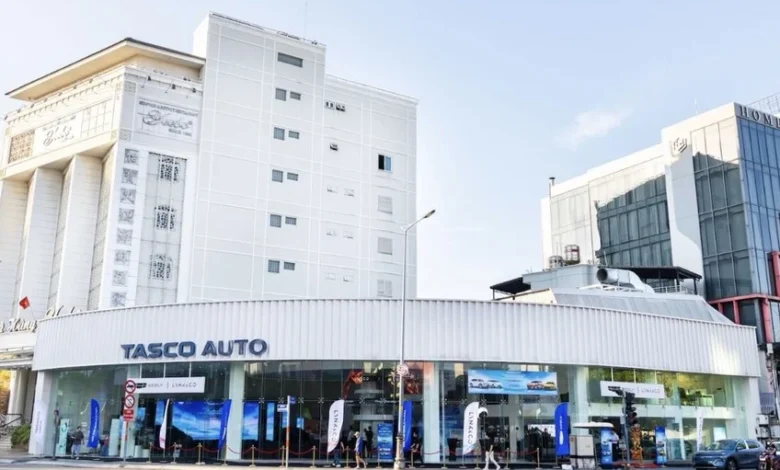
Tasco Auto, a premier automotive retail and distribution giant in Vietnam and a direct subsidiary of Tasco JSC (UPCoM: HUT), has officially released its financial statement for the first half of 2026. The report showcases a stark rebound in corporate profitability alongside substantial shifts in capital structure, leverage ratios, and strategic scaling initiatives. Despite carrying a substantial historical accumulated deficit from prior operational cycles, the enterprise has demonstrated resilient bottom-line growth, signaling a positive trajectory in its ongoing transformation.
Financial Performance Overview: Strong Bottom-Line Rebound
During the first six months of 2026, Tasco Auto registered a net profit after tax of slightly over 31 billion VND. This figure represents an impressive surge of approximately 5.4 times compared to the same period in the previous fiscal year. The sharp recovery underscores improved operational efficiency, better inventory absorption across its extensive dealership networks, and optimized cost management strategies.
However, despite the robust half-year earnings growth, the company continues to grapple with the legacy of historical losses incurred during previous years. Consequently, Tasco Auto’s accumulated losses at the close of the period stood at nearly 2,084 billion VND. Financial analysts note that while the current net profit rate indicates a healing balance sheet, clearing the substantial accumulated deficit will require sustained multi-year profitability and aggressive market penetration.
As of June 30, 2026, Tasco Auto’s total owner’s equity reached nearly 7,331 billion VND, with contributed charter capital accounting for 6,397 billion VND. The capitalization base provides a stable foundation for the firm as it navigates complex macroeconomic conditions and heavy capital expenditures associated with localized manufacturing and brand integration.

Liabilities, Debt Profiles, and Capital Structure
A granular examination of Tasco Auto’s financial health reveals notable shifts in its liability profile. At the end of June 2026, total liabilities surged to 12,971 billion VND, marking an increase of roughly 15% compared to the corresponding period last year.
Bank borrowings formed a major component of this expansion, reaching nearly 7,689 billion VND—nearly doubling the figures recorded as of June 30, 2025. This uptick in bank debt aligns with the capital-intensive nature of automotive distribution, network enlargement, and joint-venture investments in manufacturing facilities. Meanwhile, corporate bond obligations issued by the enterprise stood at 331 billion VND, reflecting a controlled reliance on debt capital markets.
Conversely, other liabilities experienced a downward trend. Other payables and financial obligations dropped sharply by approximately 33% year-on-year to 4,951 billion VND. Within this category, alternative loans and financial lease liabilities saw a steep reduction, plunging from nearly 4,180 billion VND down to 1,694 billion VND, indicating a successful deleveraging of non-bank credit lines.
Financial Safety Indicators and Solvency Ratios
To evaluate the overall safety and stability of the business, financial watchdogs look closely at leverage and liquidity metrics. For Tasco Auto, the total liabilities-to-total assets ratio stabilized at 0.6x, while the total liabilities-to-owner’s equity ratio was recorded at 1.8x. These coefficients suggest a manageable financial leverage posture typical for large-scale retail and distribution conglomerates.

In terms of short-term liquidity, the firm’s current ratio stood at 1.54x, and the quick ratio was recorded at 0.99x. The interest coverage ratio sat comfortably above breakeven at 1.15x, demonstrating that operational earnings are sufficient to service ongoing debt commitments.
Profitability ratios, though modest, trended upward compared to the previous year. The annualized return on assets (ROA) and return on equity (ROE) for the first six months reached 0.15% and 0.43% respectively. While these margins remain low, industry experts view them as early recovery markers for a company emerging from structural reorganizations and aggressive expansion phases.
Corporate Chronology and Evolution into Tasco Auto
To fully understand Tasco Auto’s current financial standing, it is essential to trace its corporate evolution. Established in October 2021, Tasco Auto operates as a primary direct subsidiary of Tasco JSC (Ticker: HUT), which retains a controlling ownership stake of 94.87%. The enterprise currently operates with a charter capital of nearly 6,400 billion VND.
The structural lineage of Tasco Auto traces back to SVC Holdings, a renowned name in Vietnam’s automotive landscape. In September 2023, Tasco completed the acquisition of 100% of SVC Holdings. By January 2024, SVC Holdings was officially renamed Tasco Auto Co., Ltd. Following a period of consolidation, the enterprise underwent a final corporate conversion in mid-2024, officially transforming into a joint-stock company operating under the banner of Tasco Auto JSC.
Strategic Partnerships and Global Alliances

The expansion of Tasco Auto has been heavily accelerated by high-profile international partnerships. In 2024, Tasco Auto inked a strategic alliance with Geely Auto—consistently ranked among the global Top 10 OEMs—to establish a completely knocked-down (CKD) vehicle manufacturing joint venture in Vietnam, backed by a total investment of 168 million USD.
Concurrently, Mitsui & Co., Ltd., one of Japan’s premier general trading and investment conglomerates, acquired a strategic stake in Tasco Auto, injecting global expertise, supply chain resilience, and institutional confidence into the Vietnamese firm.
Market Dominance and Ecosystem Integration
Positioned as the core automotive pillar within the broader Tasco ecosystem, Tasco Auto functions as the premier commercial service and passenger vehicle distribution network in Vietnam. The company currently distributes 15 prominent global automotive brands, including mass-market powerhouses like Toyota, Hyundai, and Ford, alongside exclusive distribution rights for luxury and premium marques such as Lotus, Volvo, Zeekr, Lynk & Co, and Geely.
According to Tasco’s 2025 Annual Report, Tasco Auto commands an extensive infrastructure network comprising over 150 showrooms and upwards of 80 Carpla service workshops nationwide. This robust footprint allowed the company to secure an impressive 14.2% market share of domestic vehicle distribution as reported by the Vietnam Automobile Manufacturers Association (VAMA), culminating in a retail volume consumption of 37,639 vehicles in 2025.
Inclusive of affiliated networks, Tasco Auto’s operating ecosystem spans over 200 commercial touchpoints and more than 650 partnered garages across the country. This comprehensive reach solidifies its market-leading position and provides a stable platform for sustained revenue generation.

Implications and Future Outlook
The financial results for the first half of 2026 highlight a period of operational stabilization and growth for Tasco Auto. While the burden of historical accumulated losses remains a challenge, the sharp multiplication of net profits, combined with strategic debt restructuring and heavy investments in localized manufacturing, indicates a strengthening core business.
As the Vietnamese automotive market continues to mature—particularly with the rising adoption of new energy vehicles and strategic joint ventures with global giants like Geely—Tasco Auto is strategically positioned to capitalize on shifting consumer demands. Analysts anticipate that maintaining disciplined cost controls, optimizing short-term liquidity, and accelerating vehicle delivery volumes will be critical factors in determining whether the company can successfully erase its historical deficit and deliver sustainable long-term value to shareholders.
Related posts: