HCMC Economic Forum 2024: CMC Corporation Chairman Nguyen Trung Chinh Proposes AI Transformation AI.X Initiative to Shape Vietnam Digital Future


Ho Chi Minh City, Vietnam — At the high-profile Ho Chi Minh City Economic Forum 2024, held on September 25, 2024, business leaders, government officials, and international experts gathered to chart the course for the nation’s future economic development. Among the most prominent contributions to the dialogue was an innovative proposal presented by Mr. Nguyen Trung Chinh, Chairman of the Board of Management and Executive Chairman of CMC Technology Group. His forward-looking initiative, titled "AI Transformation – AI.X," introduced a comprehensive framework combining digital transformation with green growth, designed to propel Vietnam forward in the rapidly evolving global digital era.
The annual economic forum, which brought together Prime Minister Pham Minh Chinh, central ministry leaders, provincial administrators, and global technology executives, served as a crucial platform for discussing sustainable economic strategies. Against this backdrop, Mr. Chinh’s presentation underscored the urgent need for Vietnamese enterprises and government bodies to harness artificial intelligence (AI) as a core engine for macroeconomic acceleration, sustainable industrial modernization, and societal enhancement.
The Dual Pillars of Modern Industrial Transformation
According to Mr. Nguyen Trung Chinh, contemporary industrial transformation must rest upon two indispensable pillars: digital transformation and green transition. Addressing the assembled delegates, the CMC Technology Group Chairman emphasized that governments, enterprises, and socio-economic organizations must fundamentally recognize the catalytic role of artificial intelligence in executing this dual transition. AI is no longer a peripheral technological novelty; it has matured into a foundational force capable of driving rapid, comprehensive disruption and improvement across every sector of the modern economy.

Modern economic projections reinforce this assessment. Global economic forecasters estimate that artificial intelligence will contribute an astounding $15.7 trillion to the global economy by the year 2030, while lifting global labor productivity by up to 40% by 2035. Domestically, domestic and international analysts project that AI will add between $150 billion and $200 billion to Vietnam’s gross domestic product (GDP) by 2030. These figures illustrate the immense transformative potential of AI to catalyze national growth, elevate living standards, and secure Vietnam’s position as a competitive digital economy in Southeast Asia.
Defining the AI.X Initiative: A Holistic Vision for Society
During his address at the forum, Mr. Chinh formally defined the concept of "AI Transformation" (AI-X) as the comprehensive, systemic application of artificial intelligence technologies to fundamentally reshape operational methodologies and interactions across all societal tiers—spanning from governmental administration and corporate ecosystems to the daily lives of everyday citizens.
The primary objective of AI-X is to unlock the boundless potential of artificial intelligence to foster innovation, drive efficiency, boost labor productivity, generate new economic value, and cultivate a thriving digital economy. Crucially, Mr. Chinh emphasized that this technological evolution must be executed in tandem with strict ethical standards and social responsibility. By centering human welfare and environmental sustainability at the core of AI implementation, the initiative aims to build a green, resilient, and inclusive digital economy.
Strategic Recommendations for National Implementation

To operationalize the AI.X initiative and maximize its national impact, the CMC Chairman laid out a series of targeted, actionable policy recommendations for the Vietnamese government and local municipal authorities.
-
Completing the Legal and Regulatory Framework
Mr. Chinh urged the Vietnamese government to expedite the refinement of legal corridors and regulatory frameworks. By establishing clear, robust guidelines tailored to the unique challenges of artificial intelligence, the nation can foster a secure environment for large-scale AI deployment. This regulatory foundation is considered vital for managing technological risks, safeguarding data privacy, and ensuring accountability, particularly in high-impact domains such as healthcare, education, transportation, and financial services. -
Cultivating Specialized AI Human Capital
Recognizing that talent is the ultimate bottleneck and catalyst for technological success, Mr. Chinh identified human resource development as a paramount priority. He recommended integrating artificial intelligence education directly into national school curricula, ranging from foundational primary education levels up to advanced university degree programs. Furthermore, he advocated for specialized, intensive training initiatives forged through strategic partnerships with prestigious international academic institutions and technology organizations to rapidly build a world-class pool of AI professionals within Vietnam. -
Building Robust Digital Infrastructure and AI Ecosystems
For artificial intelligence to take root and flourish sustainably, the country requires a robust technological foundation. Mr. Chinh called for heavy investment in modern digital infrastructure, including high-performance computing centers, advanced data repositories, and collaborative research hubs. Creating an interconnected ecosystem that brings together technology enterprises, academic researchers, and domain experts is essential for stimulating home-grown innovation and attracting elite global tech talent to Vietnam. -
Establishing Proactive Government Incentives and Ethical Standards
Finally, the CMC leader proposed that the government establish targeted incentive policies to encourage AI adoption across traditional manufacturing, precision agriculture, healthcare, education, and public services. To maintain public trust, these incentive structures must be balanced with transparent ethical standards that place human well-being at the absolute center of digital innovation, ensuring that technological progress translates into sustainable societal benefits.
Proposing Ho Chi Minh City as Vietnam’s Premier "AI City"
In addition to nationwide strategies, Mr. Chinh offered specific recommendations tailored to Ho Chi Minh City, positioning the southern metropolis as the natural testing ground for the AI.X initiative. He proposed that municipal leaders actively develop Ho Chi Minh City into a pioneering "AI City"—a flagship smart urban center driven entirely by artificial intelligence and data-driven governance.
By piloting the AI.X framework within Ho Chi Minh City, local authorities can streamline urban management, optimize public transit, improve environmental monitoring, and deliver hyper-personalized public services to residents. Mr. Chinh noted that establishing Ho Chi Minh City as a beacon of technological innovation would not only elevate the city’s global standing but also serve as a scalable blueprint for smart city development across the entire nation.
Broader Implications for Vietnam’s Socio-Economic Landscape
The propositions put forward by CMC Corporation’s leadership at the HCMC Economic Forum 2024 arrive at a critical juncture for Vietnam. As the country seeks to break out of the middle-income trap and achieve its ambitious goal of becoming a high-income, developed nation by 2045, traditional growth models driven by low-cost labor and resource exploitation are rapidly losing momentum.
Embracing an intelligence-led economic model through initiatives like AI.X provides a viable pathway toward sustainable modernization. Analysts point out that by proactively addressing infrastructure deficits, streamlining regulatory red tape, and prioritizing digital literacy, Vietnam can successfully transition from being a consumer of foreign technologies to a net creator and exporter of advanced artificial intelligence solutions.
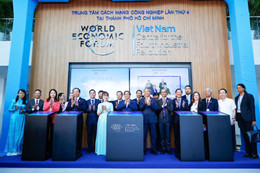
The enthusiastic reception of the AI.X initiative by government officials, international delegates, and industry peers highlights a growing consensus within Vietnam’s leadership circle: the future of national competitiveness lies in the intelligent integration of digital systems with sustainable, human-centric values. As Prime Minister Pham Minh Chinh and other high-ranking officials continue to champion digital reform and innovation—underscored by events such as the inauguration of Ho Chi Minh City’s Center for the Fourth Industrial Revolution—the visionary roadmap outlined by industry pioneers like Mr. Nguyen Trung Chinh provides a practical and inspiring framework for Vietnam’s digital destiny.