General Secretary and President To Lam and Spouse Host State Banquet Welcoming the King and Queen of Thailand

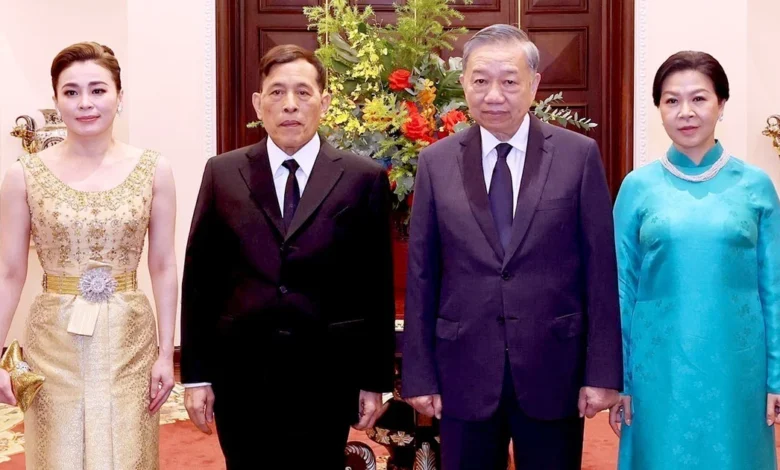
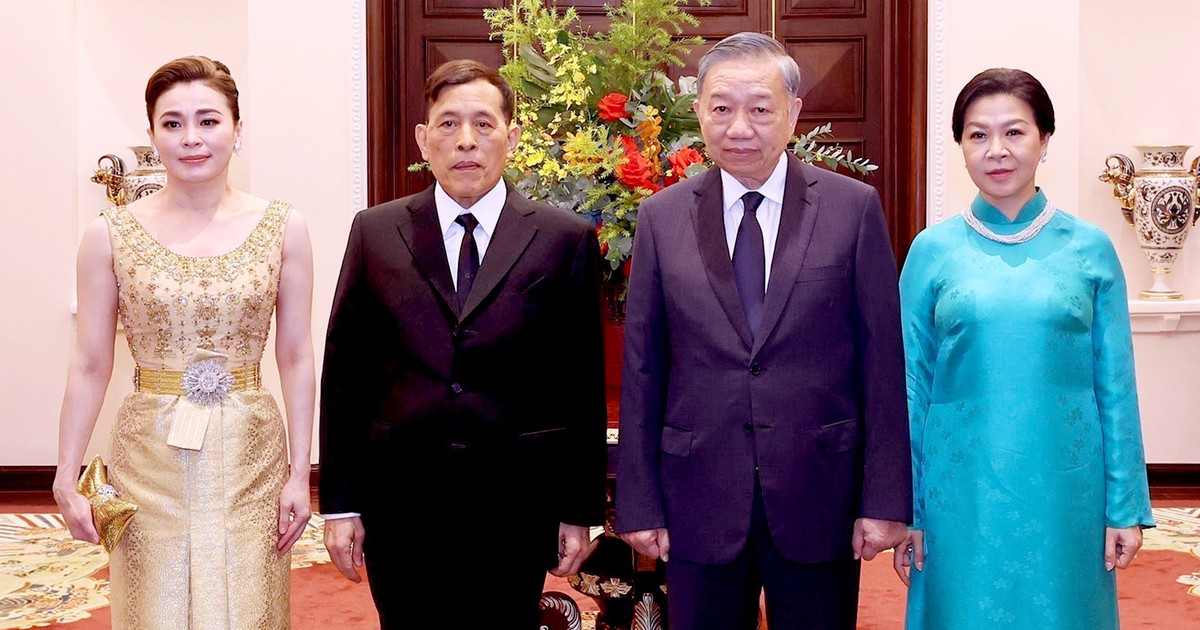
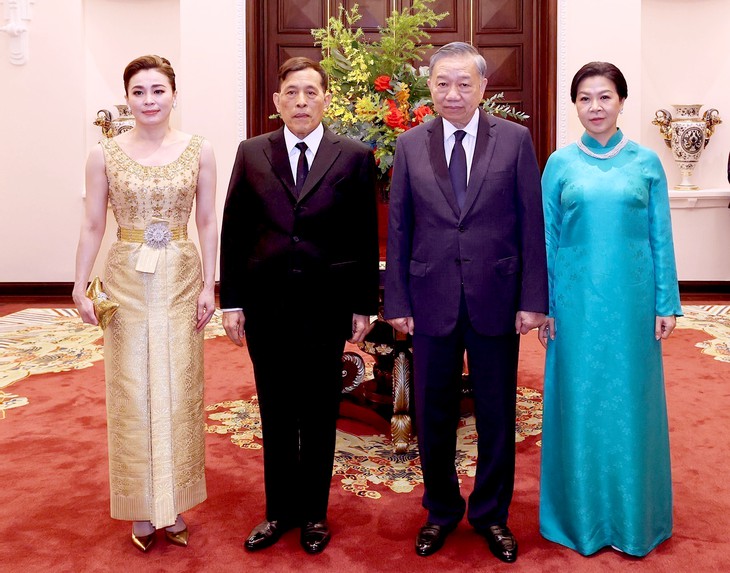
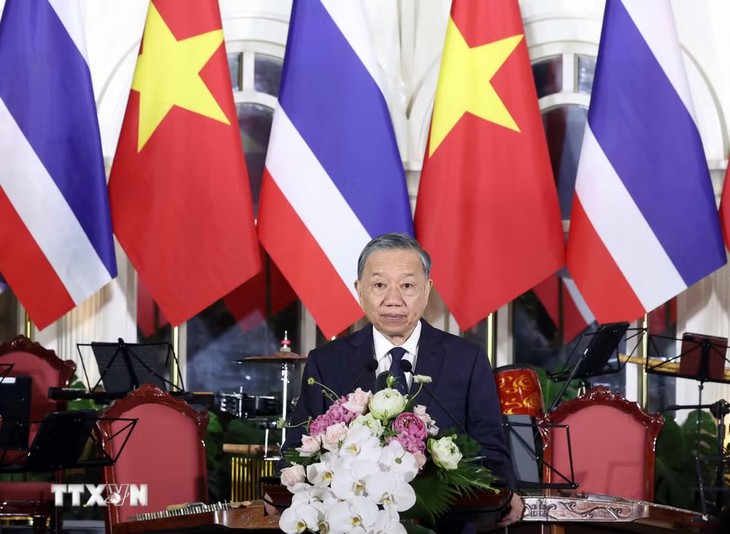
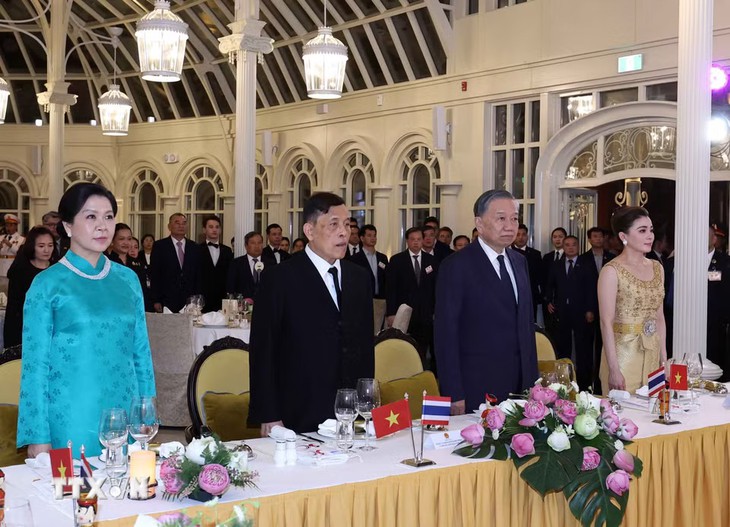
HANOI — In an atmosphere defined by profound warmth, steadfast mutual trust, and deep-rooted cultural affinity, General Secretary and President To Lam and his spouse hosted a grand state banquet in Hanoi on the evening of September 15. The prestigious event welcomed His Majesty King Maha Vajiralongkorn Phra Vajiraklaochaoyuhua and Her Majesty Queen Suthida Bajrasudhabimalalakshana of Thailand, alongside a high-ranking delegation from the Thai Royal Family, who are currently undertaking a historic State visit to Vietnam.
This diplomatic milestone coincides with the momentous 50th anniversary of the establishment of diplomatic relations between Vietnam and Thailand, marking a golden half-century of friendship, cooperation, and shared prosperity in Southeast Asia.
A Historic Milestone in Bilateral Relations
The state banquet served as a diplomatic centerpiece for a visit that has captured the attention of regional and international observers alike. Addressing the distinguished gathering, General Secretary and President To Lam underscored the unique historical significance of the Royal visit. He emphasized that the presence of the Thai Monarch and Queen in Hanoi underscores the exceptionally close ties that bind the two neighboring nations.
"Vietnam and Thailand are close friends who share numerous historical, cultural, and traditional similarities, closely bound together within a peaceful, dynamic, and potential-rich Southeast Asia," General Secretary and President To Lam stated during his opening address.
The bond between the two countries has evolved organically since the formal establishment of diplomatic ties. What began as initial diplomatic outreach has systematically blossomed over the decades. The bilateral framework was elevated to a Strategic Partnership in 2013 and further upgraded to a Comprehensive Strategic Partnership, reflecting the deepening trust and widening scope of cooperation across economic, security, and cultural domains.
Deep Roots: People-to-People Diplomacy and the Vietnamese Diaspora in Thailand
Beyond high-level statecraft and formal political agreements, the relationship between Vietnam and Thailand draws its true vitality from grassroots connections and the enduring goodwill of their respective peoples. A pivotal element of this enduring bridge of friendship is the Vietnamese community residing in Thailand.
Over generations, the overseas Vietnamese community in Thailand has integrated successfully into the local socioeconomic fabric while maintaining a deep affection for their homeland. General Secretary and President To Lam expressed profound gratitude to the King, the Royal Family, the Government, and the people of Thailand for their sustained goodwill and favorable conditions provided to the Vietnamese diaspora. Special acknowledgment was also extended regarding the preservation of historical landmarks in Thailand associated with late President Ho Chi Minh, who spent formative years organizing the Vietnamese revolutionary movement from Thai soil.
These shared historical touchpoints have transformed geographical proximity into a genuine psychological closeness, making the two nations natural allies in regional stability.
The Thai Monarch’s Perspective: Mutual Growth and Shared Prosperity
In his response address, His Majesty King Maha Vajiralongkorn expressed sincere and profound gratitude to the General Secretary and President, the Government, and the people of Vietnam for the remarkably grand and warm hospitality extended to the royal delegation.
The King articulated deep admiration for Vietnam’s extraordinary developmental strides, noting that the country’s rapid socioeconomic transformation has been closely monitored and applauded internationally. Furthermore, His Majesty expressed great joy in observing the unyielding closeness between the citizens of both nations, noting that continuous cultural exchanges and reciprocal visits form an indispensable foundation for bilateral longevity.
"This visit serves as a powerful reaffirmation of our close-knit friendship and cooperation, contributing to the consolidation of neighborly ties as strategic partners and active members of the international community," the Thai Monarch affirmed. He emphasized that as modern nation-states navigate global uncertainties, the success of one country inherently generates favorable conditions for the development of the other, establishing a symbiotic relationship built on mutual respect and shared destiny.
Evolution of the Vietnam-Thailand Partnership: A Chronological Overview
To fully understand the weight of the September 2026 State visit, it is essential to examine the chronological progression of diplomatic milestones that have defined modern Vietnam-Thailand relations:
- August 1976: Formal diplomatic relations are officially established between the Socialist Republic of Vietnam and the Kingdom of Thailand, laying the groundwork for regional reconciliation and dialogue during a turbulent geopolitical era.
- 1995: Vietnam officially joins the Association of Southeast Asian Nations (ASEAN), transforming bilateral relations with Thailand into a multi-lateral partnership within a unified regional bloc.
- June 2013: During an official visit by high-ranking Vietnamese leadership to Bangkok, the two nations formally elevate their bilateral ties to a Strategic Partnership, significantly broadening cooperation in trade, defense, and maritime security.
- 2015–2020: Bilateral trade volume experiences exponential growth, with Thailand consistently ranking among Vietnam’s top trading partners and foreign investors within ASEAN. Joint cabinet meetings and parliamentary exchanges institutionalize policy coordination.
- 2025: Marking over a decade of strategic partnership, both nations initiate preparations to transition their diplomatic framework toward a Comprehensive Strategic Partnership, reflecting deeper integration in supply chains, green energy, and digital transformation.
- September 2026: His Majesty King Maha Vajiralongkorn and Queen Suthida undertake a landmark State visit to Vietnam, coinciding with the 50th anniversary of diplomatic ties, setting a new benchmark for royal and presidential diplomacy in the region.
Economic Synergies and Trade Integration
The political goodwill celebrated at the state banquet is underpinned by robust economic integration. Thailand remains Vietnam’s largest trading partner within ASEAN, with bilateral trade turnover consistently hovering near historic highs. Major Thai conglomerates have poured billions of dollars into Vietnam’s retail, manufacturing, energy, and agricultural sectors, while Vietnamese enterprises are increasingly exploring investment opportunities within the Thai market.
Both governments have actively pursued supply chain resilience, aiming to surpass ambitious bilateral trade targets through enhanced connectivity via the East-West Economic Corridor and maritime routes in the Gulf of Thailand. Cooperation has also expanded into emerging sectors, including digital economies, renewable energy transitions, and sustainable agricultural practices, ensuring that the bilateral economic framework remains future-proof.
Geopolitical Implications for ASEAN and Regional Stability
From a strategic standpoint, the high-level engagement between Hanoi and Bangkok carries profound implications for the Association of Southeast Asian Nations (ASEAN) and the broader Indo-Pacific region. As geopolitical competition intensifies among global superpowers, middle powers and regional anchors like Vietnam and Thailand play a critical role in maintaining ASEAN centrality, regional autonomy, and consensus-driven diplomacy.
By demonstrating a united front rooted in mutual trust, political stability, and economic complementarity, Vietnam and Thailand project an image of regional cohesion. Their close coordination within multilateral frameworks—such as the Greater Mekong Subregion (GMS) cooperation, the Ayeyawady-Chao Phraya-Mekong Economic Cooperation Strategy (ACMECS), and the United Nations—helps mitigate regional security risks, manage maritime disputes peacefully, and promote sustainable development across mainland Southeast Asia.
Conclusion: A Vision for the Next Half-Century
The state banquet hosted by General Secretary and President To Lam and his spouse concluded on a high note of optimism, artistic celebration, and cultural exchange. Traditional musical performances from both countries highlighted the rich artistic heritage shared between the two civilizations.
As the royal delegation continues its itinerary in Vietnam, the underlying message of the September 2026 visit remains clear: the Vietnam-Thailand relationship has matured into an indispensable anchor of peace, stability, and prosperity in Southeast Asia. Grounded in a solid foundation of political trust, economic interdependence, and deep societal affection, both nations stand well-prepared to navigate the challenges of the 21st century hand-in-hand, ensuring that the next fifty years of diplomatic relations are even more fruitful than the last.