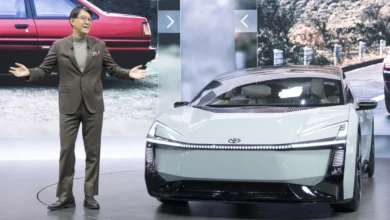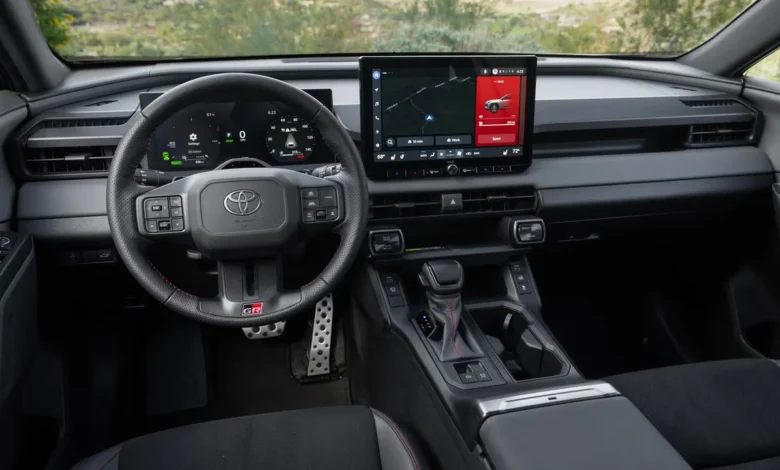
The global automotive industry is currently witnessing a significant pivot in interior design philosophy, as one of the world’s leading manufacturers acknowledges a growing disconnect between high-tech cabin trends and driver preferences. Yoshinori Futonagane, the Chief Engineer for the Toyota RAV4, recently revealed that even in China—a market long considered the global epicenter of touchscreen adoption and digital integration—consumers are expressing a clear desire for the return of physical buttons and tactile controls. This admission marks a potential turning point for Toyota and the broader industry, which has spent the better part of the last 15 years systematically removing mechanical switches in favor of sleek, glass-heavy dashboard layouts.
For over a decade, the prevailing logic among automotive designers was that the smartphone revolution would dictate the future of car interiors. The assumption was that if users enjoyed navigating complex menus on their mobile devices, they would prefer the same experience behind the wheel. However, as Toyota’s recent internal assessments suggest, the reality of operating a vehicle at highway speeds is fundamentally different from using a handheld device. The need for "blind-operation" capability—the ability to adjust a setting without taking one’s eyes off the road—has become a focal point of consumer dissatisfaction.
The Shift in the Chinese Market: A Signal to the World
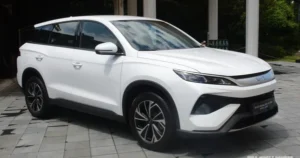
The revelation regarding Chinese consumers is particularly striking because China has historically been the testing ground for the most aggressive digital transformations in the automotive sector. Driven by the rapid rise of domestic electric vehicle (EV) giants like BYD, NIO, and Xpeng, the Chinese market became synonymous with massive, theater-like screens that control everything from climate settings to door handles.
Until recently, industry analysts believed that the younger, tech-savvy demographic in China viewed physical buttons as antiquated relics of the internal combustion engine era. However, Mr. Futonagane’s comments to the automotive publication Drive suggest that "interface fatigue" has set in. Even in a culture that embraces the "software-defined vehicle," the practical inconvenience of digging through three sub-menus to adjust a fan speed or turn on a seat heater has led to a vocal demand for the restoration of ergonomic common sense.
According to Futonagane, Toyota’s initial strategy for the latest iterations of its global models was even more radical than what eventually reached production. The engineering teams had explored the "minimum limit" of physical buttons, questioning just how many tactile controls could be removed before the driving experience was compromised. The feedback from the field, particularly from the competitive Chinese landscape, has provided a definitive answer: the industry may have already crossed that line.
The RAV4 Case Study: Balancing Minimalism and Utility
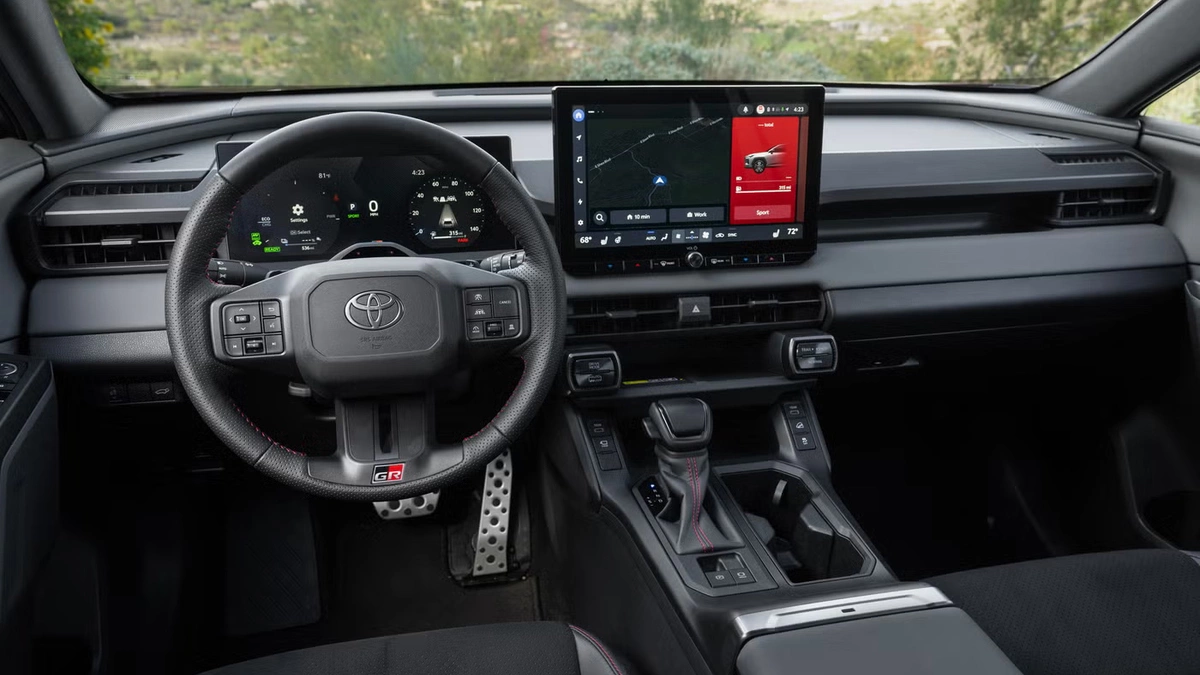
The current Toyota RAV4 serves as a primary example of this ongoing tension between modern aesthetics and functional design. In its most recent redesign, Toyota opted for a hybrid approach. The vehicle retains physical knobs for high-frequency tasks such as audio volume and temperature adjustment. It also features large, easy-to-reach buttons for drive mode selection—a feature Futonagane believes is essential for maintaining the "SUV experience" and allowing drivers to feel a mechanical connection to the vehicle’s performance.
However, several other functions that were previously controlled by dedicated switches have been migrated to the touchscreen interface. This includes fan speed, air distribution, and seat heating/ventilation. While this move cleaned up the center console’s visual appearance, it has become a point of contention for many owners.
Toyota is now monitoring customer feedback with unprecedented granularity. The company has indicated that it is not opposed to reversing these design decisions in future mid-cycle refreshes or next-generation models. "If it is necessary, we will certainly do it," Futonagane stated, referring to the potential "re-birth" of mechanical buttons. This flexibility suggests that Toyota prioritizes customer retention and safety over the cost-saving benefits often associated with digital-only interfaces.
A Chronology of the Digital Cockpit Transition
To understand why the industry is now retreating, it is necessary to look at the timeline of the digital cockpit’s evolution:
- 2012 – The Tesla Catalyst: The launch of the Tesla Model S, featuring a 17-inch vertical touchscreen that controlled nearly all vehicle functions, set a new industry benchmark. Competitors viewed the lack of buttons as a hallmark of "premium" futuristic design.
- 2015-2018 – The Transition Period: Legacy automakers began replacing physical instrument clusters with digital displays. Infotainment screens grew in size, and haptic touch-sensitive pads began replacing traditional HVAC buttons in brands like Cadillac and Honda.
- 2019-2022 – The Peak of Minimalism: Models like the Volkswagen ID.4 and various Volvo/Polestar vehicles moved almost entirely to screen-based or touch-capacitive controls. This era was characterized by "clean" dashboards but also by a spike in consumer complaints regarding usability.
- 2023-Present – The Great Correction: Major manufacturers, including Volkswagen and now Toyota, have publicly admitted that the removal of buttons went too far. The industry is now entering a "Post-Screen" era where the focus is on a balanced, "phygital" (physical + digital) interface.
The Safety Imperative: Data Supporting the Return of Buttons
The move back to physical buttons is not merely a matter of aesthetic preference; it is increasingly becoming a safety requirement. Research conducted by organizations such as the AAA Foundation for Traffic Safety and the Transport Research Laboratory has consistently shown that touchscreens require more "glance time" away from the road compared to tactile buttons.
A physical button or knob provides a fixed spatial reference point. Through muscle memory, a driver can locate a dial and feel its clicks to know they have adjusted the temperature by two degrees without ever looking away from the windshield. In contrast, a touchscreen offers no tactile feedback, requiring the driver to visually confirm that their finger is on the correct "virtual button" and that the command was registered.
The safety implications have become so significant that Euro NCAP, the leading vehicle safety rating organization in Europe, has announced new guidelines for 2026. To achieve a maximum five-star safety rating, vehicles will be required to have physical controls for essential functions, including turn signals, hazard lights, windshield wipers, horns, and emergency calls. This regulatory shift is likely to force the hands of manufacturers who were previously hesitant to move away from the cost-efficiencies of touchscreens.
The Engineering Paradox: Cost-Efficiency vs. User Experience
One of the hidden drivers behind the "all-screen" trend was the significant cost savings for manufacturers. Wiring dozens of individual mechanical switches into a dashboard is a complex, labor-intensive process that requires extensive physical hardware and space. A single touchscreen, connected via a simple data bus, can control hundreds of functions through software alone. Furthermore, software can be updated over-the-air (OTA) to fix bugs or add features, whereas a physical button is permanent once the car leaves the factory.
However, Toyota’s cautious approach highlights the long-term risks of this cost-cutting measure. If a digital interface becomes a source of frustration, it can damage brand loyalty—a metric that Toyota, with its reputation for reliability and "human-centric" design, values highly. The engineering challenge now is to integrate the flexibility of software with the reliability of hardware, a task that requires more sophisticated (and often more expensive) interior packaging.
Industry-Wide Re-evaluations: Beyond Toyota
Toyota is not alone in its introspection. Volkswagen, which faced significant backlash for the touch-capacitive steering wheel buttons and unlit climate sliders in the Golf Mk8 and ID. series, has made a public "mea culpa." Thomas Schäfer, CEO of Volkswagen Passenger Cars, admitted that the brand’s previous interior strategy "definitely did a lot of damage" and promised a return to physical buttons in upcoming models like the refreshed Tiguan and Passat.
Similarly, Hyundai’s design chief, SangYup Lee, has stated that while large screens are great for autonomous driving modes, they are a liability for active driving. Hyundai has committed to keeping physical knobs for climate and audio in the near term. Even luxury brands like BMW, which pioneered the iDrive rotary controller, are finding that customers still prefer the tactile wheel over purely touch-based navigation.
The Future of In-Car Interaction: Finding the "Golden Ratio"
The comments from Toyota’s Chief Engineer suggest that the future of car interiors will not be a return to the cluttered dashboards of the 1990s, but rather a search for the "Golden Ratio" of controls. This likely involves:
- Dedicated Tactile Controls: Physical switches for "Tier 1" functions—those used frequently while driving, such as volume, temperature, and wipers.
- Contextual Displays: Smaller screens or haptic surfaces that change function based on the driving mode but provide a physical sensation of being "pressed."
- Advanced Voice Control: Using AI-driven voice recognition to handle "Tier 2" tasks (like navigating to a specific address or changing a Spotify playlist) to keep hands on the wheel.
- Augmented Reality (AR) HUDs: Projecting critical information onto the windshield so the driver never needs to look down at a screen.
As Toyota prepares for the next generation of its best-selling RAV4 and other global models, the "voice of the customer" from China and beyond is being heard. The era of the "tablet on wheels" may be evolving into a more mature phase of automotive design—one where technology serves the driver, rather than requiring the driver to serve the technology. The return of the button is not a step backward; it is a recalibration of the industry’s commitment to safety, ergonomics, and the fundamental joy of driving.