Three-Vehicle Chain Collision on Expressway Triggers 10-Kilometer Traffic Jam After Driver Fails to Maintain Safe Following Distance

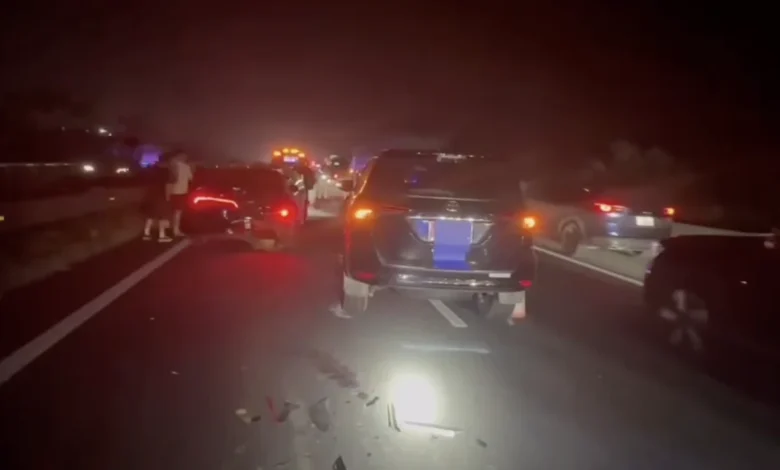
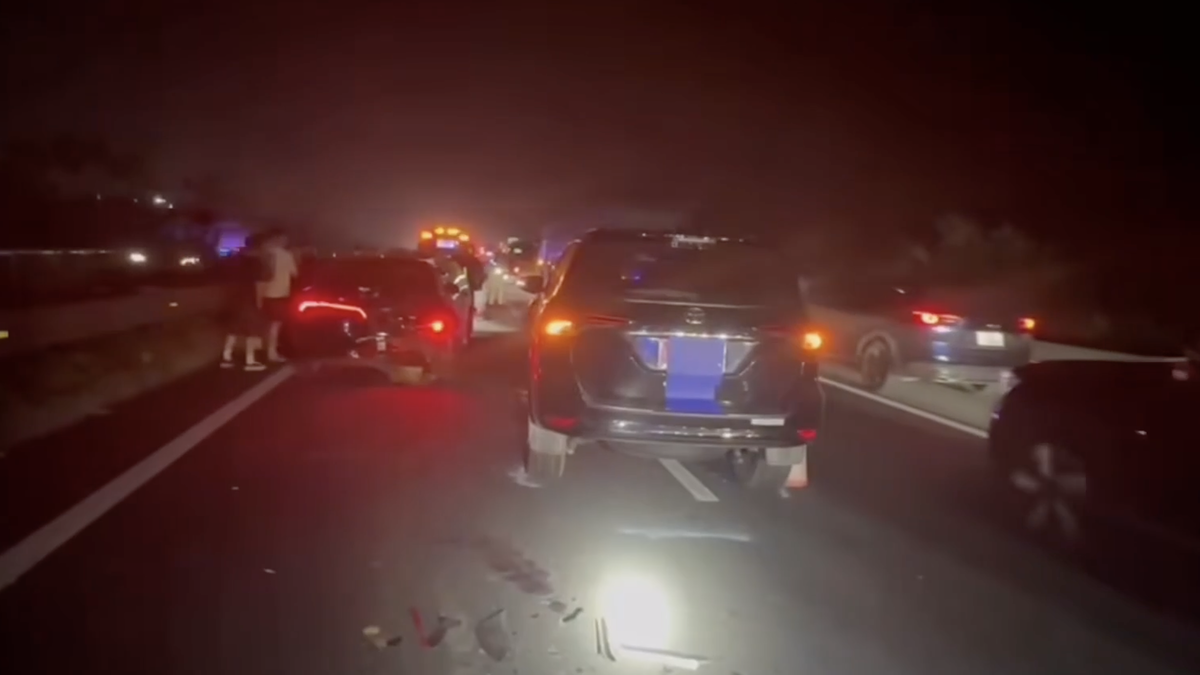
A multi-vehicle collision involving three automobiles on the Phap Van – Nghi Son Expressway caused severe gridlock spanning approximately 10 kilometers, disrupting traffic flow and drawing renewed scrutiny to highway driving safety standards. The incident, which occurred at kilometer marker 228+600, resulted in significant material damage to all three vehicles involved, though authorities confirmed that no fatalities or serious injuries were reported at the scene.
According to preliminary findings from Traffic Police Highway Patrol Team No. 3, operating under the Traffic Police Department, the accident was directly triggered when the driver of a Sport Utility Vehicle (SUV) failed to maintain the legally mandated safe following distance from the vehicle directly ahead. The sudden deceleration or abrupt stop of the lead vehicle left the SUV driver with insufficient reaction time, precipitating a rear-end shunt that subsequently involved a third trailing automobile in a classic chain-reaction crash.
The physical obstruction caused by the disabled vehicles temporarily paralyzed southbound traffic lanes on one of the region’s vital arterial expressways. Commuters and commercial transport operators faced extensive delays as traffic backed up for 10 kilometers. Highway management teams, alongside local traffic police units, were immediately dispatched to secure the accident perimeter, manage the heavy backlog of stranded vehicles, and coordinate the prompt removal of the damaged automobiles to restore normal traffic circulation.
Stringent Penalties and Regulatory Enforcement
In the wake of the incident, law enforcement authorities reiterated the strict legal penalties associated with tailgating and failing to observe safe operational gaps on high-speed roadways. Under Decree 168/2024/ND-CP, which governs administrative penalties for road traffic violations, motorists who fail to maintain a safe distance between vehicles resulting in a traffic accident face severe financial and administrative sanctions.
Offenders can be fined between 20 million and 22 million Vietnamese dong. In addition to the substantial monetary penalty, authorities are authorized to deduct 10 points from the driver’s official driving license, significantly impacting the motorist’s legal driving privileges and serving as a deterrent against reckless driving habits.
The strict enforcement mechanism forms part of a broader, intensified campaign launched by the Traffic Police Department to curb aggressive driving behaviors on major expressways. Beginning in late August, traffic authorities deployed advanced surveillance camera systems along the Phap Van – Nghi Son Expressway to automatically capture instances of tailgating and unsafe driving distances.
National Statistics on Tailgating-Related Incidents
The accident on the Phap Van – Nghi Son route is reflective of a broader nationwide safety challenge involving rear-end collisions on high-speed thoroughfares. Historically, following too closely has remained a leading contributory factor in severe expressway accidents, often resulting in catastrophic pile-ups due to the high operating velocities involved.
Data released by the Traffic Police Department highlights the tangible impact of the recent enforcement drive. Between August 28 and September 19, a comprehensive nationwide review recorded 37 traffic accidents directly linked to the failure to maintain safe following distances. These incidents resulted in 17 fatalities and 18 injuries.
Despite the grim statistics, authorities noted a measurable improvement when comparing the data year-over-year. The total number of traffic accidents decreased by 43.1% compared to the same period in 2025, while expressway chain collisions plummeted by 66.7%. Traffic safety experts attribute these positive trends directly to the proactive deployment of automated surveillance, heightened police visibility, and a zero-tolerance policy toward tailgating adopted by law enforcement agencies since late August.
Comprehensive Mitigation Strategies and Infrastructure Upgrades
Addressing the root causes of expressway collisions requires a multifaceted approach that extends beyond punitive measures. In response to recurring safety violations, the Ministry of Construction, in coordination with transport authorities and expressway management companies, has initiated a series of infrastructural and educational enhancements.
Key interventions include the large-scale installation of supplementary warning signs, clearer pavement markings, and visual distance markers painted directly onto the road surface to help drivers intuitively gauge the required gap between moving vehicles. Furthermore, the content regarding safe following distances and defensive driving techniques has been formally integrated into standard driver training curricula and examination procedures for prospective motorists.
Traffic authorities have emphasized an educational-first approach for minor infractions, prioritizing public awareness campaigns and direct warnings for motorists caught inadvertently creeping too close to preceding vehicles. However, enforcement remains uncompromising for drivers who willfully disregard safety warnings or exhibit blatant recklessness in dense traffic conditions.
Broader Implications for Highway Safety
The 10-kilometer congestion resulting from the three-vehicle collision underscores the fragility of high-speed transport corridors when basic safety protocols are ignored. Expressways are engineered to facilitate efficient, high-volume transit, but their operational capacity relies entirely on the collective discipline of motorists adhering to established physical laws of motion and statutory regulations.
As vehicle density continues to rise across national transport networks, maintaining adequate spatial buffers between automobiles is increasingly recognized as a critical public safety imperative. Transport analysts suggest that the combination of technological surveillance, severe financial penalties under Decree 168/2024, and ongoing public infrastructure improvements will play a pivotal role in shifting driver behavior and fostering a safer motoring culture across Vietnam’s expanding expressway network.
Related posts: