General Secretary and State President To Lam’s official visit to Japan marked a significant milestone in bilateral economic diplomacy, underscored by a series of high-level engagements with leaders of Japan’s premier financial institutions and multinational conglomerates in Tokyo on November 9. Amidst an evolving global economic landscape and a shared commitment to elevating the Vietnam-Japan Comprehensive Strategic Partnership, the Vietnamese leader used the platform to advocate for a deeper, more substantive economic integration that transcends traditional trade boundaries. The discussions focused heavily on mobilizing medium- and long-term capital, accelerating green transitions, advancing infrastructure development, and integrating Vietnamese enterprises into global supply chains.
The high-level diplomatic itinerary in Tokyo brought together top executives from six of Japan’s most influential financial and commercial powerhouses, including Sumitomo Mitsui Banking Corporation (SMBC Group), Mizuho Bank, SBI Holdings, Sojitz Corporation, Erex Co., and AEON Group. These interactions reflect Tokyo’s persistent confidence in Vietnam’s macroeconomic stability, robust domestic market growth, and investor-friendly reforms. By addressing key areas such as green finance, renewable energy infrastructure, digital transformation, and retail distribution networks, both nations signaled a mutual readiness to shape the next chapter of economic cooperation.
Mobilizing Medium and Long-Term Capital for Strategic Infrastructure
Opening his series of meetings, General Secretary and State President To Lam met with Toru Nakashima, Chairman and Group CEO of Sumitomo Mitsui Financial Group (SMBC Group). Acknowledging SMBC’s prominent role as a strategic financial bridge in Asia, the Vietnamese leader urged the group to spearhead initiatives aimed at mobilizing and arranging medium- and long-term capital for Vietnam’s national priority projects. These critical sectors include transportation infrastructure, logistics networks, clean energy development, and comprehensive green transitions.
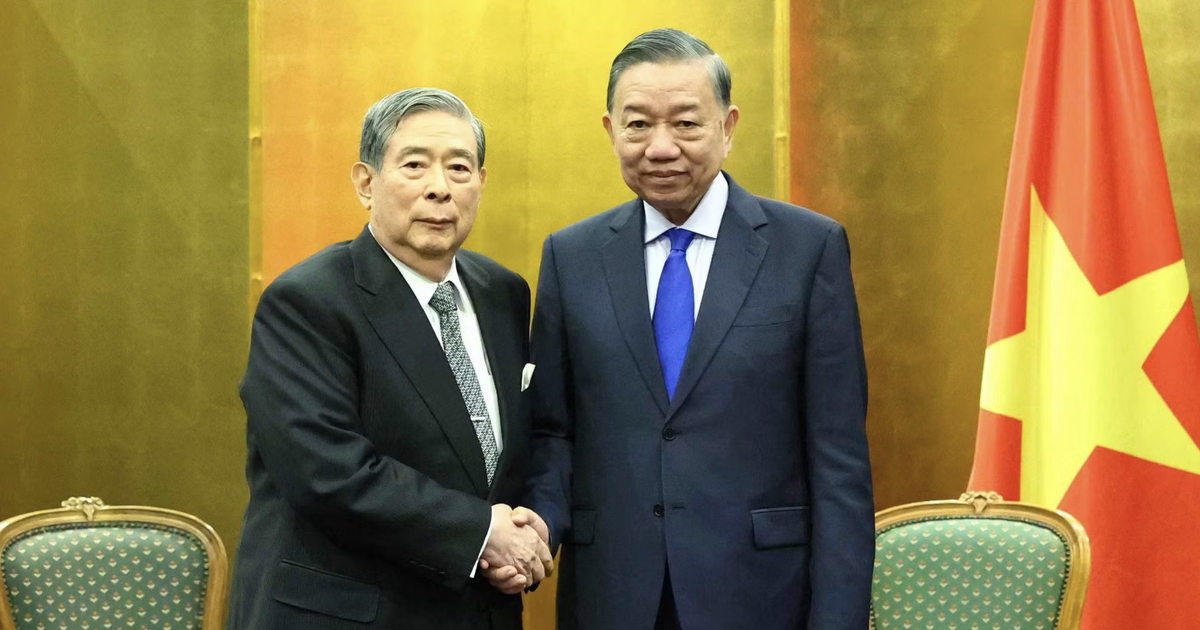
Mr. Nakashima responded by reaffirming Vietnam’s status as a core strategic market within SMBC’s regional blueprint. Highlighting the group’s track record, the CEO noted that SMBC has successfully mobilized and channeled over $20 billion of international capital into Vietnam while actively facilitating Japanese direct investment into the country. He pointed to SMBC’s strategic partnership with Vietnam Prosperity Joint Stock Commercial Bank (VPBank) as tangible proof of the financial institution’s long-term commitment to the market. Furthermore, Mr. Nakashima praised Vietnam’s decisive push toward private economic development as a breakthrough policy, pledging that SMBC will continue expanding its footprint in green finance, capital market development, and supporting the establishment of Vietnam’s nascent International Financial Center.
In response, General Secretary and State President To Lam encouraged SMBC to share advanced financial models and regulatory frameworks to help diversify Vietnam’s capital pool and enhance resource allocation efficiency. He emphasized that alongside securing capital scale, Vietnam places equal priority on qualitative growth, financial safety, and risk management to ensure that funds are directed toward highly viable projects that generate sustainable long-term value.
Deepening Banking Partnerships and Sustainable Trade Financing
Continuing his schedule, the Vietnamese leader received Masahiko Kato, Chairman and CEO of Mizuho Bank. Welcoming Mizuho’s continued expansion, General Secretary and State President To Lam lauded the bank’s operational efficiency in Vietnam, specifically highlighting its 15-year strategic partnership with Joint Stock Commercial Bank for Foreign Trade of Vietnam (Vietcombank) as a gold standard for financial collaboration between the two nations.
Mr. Kato noted that Mizuho holds the distinction of being the first Japanese bank to establish a branch in Hanoi, reflecting its pioneering role in the country’s financial sector. He reiterated the bank’s dedication to supporting Japanese investments and seamlessly connecting Vietnamese enterprises with global capital markets.
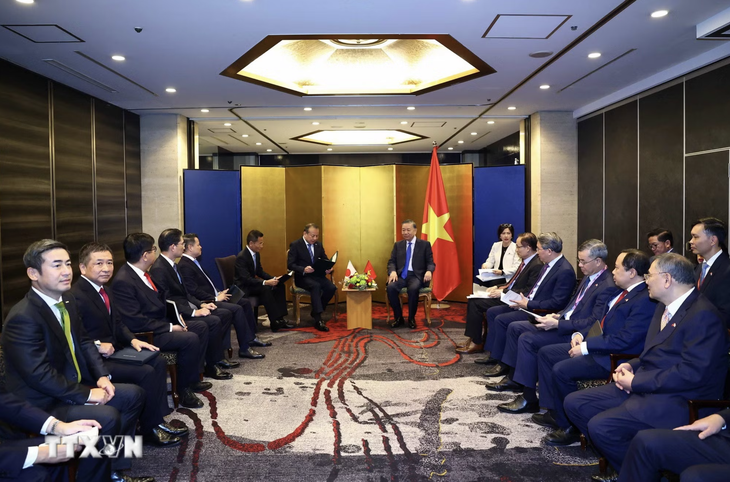
Recognizing the expansive potential for growth, General Secretary and State President To Lam noted that as Vietnam pursues an ambitious agenda centered on high growth and sustainable development, the demand for sophisticated, high-quality capital remains immense. He called upon Mizuho and other leading financial institutions to broaden their support for Vietnamese businesses—expanding beyond standard financial services to encompass direct access to capital, strategic equity partners, and trade networks across Japan and global markets.
Transitioning from Financial Investor to Multi-Industry Ecosystem Partner
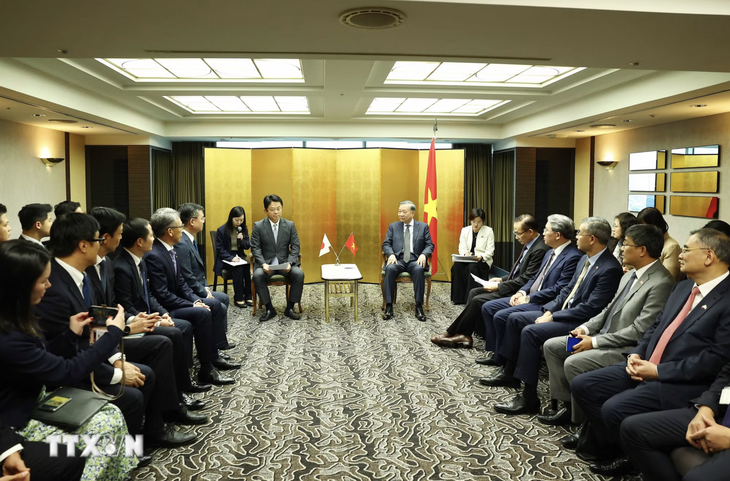
In his meeting with Yoshitaka Kitao, Chairman and CEO of SBI Holdings, General Secretary and State President To Lam commended the group’s multifaceted contributions across Vietnam’s banking, securities, asset management, consumer finance, and digital transformation sectors. He expressed a clear desire for SBI Holdings to evolve its operational model from a traditional financial investor into a comprehensive, multi-industry ecosystem development partner.
Mr. Kitao outlined SBI’s strategic vision to build a holistic financial ecosystem spanning investment, capital raising, asset management, digital payments, and fintech services. A testament to this expansion is the group’s impending memorandum of understanding with Vietnam’s Sun Group, aimed at fostering joint research and establishing collaborative business ventures. General Secretary and State President To Lam hailed this partnership as a critical milestone, signaling a deeper phase of cross-border enterprise integration.
The Vietnamese leader reiterated that Vietnam requires vast financial resources for strategic infrastructure, advanced science and technology, and green transformation. He reaffirmed the government’s unwavering commitment to fostering a transparent, modern, and internationally integrated financial market that ensures macroeconomic stability and offers a secure, long-term operating environment for international financial institutions.
Advancing Renewable Energy, Biomass, and Regional Integration
Energy security and environmental sustainability formed a cornerstone of the discussions with Japanese conglomerates Sojitz Corporation and Erex Co. Meeting with Masayoshi Fujimoto, Chairman and CEO of Sojitz, General Secretary and State President To Lam acknowledged the company’s strong operational track record over its decades of presence in Vietnam.
Mr. Fujimoto outlined Sojitz’s forward-looking strategy to form integrated business clusters, combining industrial infrastructure, clean energy, and consumer goods distribution through strategic alliances with local Vietnamese partners. In response, General Secretary and State President To Lam proposed four strategic priorities for Sojitz: accelerating the deployment of clean electricity and renewable energy; securing strategic mineral supply chains and advanced materials; investing in data centers and digital infrastructure; and scaling up circular economy projects through integrated business models. The Vietnamese leader emphasized that after 40 years of diplomatic and economic cooperation, both sides must transition from isolated project-based investments to comprehensive, long-term programmatic frameworks.
During his meeting with Honna Hitoshi, Chairman and CEO of Erex Co., General Secretary and State President To Lam praised the company’s visionary approach to renewable energy development across Japan and Southeast Asia. Erex has been a prominent advocate for biomass energy in Vietnam, aiming to construct biomass power plants across multiple localities by utilizing agricultural and forestry byproducts as fuel.
Mr. Hitoshi explained that these biomass initiatives not only drive Vietnam’s sustainable transition to green energy but also generate substantial socio-economic benefits by boosting rural incomes and creating local employment opportunities in fuel collection, transportation, and plant operations. He requested the Vietnamese Government and the Ministry of Industry and Trade to streamline regulatory frameworks for biomass development, appoint a unified cross-sector coordinating body to resolve operational bottlenecks, and promote bilateral carbon credit cooperation under the Joint Crediting Mechanism (JCM).
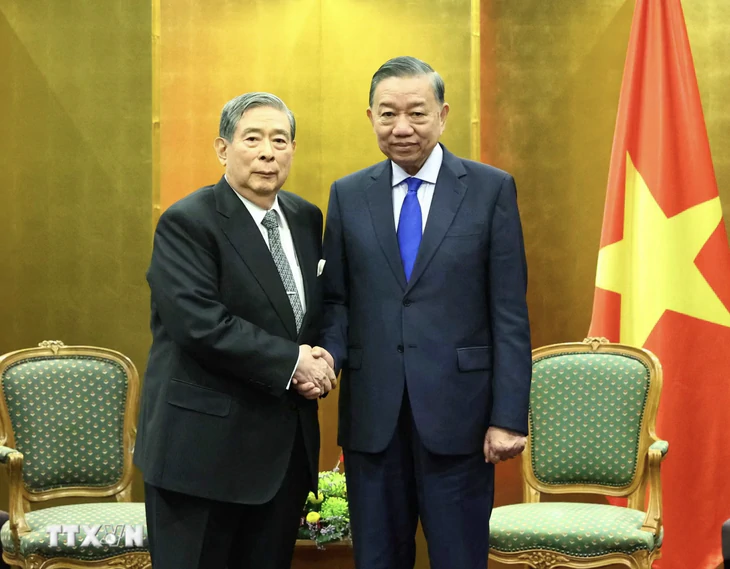
Acknowledging these proposals, General Secretary and State President To Lam noted that achieving Erex’s long-term goal of developing biomass power plants with a cumulative capacity exceeding 1,000 MW requires meticulous preparation regarding regulatory frameworks, feedstock supply chains, plant locations, and implementation timelines. He advised the company to proceed systematically, aligning its green energy initiatives with local municipal needs and compliance standards under Vietnamese law.
Integrating Vietnamese Goods into Global Retail Networks
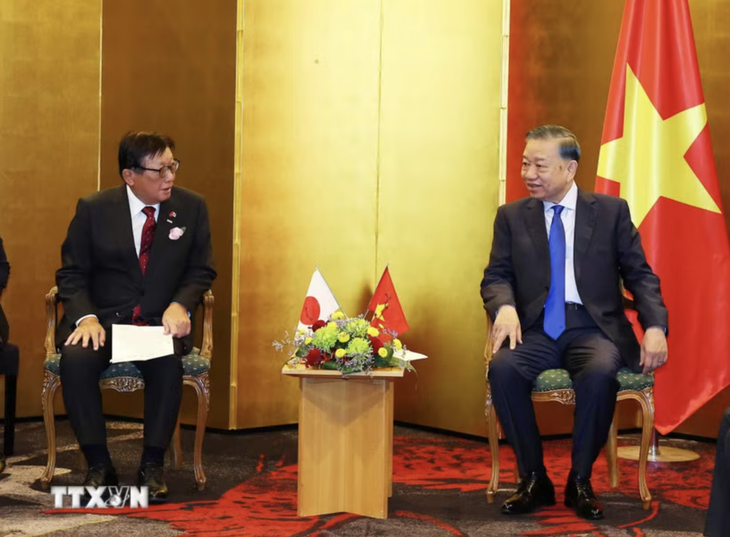
Concluding his series of high-level meetings, General Secretary and State President To Lam received Motoya Okada, Chairman of AEON Group. Mr. Okada reported that AEON currently operates 11 subsidiary companies in Vietnam and has continued to expand its commercial footprint with new shopping centers launched across multiple provinces and municipalities throughout 2026.
Describing Vietnam as an indispensable strategic pillar in AEON’s mid-term global expansion plan, Mr. Okada stated that the retail giant aims to triple its business scale in the country, driven by a stable and continuously improving investment climate.
Welcoming this ambitious expansion strategy, General Secretary and State President To Lam encouraged AEON to diversify its modern retail formats to match regional demographics while scaling up investments in automated logistics and e-commerce infrastructure. Furthermore, he urged AEON to deepen its collaboration with Vietnamese producers to enhance product quality standards, improve traceability mechanisms, and build robust commercial brands. By doing so, an increasingly large volume of high-quality Vietnamese agricultural goods and consumer products can be successfully integrated into AEON’s sprawling global retail distribution network.
Broader Implications and Strategic Outlook
The series of high-level meetings held in Tokyo underscore a pivotal maturation in Vietnam-Japan economic relations. By shifting the focus from labor-arbitrage manufacturing to high-end services, green infrastructure, capital market development, and deep supply chain integration, both nations are positioning themselves to navigate emerging global economic shifts effectively.
The active participation of Japan’s leading financial institutions—SMBC, Mizuho, and SBI—signals strong international backing for Vietnam’s ambition to modernize its financial architecture and establish a regional financial hub. Concurrently, the strategic alignment on renewable energy initiatives with Sojitz and Erex highlights Vietnam’s unwavering commitment to achieving its net-zero emissions targets while maintaining robust economic expansion. As these agreements move from the negotiating table to implementation, they are poised to inject substantial momentum into Vietnam’s long-term socioeconomic development, reinforcing a resilient, future-oriented partnership between Hanoi and Tokyo.
Related posts: