Beijing Rejects Espionage Allegations Involving Nvidia CEO Jensen Huang as Groundless Smear Campaign

The Ministry of Foreign Affairs of the People’s Republic of China has officially and forcefully dismissed escalating accusations alleging that Beijing deployed an intelligence operative to approach Nvidia Chief Executive Officer Jensen Huang. Describing the claims as entirely baseless and defamatory, Chinese officials have pushed back aggressively against what they characterize as a malicious fabrication designed to politically damage and smear the administration in Beijing.
The diplomatic fallout stems from an unfolding corporate and international security scandal involving the head of one of the world’s most valuable semiconductor and artificial intelligence firms. As global headlines fixate on the intersection of corporate governance, personal misconduct, and geopolitical espionage, the ramifications of the event are rippling through Washington, Beijing, and corporate boardrooms across Silicon Valley.
Origins of the Controversy and Corporate Investigation
The controversy erupted into the public sphere when Nvidia Corporation confirmed that its board of directors had initiated an independent investigation. The internal inquiry was launched to examine emerging media reports suggesting potential foreign intelligence exposure tied to the personal life of CEO Jensen Huang.
The scrutiny follows public confirmations by Huang regarding an extramarital relationship with a businesswoman identified in reports as Alice Huang. Facing intense public and corporate pressure, the Nvidia chief executive issued a statement accepting full accountability for his actions. Furthermore, Huang pledged his complete and unreserved cooperation with both internal investigators and U.S. national security agencies tasked with reviewing potential vulnerabilities.
While personal indiscretions among corporate executives are typically handled strictly through internal corporate governance channels, the involvement of a romantic partner whom foreign media and unverified intelligence whispers linked to Chinese intelligence networks instantly elevated the matter to a high-stakes geopolitical incident. The intersection of artificial intelligence dominance, national security, and critical semiconductor supply chains made the personal conduct of a key technology titan a matter of intense public policy concern.
Diplomatic Rebuttal from Beijing
Addressing the press during a regular briefing in Beijing, Chinese Foreign Ministry spokesperson Guo Jiakun forcefully rejected any insinuation that the Chinese government orchestrated or maintained ties to the individuals involved.
"We have repeatedly responded to this issue and made our position crystal clear," Guo stated during the conference. "The allegations regarding a Chinese intelligence operative are completely groundless and are intended solely to smear, slander, and undermine Beijing."
Echoing the Foreign Ministry’s strong stance, the state-backed newspaper Global Times, an influential publication operating under the auspices of the Chinese Communist Party, launched a scathing critique of Western media coverage. The publication accused certain media outlets in the United States of manufacturing a "pulp fiction spy story," warning that sensationalized reporting regarding geopolitical adversaries poses a tangible risk to bilateral relations between the world’s two largest economies.
Analysts note that Beijing is acutely sensitive to narratives that frame Chinese commercial or technological engagement with Western executives as covert espionage operations, particularly as export controls and technological decoupling continue to strain relations between Washington and Beijing.
Political Reactions in Washington: Trump and Musk Weigh In
As the investigation unfolds, the political apparatus in the United States has mobilized in defense of the embattled tech leader, underscoring the vital economic and strategic importance of Nvidia to American technological hegemony.
U.S. President Donald Trump stepped into the public discourse, offering a strong defense of the Nvidia chief. Trump emphasized Huang’s immense contributions to the American economy, describing him as a respected figure whose technological leadership has fundamentally propelled the United States forward in the fields of artificial intelligence and advanced computing. The U.S. leader further framed the controversy as an unwelcome distraction for a crucial national asset at a time when technological supremacy is paramount.
Amplifying the sentiment within the Silicon Valley and venture capital ecosystem, billionaire entrepreneur Elon Musk shared commentary originally posted by venture capitalist Shaun Maguire. The shared post argued that Huang harbored no malicious intent against national security interests, attempting to separate personal failings from institutional or national betrayal.
The bipartisan and cross-industry defense highlights the delicate balance between personal accountability and national economic interest. Nvidia currently sits at the absolute center of the global artificial intelligence boom, supplying the specialized graphics processing units (GPUs) that power everything from generative AI models to advanced defense systems. Consequently, any destabilization of its leadership structure carries profound systemic risks.
Chronology of Events
To understand the rapid escalation of the crisis, a chronological overview outlines the sequence of developments:
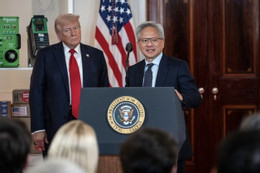
- November 8: Media reports surface detailing an extramarital relationship between Nvidia CEO Jensen Huang and a businesswoman. Concurrently, Nvidia announces the initiation of an independent board investigation into potential foreign intelligence ties. Jensen Huang releases a public statement accepting full responsibility and pledging cooperation with U.S. national security authorities.
- November 8: U.S. President Donald Trump publicly defends Jensen Huang, praising his contributions to American technology and the economy. Prominent tech figures, including Elon Musk, amplify defenses of the CEO on social media.
- November 9: The Chinese Foreign Ministry, through spokesperson Guo Jiakun, formally rejects all accusations linking Beijing to the alleged intelligence operative, labeling the claims as a baseless smear campaign.
- November 9: The Global Times publishes an editorial condemning Western media narratives, characterizing the reports as a sensationalized spy story that threatens bilateral stability.
Fact-Based Analysis of Broader Implications
The unfolding situation surrounding Jensen Huang and Nvidia carries deep implications across multiple domains, ranging from corporate governance to international diplomacy.
1. Corporate Governance and Executive Vulnerability
In the modern era of great power competition, corporate executives at the helm of critical technology companies are increasingly treated as geopolitical assets. Personal indiscretions, which historically remained private matters or resulted strictly in corporate restructuring, now intersect directly with national security protocols. The willingness of Nvidia’s board to launch an independent investigation demonstrates the stringent compliance standards required of companies dealing in dual-use technologies and artificial intelligence infrastructure.
2. U.S.-China Technological Friction
The rapid politicization of the incident illustrates the deep-seated paranoia and mistrust characterizing U.S.-China relations. Even as American officials rally to protect a foundational domestic tech titan, Chinese state media and diplomatic channels feel compelled to issue aggressive pushback to prevent the narrative from being weaponized to justify further economic decoupling or tighter export restrictions on advanced semiconductors.
3. The Centrality of Nvidia in Global AI Infrastructure
Nvidia’s market dominance places it under a unique microscope. With governments worldwide vying for computational sovereignty, any disruption to Nvidia’s leadership, operational stability, or regulatory standing reverberates across global financial markets. While the independent investigation in the U.S. continues to examine the factual boundaries of the security concerns, the swift rejection from Beijing ensures that the incident will remain a focal point of geopolitical tension rather than remaining an isolated corporate compliance issue.
As investigators continue their work and political leaders weigh the broader economic ramifications, the case of Jensen Huang underscores a new reality: for leaders of foundational technology monopolies, private lives and public geopolitics are now inextricably linked.
Related posts: