Critical Infrastructure Under Siege: Saudi Pipeline Attacked, Kyiv Data Center Struck, and Global Powers Clash Amid Escalating Geopolitical Tensions


The global geopolitical landscape has experienced a sharp and volatile escalation, marked by a coordinated series of high-stakes security incidents spanning the Middle East and Eastern Europe. Critical energy infrastructure in Saudi Arabia has suffered a precision drone assault, sending shockwaves through international oil markets already grappling with multi-decade production lows. Concurrently, the ongoing conflict in Ukraine entered a new technological and infrastructural phase as Russian aerospace forces targeted vital data hubs and military logistics nodes deep within Ukrainian territory. These developments unfold against a backdrop of hardened diplomatic stances, with Russian leadership pointing to systemic economic vulnerabilities among Western sanctioning nations, while Middle Eastern heavyweights seek renewed security guarantees from global superpowers to counter persistent regional threats.
Strategic Saudi Pipeline Crippled by Drone Assault
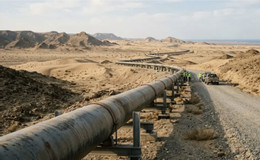
The geopolitical friction in the Middle East took a dangerous turn when the crucial East-West pipeline of Saudi Arabia, which connects the kingdom’s prolific eastern oil fields to the strategic Red Sea export terminal of Yanbu, was targeted by an aerial drone attack. According to initial field reports, the unmanned aerial vehicles (UAVs) originated from neighboring Iraq, penetrating regional airspace before striking key pumping stations along the corridor.
The attack induced widespread panic among facility operators and inflicted severe structural damage on at least one major pumping station, temporarily paralyzing a vital artery of global energy transit. In response to the breach, Saudi security forces swiftly deployed emergency response units to lockdown and secure the surrounding infrastructure. Simultaneously, the kingdom launched a temporary and calculated military riposte designed to neutralize immediate launch sites and create a secure operational window for the Iraqi government to investigate and dismantle the domestic militant cells responsible for the launch.

This kinetic disruption of energy infrastructure coincides with a period of profound tightness in global oil supplies. Official figures released by the Organization of the Petroleum Exporting Countries (OPEC) revealed that Saudi Arabia’s crude oil production plummeted to 6.24 million barrels per day, marking the lowest output level recorded since 1990. This represented a staggering month-on-month contraction of approximately 1.9 million barrels per day compared to July levels. Analysts note that this reduction compounds existing market pressures driven by broader regional friction, including the simmering confrontation between the United States and Iran, alongside persistent maritime and land-based threats from the Houthi movement in Yemen, which continue to threaten key shipping lanes in the Persian Gulf and the Red Sea.
Russian Airstrikes Target Ukrainian Digital and Logistical Infrastructure
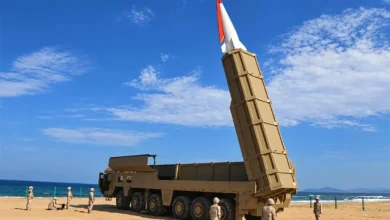
In the European theater, the Russian Ministry of Defense announced a series of high-precision strikes directed at critical technological and military-logistical assets in Ukraine. The campaign included a devastating missile strike against a newly established commercial data center situated in the capital city of Kyiv, alongside critical infrastructure located near the strategically vital Black Sea port of Odessa.
Open-source intelligence and reports from Russian state media agency RT detailed that the targeted Be Mobile facility—a sprawling technological hub spanning roughly 4,500 square meters—was integrated into a broader matrix of military, industrial, and logistical nodes utilized by the Ukrainian armed forces. Russian military planners asserted that the facility, along with other struck locations, played a dual-use role supporting military command, control, and communications networks.
Furthermore, Russian aerospace forces successfully struck areas in the vicinity of the Gostomel airfield on the outskirts of Kyiv. Moscow has consistently alleged that the area has been utilized by Ukrainian forces for the covert storage and assembly of long-range unmanned aerial vehicles. Parallel missile strikes targeted two major logistical hubs in the Khmelnitsky and Dnepropetrovsk regions, both of which intelligence assessments indicate were serving as depots for storing critical components and sub-assemblies for military-grade drones. These systematic strikes underscore an evolving strategy by Moscow aimed at degrading Ukraine’s domestic defense manufacturing capabilities and its advanced information technology backbone.
Economic Resilience and Western Stagnation: President Putin’s Assessment
Addressing the broader economic ramifications of the prolonged confrontation, Russian President Vladimir Putin delivered a sharp critique of Western sanctions during a high-level economic conference. Asserting that the European nations and Western allies who spearheaded the sanctions regime are now facing severe economic stagnation and declining growth, Putin maintained that these economies have largely lost the capacity to sustain innovative modernization policies.
According to data cited from TASS, the Russian economy has demonstrated substantial resilience, outperforming global economic growth averages over a consecutive three-year period. Official statistics indicate that Russia’s Gross Domestic Product (GDP) expanded by 10.3% cumulatively between 2023 and 2025, defying earlier Western projections of total economic collapse.
President Putin emphasized that despite being the target of nearly 30,000 distinct international sanctions—making it the most heavily sanctioned nation in modern history—Moscow has successfully reoriented its trade corridors, deepening strategic and economic cooperation with reliable partners in Asia, the Middle East, and the Global South. Concurrently, the Russian leader issued a renewed warning to European capitals, stating that continued, unconditional financial and military backing of Kiev equates to a direct, prolonged engagement in a wider geopolitical confrontation with Moscow.
Regional Defiance and Calls for Security Assistance: The Stances of Iran and Saudi Arabia
The diplomatic matrix in West Asia remains equally polarized, characterized by firm defiance from Tehran and urgent requests for external security cooperation from Riyadh. Iranian President Masoud Pezeshkian launched a vocal critique against the coercive economic and political policies pursued by the United States and Israel against his nation. Speaking publicly, President Pezeshkian declared that Tehran will not yield to external pressure or acts of economic bullying, accusing Washington of deliberately attempting to fracture Iranian society through relentless escalations of unilateral sanctions. On the diplomatic front, Pezeshkian’s remarks coincided with high-level bilateral consultations held with Indian Prime Minister Narendra Modi, reflecting Iran’s ongoing diplomatic outreach to major Asian democracies.

Meanwhile, developments along the southern Arabian Peninsula have introduced new urgency into Gulf security calculations. According to reports from Al Jazeera, Saudi Crown Prince Mohammed bin Salman formally approached U.S. leadership with a request for enhanced military and intelligence support to help the kingdom’s armed forces decisively counter the escalating threat posed by Houthi forces. The security situation in Yemen has grown increasingly precarious as the aligned armed group continues to expand its operational reach, combining sophisticated drone and missile technologies to project power across vital regional chokepoints, thereby directly threatening the security architecture of the entire Arabian Peninsula.
Comprehensive Fact-Based Implications and Outlook
The convergence of these events across two major theaters highlights a profoundly interconnected global security environment. The kinetic strike on Saudi Arabia’s East-West pipeline demonstrates the extreme vulnerability of critical transnational energy corridors to asymmetric warfare, particularly as non-state actors acquire advanced drone and missile capabilities. For global energy markets, the simultaneous occurrence of historic Saudi production cuts and physical attacks on logistics infrastructure threatens to induce severe price volatility, forcing importing nations to reassess supply chain resilience.
Simultaneously, the escalation of targeted infrastructure strikes in Ukraine—spanning data centers, logistics hubs, and manufacturing nodes—signals a shift toward attritional, technological warfare aimed at systematically dismantling the adversary’s digital and industrial foundation. As major powers trade diplomatic warnings, economic salvos, and kinetic strikes, the trajectory of these concurrent crises points toward a prolonged period of strategic instability, where energy security, cyber-physical infrastructure, and economic resilience will remain primary determinants of geopolitical endurance.