Israel Political Crisis Deepens As Former Chief of Staff Gadi Eisenkot Tasked With Forming New Government To Oust Long-Serving PM Benjamin Netanyahu

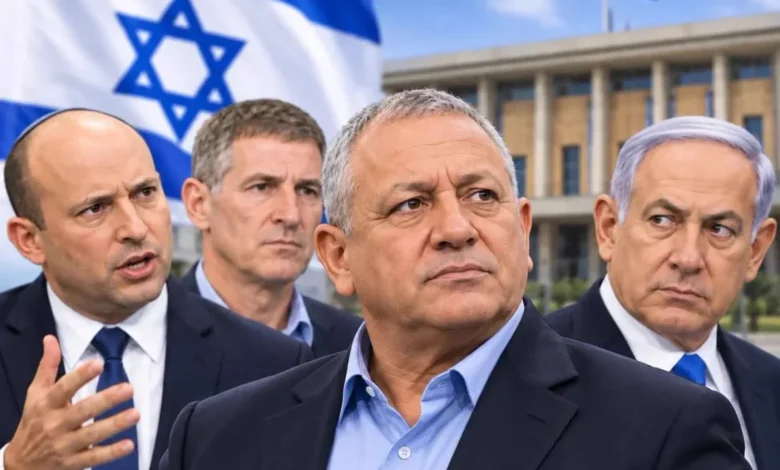
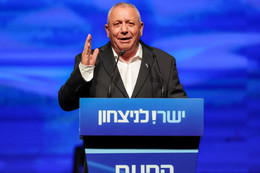
The political landscape of Israel has entered a period of unprecedented turbulence and high-stakes maneuvering following the recent general elections. Despite securing notable support within the Israeli parliament, known as the Knesset, former military Chief of Staff and leader of the centrist Yashar party, Gadi Eisenkot, faces a formidable maze of political obstacles. His primary mission is to successfully forge a governing coalition that can finally bring an end to the protracted tenure of Prime Minister Benjamin Netanyahu, who holds the record for the longest-serving prime minister in Israeli history.
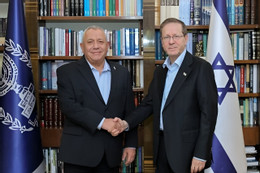
In a decisive political development, Israeli President Isaac Herzog officially tasked Mr. Eisenkot with the responsibility of forming a new administration. This move marks a critical juncture in Mr. Eisenkot’s persistent campaign to replace the incumbent leader. However, the path to executive power for the former general remains fraught with deep ideological divisions, intense intra-opposition friction, and immense structural challenges within the fractured Israeli legislature.
Chronology of the Post-Election Political Impasse
The current political crisis unfolded swiftly in the wake of the October 27 Knesset elections, which produced a heavily fragmented parliament without a clear, outright winner. Following two days of intensive consultations with party leaders representing the newly elected lawmakers, President Herzog evaluated the parliamentary arithmetic. The consultations revealed that Mr. Eisenkot commanded the preliminary backing of 67 lawmakers in the 120-seat Knesset, a tally that included 19 members belonging to two separate Arab-majority parties.
In contrast, Prime Minister Netanyahu found his support base shrinking, commanding only 46 committed backers. A significant fracture appeared within Mr. Netanyahu’s traditional nationalist-religious bloc when United Torah Judaism (UTJ), a long-standing ultra-Orthodox coalition partner, balked at unconditionally endorsing his continued efforts to form a government.
Despite President Herzog’s mandate, Mr. Eisenkot’s appointment does not automatically strip Mr. Netanyahu of executive authority overnight. The former military chief currently holds a nominal majority of pledged votes on paper, but he has yet to construct a fully functioning coalition capable of effectively governing the nation. Under Israeli constitutional law, a new government must secure a vote of confidence in the Knesset, requiring at least 61 supportive votes from the 120-member parliament to successfully unseat the incumbent administration.
Opposition Fragmentation and the Dilemma of Arab Parties
Mr. Eisenkot is currently spearheading efforts to establish what he terms an "emergency national government," aiming to quickly sideline the caretaker administration led by Mr. Netanyahu. The proposed coalition composition primarily centers around four Zionist opposition factions that hold a combined 48 seats in the Knesset: Mr. Eisenkot’s Yashar party, the Democrats led by former prime ministers Naftali Bennett and Yair Lapid, Yisrael Beiteinu led by Avigdor Liberman, and the left-wing Democrats led by Yair Golan.
To secure internal cohesion within this prospective alliance, Mr. Eisenkot laid down four stringent baseline conditions. These include official recognition of Israel as a Jewish, democratic, liberal, and equal state; a strict commitment to the values outlined in the nation’s Declaration of Independence; the fulfillment of national service obligations through military, national, or civil frameworks; and the formal designation of Hamas as a terrorist organization.
While the fourth condition practically rules out the direct inclusion of Arab-majority parties in the ruling coalition, these factions could potentially extend outside parliamentary support, thereby helping Mr. Eisenkot’s alliance maintain the critical threshold required in the legislature.
However, major roadblocks persist within the opposition camp itself. Avigdor Liberman, a veteran politician who has previously served as Israel’s Minister of Defense, Minister of Foreign Affairs, and Minister of Finance, remains the most vocal opponent of relying on Arab party backing. Mr. Liberman contends that a minority government dependent on such outside support is inherently unstable and risks accidentally paving the way for Mr. Netanyahu to return to power with an even stronger mandate.
In a public social media statement, Mr. Liberman warned that Israel could ultimately face a worse political fate if the current stalemate results in Mr. Netanyahu returning with a reinforced bloc of 70 seats, extending his governance for another four years and plunging the country into a dangerous geopolitical trajectory. Instead, Mr. Liberman proposed an alternative strategy: breaking the long-standing opposition boycott against ultra-Orthodox parties like Shas and UTJ to form an alternative 61-seat coalition, followed by efforts to peel away a few members from Mr. Netanyahu’s Likud party.
This proposal, however, fundamentally clashes with a core campaign commitment of the broader opposition: ending the sweeping military service exemptions traditionally granted to ultra-Orthodox men. While ultra-Orthodox factions continue to lobby for the formal codification of military exemptions, Mr. Eisenkot, Mr. Liberman, and other secular opposition figures remain steadfast in their commitment to universal conscription.
Prime Minister Netanyahu Fights to Block the New Government
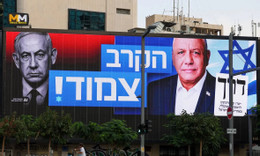
While the opposition works to reconcile its internal divisions, Prime Minister Netanyahu is aggressively deploying political and legal pressure tactics to prevent the formation of a rival coalition. Mr. Netanyahu has publicly challenged the legitimacy of the recent election outcomes, alleging that the parliamentary bloc involving Arab parties constitutes an "hijacked" result achieved through alleged foreign funding and illicit political maneuvering.
David Zini, the Director of the Shin Bet internal security agency appointed during Mr. Netanyahu’s tenure, has reportedly faced internal pressure to probe Arab politicians, though no formal, publicly verified evidence has been presented to substantiate these allegations. In video statements released to the public, Mr. Netanyahu cautioned that Israel "cannot survive" a minority government dependent on Arab party support, instead issuing repeated calls for a broad nationalist unity government encompassing his entire political bloc, including religious and ultra-Orthodox factions.
Mr. Eisenkot firmly rejected these appeals, dismissing them as desperate political rhetoric. The Yashar party maintains that Likud is fully welcome to join a broad unity government on the condition that it seizes its alliance with ultra-nationalist factions and accepts leadership under the former military chief of staff.
The Decisive Timeline and Institutional Battles Ahead
The immediate political battlegrounds are set to intensify as the newly elected Knesset convenes. The opposition intends to challenge the incumbent Speaker of the Knesset—an ally of Prime Minister Netanyahu—to weaken the premier’s institutional influence and pave the way for progressive legislative steps. A primary legislative priority for the opposition is the establishment of a state commission of inquiry to investigate the systemic security failures that preceded and unfolded during the October 7, 2023, cross-border attacks by Hamas. This investigation carries immense political weight, as lingering public anger over pre-war and wartime security lapses continues to exert severe pressure on the Netanyahu administration.
Under Israeli legislative rules, Mr. Eisenkot was granted an initial 28-day window starting November 8 to negotiate ministerial portfolios, budget allocations, and policy platforms with prospective coalition partners. This timeframe can be extended by an additional 14 days if deemed necessary by the president. Should Mr. Eisenkot fail to secure the necessary agreements, the mandate to form a government will revert to Mr. Netanyahu, who would then be granted four weeks to assemble a ruling majority.
Political analysts emphasize that the coming weeks will determine not only the immediate structural stability of the Israeli government but also the long-term political trajectory of the nation. With a caretaker prime minister managing security and law enforcement apparatuses despite losing a parliamentary majority and facing severe drops in public trust, political observers consider the current environment exceptionally precarious. The outcome of these ongoing coalition talks will decisively shape Israel’s domestic governance and its foreign policy posture amidst ongoing regional volatility.