Iran Threatens Seizure of Vessels in New Maritime Exclusion Zone as US Conflict Escalates Oil Prices Past 100 USD

Tensions in the Middle East reached a critical new threshold today as the Islamic Revolutionary Guard Corps (IRGC) announced the establishment of an expanded maritime exclusion zone. The move follows a severe escalation of military clashes between United States and Iranian forces, directly impacting global energy markets and driving crude oil prices above the psychological threshold of 100 USD per barrel for the first time in nearly two months.
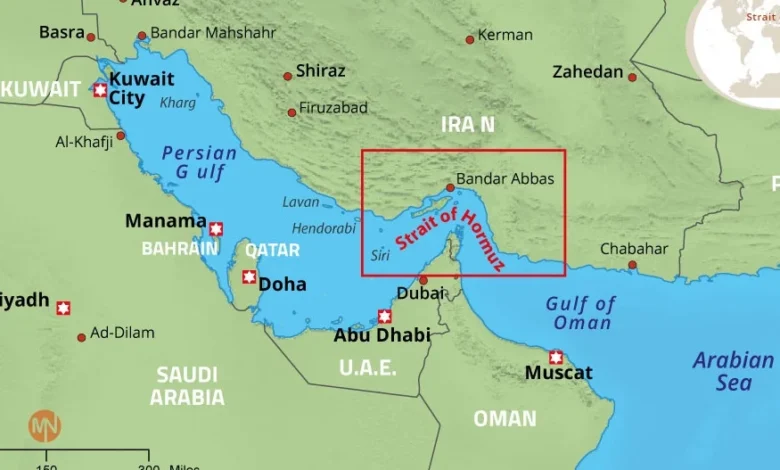
The announcement, delivered by an official IRGC spokesperson on September 9, signals a dramatic tightening of control over vital shipping lanes in the region. According to the statements, any watercraft attempting to transit the newly designated restricted zone will face punitive measures from Tehran. Furthermore, the Iranian military stated it would broadcast exact geographic coordinates to international shipping lines to demarcate the boundaries of the restricted operational area, raising the stakes for commercial vessels operating in the Persian Gulf, the Gulf of Oman, and the Arabian Sea.
Expansion of Maritime Restrictions and Strategic Context
According to reports from the Anadolu Agency, the IRGC’s official decision comes closely on the heels of statements made on September 6 by Mohsen Rezaei, Secretary of Iran’s Supreme National Security Council. Rezaei had previously indicated that Tehran intended to establish a fortified maritime exclusion zone just outside the strategic Strait of Hormuz to counter what it terms hostile Western activities.
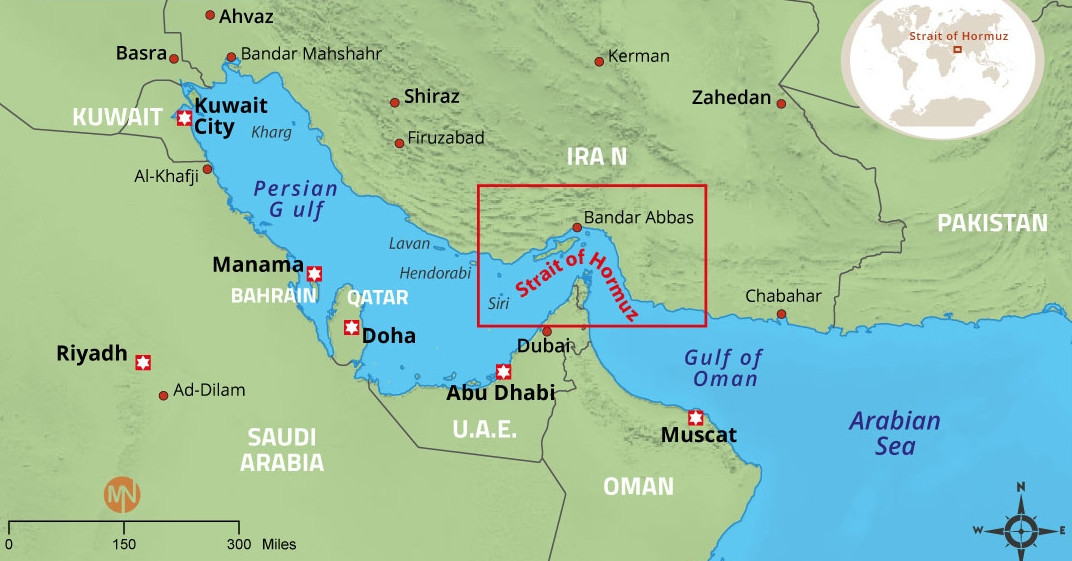
Geographically, the newly declared restricted zone spans extensively from Chabahar along the southeastern coast of Iran across portions of the Gulf of Oman and into the Arabian Sea. Military analysts note that this broad sweep encompasses waters historically vital to international maritime commerce and energy transport. Before the current cycle of escalation, the Strait of Hormuz alone handled approximately one-fifth of the world’s total petroleum consumption, making it the most critical energy transit chokepoint on the planet.
The implementation of these aggressive restrictions effectively creates a contested maritime theater where commercial shipping is increasingly caught in the crossfire of asymmetric geopolitical maneuvering. Insurers have already begun reassessing risk parameters for the region, driving up freight and protection-and-indemnity (P&I) costs for tankers navigating Middle Eastern waters.
Energy Markets React as Brent Crude Crosses the 100 USD Threshold
The intensification of the U.S.-Iran conflict has injected profound volatility into global commodity markets. On September 9, Brent crude futures surged past 100 USD per barrel during trading sessions in Asia, marking an increase of roughly 2.2% to settle at 100.07 USD per barrel—the highest level recorded since July 24.
This dramatic price surge coincides directly with a broader wave of supply disruption fears. In recent weeks, infrastructure connected to regional energy production has faced persistent threats, including targeted attacks attributed to the Houthi movement in Yemen—a group aligned with Iran’s regional network—against energy facilities in Saudi Arabia.
Financial institutions and commodities analysts have been quick to evaluate the long-term economic repercussions of these developments. Experts from Dutch multinational banking and financial services corporation ING noted in a recent market briefing that the recent escalation serves as a stark reminder that a diplomatic resolution to the U.S.-Iran conflict remains distant. "In the meantime, the market will likely continue to price in a substantial and enduring risk premium on crude oil," analysts from the bank stated, emphasizing that supply chain vulnerabilities will persist as long as kinetic military operations continue in the region.
A Timeline of Escalation: From Sea Skirmishes to Missile Exchanges
The sudden jump in oil prices is the direct financial manifestation of an escalating military conflict that has rapidly transitioned from diplomatic friction to active kinetic combat.
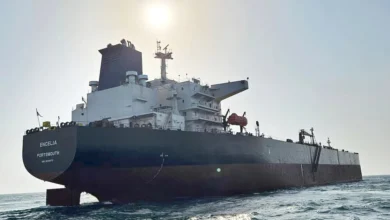
The immediate catalyst for the latest crisis occurred on September 8, when U.S. military forces launched precision strikes targeting five Iranian oil tankers operating near Kharg Island. Washington maintained that the targeted vessels were involved in illicit shipping operations designed to bypass international sanctions and fund regional proxy networks.
Tehran responded with immediate retaliation. Iranian state media and military reports claimed that IRGC forces launched retaliatory strikes against two U.S. naval vessels and eight additional oil tankers in the Persian Gulf and surrounding waters, inflicting what Iranian officials described as "significant material damage."
Prior to these exchanges, the IRGC had issued emergency navigational warnings instructing all shipping crews operating near Bahrain and Kuwait to immediately alter their courses, warning that vessels remaining in the vicinity would be treated as legitimate targets. The kinetic exchange was not limited to the maritime domain. Iranian forces also launched a barrage of tactical ballistic missiles targeting multiple U.S. military installations across the Middle East. Among the targeted locations were facilities in Jordan, where local integrated air defense systems successfully intercepted and destroyed 18 out of 20 incoming projectiles, according to regional military briefings.
Broader Implications for Global Trade and Geopolitics
The ongoing confrontation between Washington and Tehran has fundamentally altered the operational landscape of international trade and maritime security. The United States has progressively tightened restrictions on commercial traffic moving into and out of Iranian ports, deploying naval assets to enforce compliance and interdict vessels suspected of violating sanctions.
Conversely, Iran’s assertion of control over the approaches to the Persian Gulf represents an unprecedented challenge to the principle of freedom of navigation. By dictating terms for passage through international waters and establishing unilateral exclusion zones, Tehran is leveraging its geographical position to impose direct economic costs on nations reliant on Middle Eastern energy imports.
This strategy of tit-for-tat maritime interdiction and kinetic strikes has compounded existing economic pressures worldwide. With central banks already navigating fragile post-pandemic economic recoveries, sustained high energy prices driven by Middle Eastern geopolitical instability threaten to reignite inflationary pressures across both developed and developing economies.
International Reaction and Future Outlook
Diplomatic channels between Washington and Tehran remain severely constricted, with few viable avenues for immediate de-escalation. Major international stakeholders, including European Union signatories to legacy regional security frameworks, have issued repeated calls for restraint, urging both sides to respect international maritime law and protect non-combatant commercial shipping.
However, with military assets heavily deployed on both sides and domestic political pressures in Washington and Tehran discouraging perceived displays of weakness, analysts predict that the maritime theater will remain highly volatile. The establishment of the IRGC’s new exclusion zone ensures that naval confrontations will continue to pose an immediate hazard to global supply chains, cementing a new and precarious normal for international energy logistics in the months ahead.