Refining Postal Law and Logistics: Modernizing Vietnam’s Legal Framework for the Digital Economy

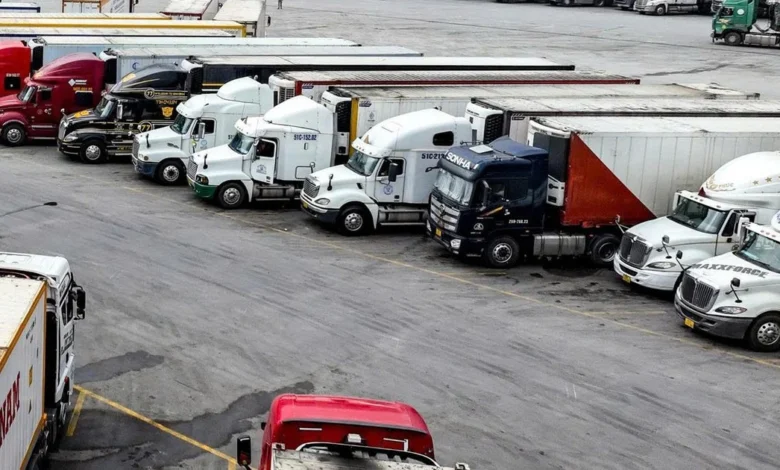
As Vietnam’s e-commerce market expands exponentially, the legal frameworks governing postal services and logistics are undergoing a critical evolution. The draft amended Postal Law is slated for submission to the 16th National Assembly, with review and approval expected during its second session in October 2026, and an intended effective date of July 1, 2027, replacing the aging Postal Law No. 49/2010/QH12. At the heart of this legislative revision lies the pressing need to clearly define the boundaries and intersections of postal operations within an increasingly intertwined relationship with logistics. This dual objective seeks to ensure rigorous state management while carving out adequate space for enterprises to integrate innovative services and invest heavily in advanced technology.
The Paradigm Shift: From Traditional Mail to E-commerce Logistics
The sheer scale of market expansion serves as the clearest testament to the radical transformation of postal services in Vietnam. In 2010, the entire country processed roughly 360 million postal items. By 2025, that figure skyrocketed to approximately 4.1 billion postal items—representing an astounding increase of more than 11 times, with total industry revenue hitting an estimated 87 trillion VND. More significantly, traditional postal correspondence now accounts for less than 10 percent of total volume, whereas parcels and packages comprise over 90 percent.
This massive surge in volume has fundamentally altered the core nature of postal activities. The postal sector is no longer detached from modern commerce; rather, it is inextricably linked with e-commerce, spanning from initial order pickup, sorting, and transportation to final delivery and return processing. Consequently, postal enterprises no longer operate merely as traditional mail couriers. Instead, they function as indispensable cogs in the physical-digital supply chain.
In stark contrast, the Postal Law of 2010 was drafted during an era when the market scale was vastly smaller. Over the past 15 years, numerous innovative business models have emerged, including automated sorting centers, advanced parcel processing warehouses, fulfillment centers, automated pickup points, return-management platforms, and digital ecosystems connecting sellers directly with delivery networks. Grounded in these market realities, policymakers face an urgent mandate to refine the legal framework to keep pace with industry evolution. Clear criteria must be established to distinguish between core postal activities, independent logistics services, and the overlapping grey areas that require transparent management.
Under the provisions of the current draft law, postal services are legally characterized by their operational nature, encompassing acceptance, sorting, transportation, delivery, and direct pre-delivery handlings such as warehousing, order processing, packaging, and returns. Conversely, independent freight transport, general warehousing, and detached logistics services remain distinct categories.
International Benchmarks: Integrating Postal Networks with Logistics
Global experience demonstrates that the convergence of postal services, e-commerce, and logistics is not a phenomenon unique to Vietnam. Developed economies have long recognized the synergy between these sectors and restructured their regulatory models accordingly.
In Japan, Japan Post has successfully evolved from traditional letter and parcel delivery into a comprehensive provider of logistics solutions, overseeing everything from supply chain design and construction to full-scale operations. Notably, Japan Post partnered strategically with Rakuten to construct shared logistics centers and joint delivery networks tailored specifically to support the country’s e-commerce ecosystem.
Singapore has pursued a remarkably similar trajectory. Singapore Post (SingPost) officially defines itself as a provider of e-commerce postal and logistics services, boasting an integrated ecosystem that spans warehousing, fulfillment, last-mile delivery, and international freight forwarding. SingPost’s operational model allows merchandise originating from multiple warehouses to converge at centralized e-commerce logistics hubs, where automated sorting systems streamline distribution to diverse destinations.
The central lesson derived from these international models is not blind replication, but rather a flexible regulatory mindset that refuses to erect rigid barriers between supply chain segments. Governments establish clear responsibilities for individual operational stages while deliberately preserving legal space for enterprises to integrate services and deploy technology investments.
For Vietnam, this integrated approach is paramount during the ongoing refinement of the Postal Law. As e-commerce continues to expand its footprint, every parcel is no longer viewed merely as an isolated piece of mail, but rather as an active data point within a complex supply chain. Activities such as intake, sorting, transportation, delivery, processing, warehousing, packaging, and returns exhibit increasingly tight operational linkages.
Regulatory Evolution: Transitioning from Pre-Audit to Post-Audit
The draft amended Postal Law introduces a strategic pivot from heavy pre-audit inspection mechanisms to robust post-audit enforcement. Concurrently, it establishes comprehensive frameworks for item identification, traceability, and risk-based governance. Under this proposed system, every single parcel will be assigned a unique identification code within corporate networks, enabling seamless, end-to-end tracking from initial acceptance and sorting through to final delivery.
This legislative modernization represents much more than a routine update to specialized legislation enacted 15 years ago. It constitutes a vital opportunity to overhaul the legal architecture for an infrastructure that directly connects the physical delivery mechanisms with the data streams of the digital economy.
In the broader domain of national logistics, Prime Minister Decision No. 2229/QD-TTg, approved on October 9, 2025, formally established the Strategy for Developing Vietnam’s Logistics Services for the 2025–2035 Period, with a Vision to 2050. This national strategy aims to construct a sustainable, highly efficient, quality-driven, and globally competitive logistics sector.
Consequently, reforming the Postal Law must be viewed as a foundational step in redesigning the legal corridor for a highly integrated infrastructure. When e-commerce thrives, an effective legal framework that clearly delineates responsibilities without stifling service integration will empower enterprises to boldly invest in smart warehouses, automation technologies, advanced data analytics, and expansive delivery networks.
Ultimately, this progressive legislative direction enables Vietnam to successfully balance state oversight, postal security, and public safety while unlocking vital societal resources, lowering aggregate logistics costs, and sharply elevating the overall competitiveness of the national economy.