The landscape of men’s football at the 2026 Asian Games (ASIAD) has reached a critical juncture, with Vietnam set to face the perennial powerhouse, South Korea, in the quarter-finals. This high-stakes encounter follows the conclusion of the group stage matches held on September 22, where South Korea secured their position as the winners of Group D, effectively setting up a clash against Vietnam, the top-ranked side from Group C.
The Path to the Quarter-Finals
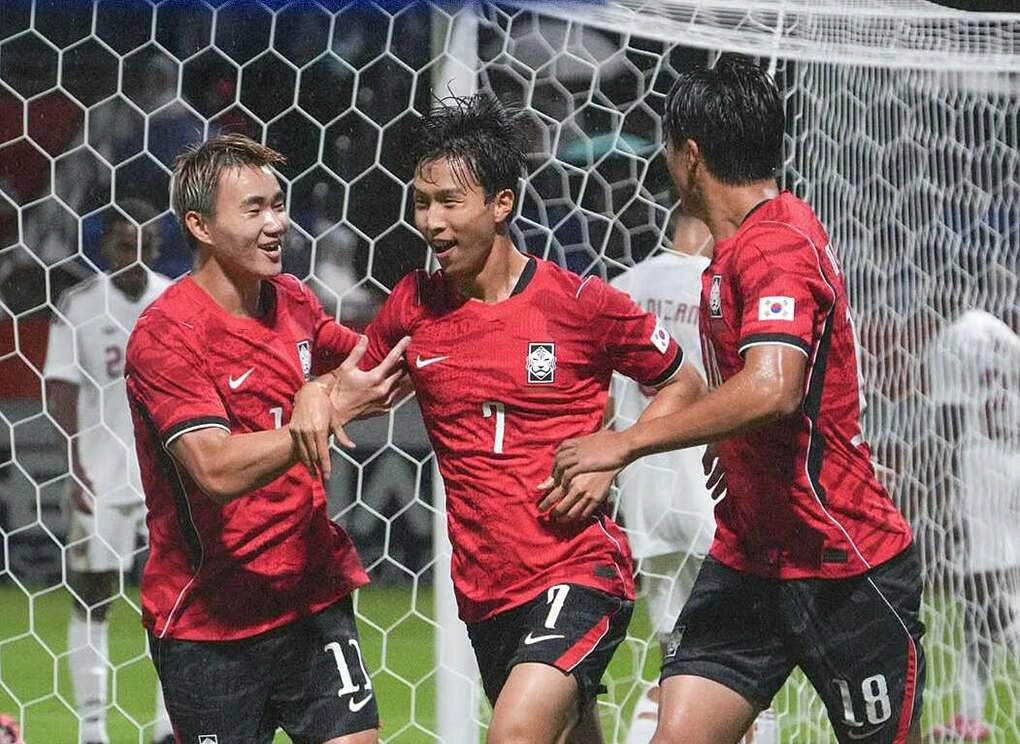
South Korea’s journey to the knockout stage was characterized by clinical efficiency and tactical dominance. On September 22, at the Paloma Mizuho Stadium in Nagoya, Japan, the South Korean squad faced a resilient Saudi Arabian side. Despite a scoreless first half, the deadlock was finally broken in the second period. A flurry of offensive pressure resulted in two goals in quick succession; Shin Min-ha opened the scoring in the 67th minute, followed immediately by a strike from Kim Myeong-jun in the 69th minute. This 2-0 victory cemented South Korea’s standing at the top of Group D with six points, following their earlier 4-1 thrashing of Qatar.
The group dynamics were notably altered by the withdrawal of Iraq, leaving Group D as a three-team contest. Consequently, Saudi Arabia finished in second place with three points, setting them up for a challenging quarter-final fixture against Uzbekistan, while Vietnam emerged as the winners of Group C.
Historical Context: A Rivalry Forged in Competition
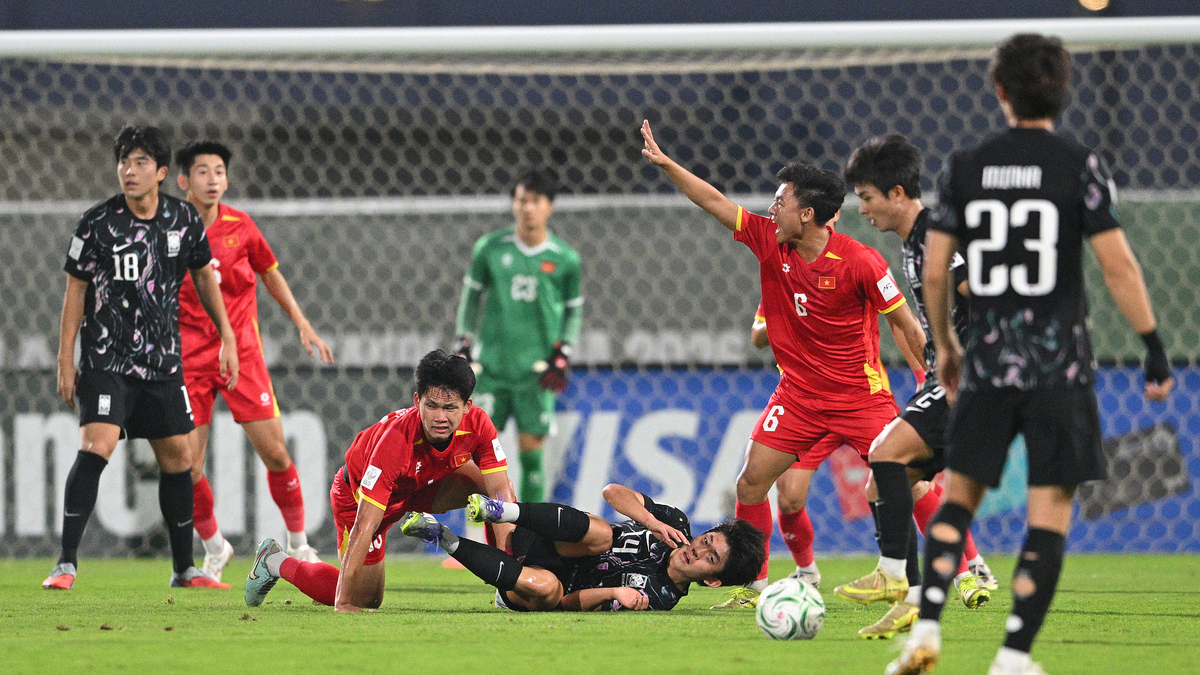
The history between Vietnam and South Korea at the Asian Games is extensive and often one-sided. Records show that South Korea has historically held the upper hand, with significant victories including a 4-0 win in the 1998 group stage, a 2-0 result in 2006, and a 3-1 triumph in the 2018 semi-finals.
The 2018 semi-final encounter remains particularly poignant for Vietnamese football fans. At that time, Vietnam was riding a wave of national euphoria following their U23 Asian Championship success. The team, bolstered by senior overage players such as Nguyen Van Quyet, Nguyen Anh Duc, and Do Hung Dung, fought valiantly against a star-studded South Korean side that included global icons like Son Heung-min, goalkeeper Jo Hyeon-woo, and striker Hwang Ui-jo. South Korea’s dominance in that match was clear, with Lee Seung-woo scoring a brace, though Vietnam managed to net a consolation goal through a well-executed free-kick by Tran Minh Vuong.
The Evolution of the Rivalry
The dynamic between the two nations shifted significantly earlier this year. During the U23 Asian Championship held in Saudi Arabia in January 2026, Vietnam and South Korea squared off in a dramatic match to determine the bronze medalists. Under the leadership of coach Kim Sang-sik, the Vietnamese squad displayed remarkable resilience. Twice they took the lead through goals from Nguyen Quoc Viet and Nguyen Dinh Bac, only to be pegged back by the South Koreans. The match ended in a 2-2 draw after a dramatic equalizer in the seventh minute of injury time—a period during which Vietnam was playing with ten men following an expulsion.
In the ensuing penalty shootout, Vietnam prevailed 7-6, marking a historic first for the nation at the U23 level against South Korean opposition. However, the context of the upcoming quarter-final is drastically different from that January clash.
Current Squad Realities and Tactical Shifts
The current iteration of the Vietnam national team faces a significantly altered landscape. Coach Kim Sang-sik, who masterminded the earlier success, is no longer at the helm, and the squad has undergone a substantial personnel overhaul. Key players who were instrumental in previous campaigns—such as Nguyen Dinh Bac, Nguyen Thai Son, Nguyen Nhat Minh, Khuat Van Khang, Nguyen Hieu Minh, and Tran Trung Kien—are absent from the current roster, leaving a void that the coaching staff is scrambling to fill with younger, less experienced talent.
Conversely, South Korea has aggressively pursued their goal of reclaiming the gold medal. Winning the Asian Games gold is of paramount importance for the South Korean football association, as it grants the players mandatory military service exemptions. To this end, they have overhauled 16 positions, integrating high-quality talent and scouting extensively. Their current squad is built around players born in 2004 or later, targeting both the U23 Asian championship and the 2028 Olympic qualification cycle.
South Korea has also utilized their quota for three players over the age of 23 to bolster their chances. This includes defender Lee Gi-hyuk (born in 2000) of Gangwon FC, alongside European-based stars such as Eom Ji-sung (Swansea City) and Yang Hyun-jun (Celtic). The depth of their talent pool is further underscored by the inclusion of players plying their trade in top European leagues, including Kim Ji-soo (Brentford), Kim Myung-jun (KRC Genk), Lee Young-jun (Grasshopper), Lee Hyun-ju (Arouca), and Yang Min-hyeok (Westerlo).
Analytical Perspective: Implications for the Quarter-Final
The upcoming match represents a stark contrast in preparation and depth. South Korea’s systematic approach to squad building, combined with their reliance on players gaining experience in European football, creates a formidable challenge for a Vietnamese side that is currently in a transitional phase.
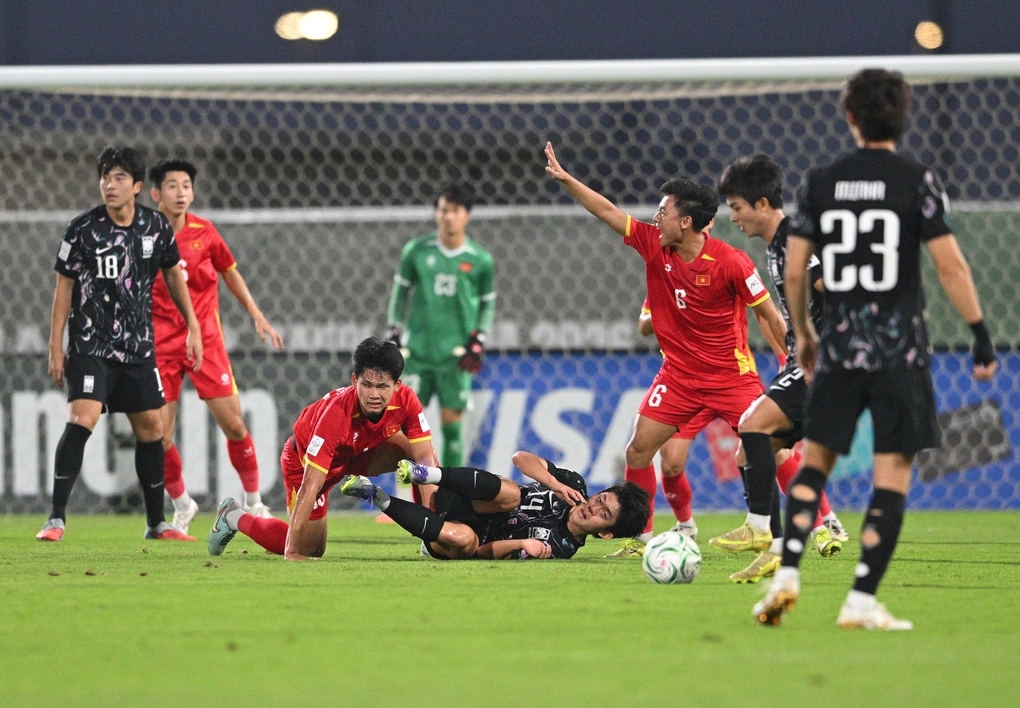
Statistically, South Korea enters the quarter-finals as the heavy favorites. Their offensive production in the group stage—scoring six goals in two matches—demonstrates a high level of tactical discipline and finishing ability. For Vietnam, the challenge will be to maintain defensive structure against a high-pressing South Korean attack that is clearly intent on securing the gold medal.
The absence of key players for Vietnam will likely force the team to adopt a more conservative, counter-attacking strategy. Analysts suggest that Vietnam’s success will depend on the effectiveness of their transition play and the ability of the goalkeeper to withstand sustained pressure. The tactical discipline shown in the January 2026 bronze medal match will be the blueprint for the current team, although replicating that result against a more refined and experienced South Korean squad will be a monumental task.
Broader Impact on Asian Football
The outcome of this quarter-final will carry significant weight beyond the tournament itself. For South Korea, a loss would be a major setback for their youth development trajectory and the fulfillment of military exemptions for their rising stars. For Vietnam, regardless of the result, this match serves as a crucial barometer for their post-transition development. The performance of the younger players against a high-caliber opponent will provide the coaching staff with essential data regarding the team’s readiness for upcoming regional competitions.
As the tournament moves into the knockout stages, the spotlight on the Paloma Mizuho Stadium will be intense. Both teams represent the shifting power dynamics of Asian football—one a consolidated giant seeking to maintain supremacy, the other a team looking to rebuild and reclaim its standing as a formidable regional competitor. The match is not merely a contest for a semi-final berth; it is a testament to the evolving strategies of two nations deeply invested in the growth of their national football programs. As the final whistle blows on September 23 for the remaining group stage matches, the stage will be fully set for what promises to be a definitive match in the 2026 Asian Games calendar.