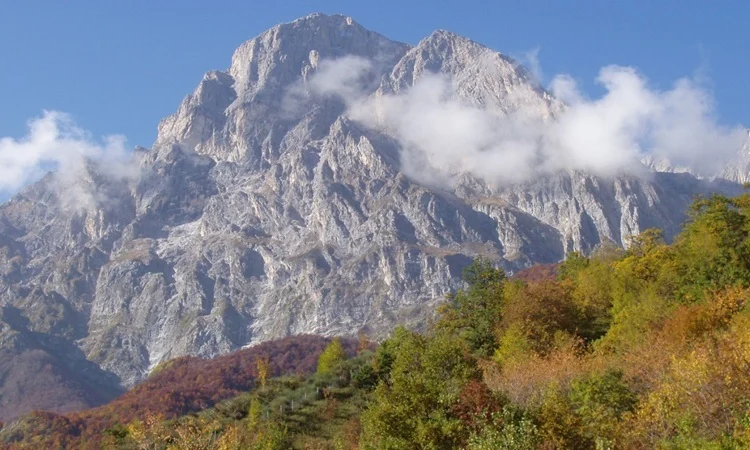
The geological stability of the Italian peninsula, long defined by its dramatic Apennine mountain range, is currently undergoing a fundamental transformation driven by deep-seated tectonic processes. A team of geologists, led by researcher Stefano Tavani from the University of Florence, has identified a sophisticated mechanism known as "slab peeling" occurring deep beneath the surface. This phenomenon, which involves the crust separating and sinking into the mantle, is redefining the seismic landscape of the region and offering scientists a rare, real-time glimpse into the final stages of a subduction cycle.
The Mechanism of Slab Peeling
Geologically, the Mediterranean region represents one of the most complex intersections of tectonic plates on the planet, caught in the convergence zone between the African, Eurasian, and Arabian plates. For roughly 50 million years, the African plate has been moving northward, exerting immense pressure that forced the ancient Tethys oceanic crust to subduct—or sink—beneath the Eurasian plate.
While subduction is a well-documented process, the research published recently in the journal Communications Earth & Environment suggests that the activity beneath the Apennines is not standard subduction, but rather a more localized and aggressive "slab peeling." As the African plate pushes beneath the European crust, the boundary of this subduction zone is shifting. This movement is causing the crust on the European side to stretch and thin, effectively pulling apart and creating two distinct geological blocks: one located to the west near the islands of Corsica and Sardinia, and another developing beneath the Tyrrhenian Sea off the western coast of Italy.
Chronology of Tectonic Evolution
The origins of this geological restructuring are not recent. According to the study, the process began to manifest during the late Miocene epoch, approximately 10 million years ago. What began as a continuous subduction process has transitioned into a fragmented state.
- 50 Million Years Ago: The Tethys oceanic crust began its descent into the mantle as the African plate initiated its northward migration.
- 10 Million Years Ago: The onset of the "slab peeling" process began, marking a transition in how the crust responds to the underlying mantle pressures.
- Present Day: Researchers are observing a "dirty zone"—a specific area where the slab is actively separating. Data indicates that the crust behind this zone is moving at a rate of approximately 4 millimeters per year, while the crust in front experiences tectonic uplift at about 2 millimeters per year.
- Future Projections: Based on the current velocity of these tectonic shifts, scientists estimate that within the next few million years, the crust beneath Italy will likely undergo a total detachment, leading to a complete reconfiguration of the regional crustal plates.
Data-Driven Analysis: The Moho Discontinuity
The research team’s conclusions are not merely theoretical; they are backed by decades of longitudinal data. By integrating high-precision Global Positioning System (GPS) measurements with satellite altimetry, the team mapped the Mohorovičić discontinuity (or "Moho")—the boundary between the Earth’s crust and the mantle.
The analysis revealed a 500-kilometer-long segment of the Moho that has become distorted beneath both the Tyrrhenian and Adriatic regions. The "snagging" or "peeling" effect is most visible here, where the two crustal sections are essentially pulling apart like a zipper. This, according to the researchers, is the primary driver of the seismic activity observed along the 1,200-kilometer Apennine range. The seismic tremors and volcanic activity frequently associated with Italy are the surface-level manifestations of this deep-crustal migration.
Broader Context and Global Implications
The study of the Italian peninsula serves as a vital case study for global plate tectonics. The processes observed beneath Italy are not unique; similar dynamics are currently being studied in other parts of the world, most notably the Hellenic Trench south of Greece.
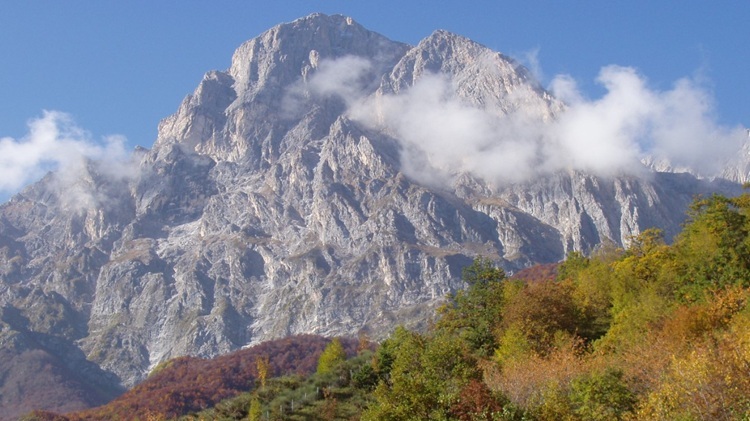
The implications of this discovery are twofold. First, it refines our understanding of how mountain ranges are built and subsequently destroyed. The Apennines, which were once thought to be a static result of standard plate convergence, are now understood to be part of a dynamic, evolving system of crustal thinning and detachment.
Second, this research provides a clearer framework for assessing seismic risk. By identifying the exact mechanisms causing the stress within the crust, seismologists can develop more accurate models for predicting the frequency and intensity of tectonic events in the region. Understanding that the stress is caused by slab peeling rather than traditional subduction allows for a more nuanced approach to disaster mitigation and infrastructure planning in Italy.
Expert Perspectives and Scientific Consensus
The scientific community has lauded the study for its reliance on multi-decade datasets. The integration of GPS data with seismic imaging allows for a level of accuracy that was previously unattainable. Experts in the field note that the "peeling" model effectively explains why certain regions of Italy experience crustal extension (stretching) while others experience compression.
"The discovery of the slab peeling process changes the narrative from one of simple collision to one of complex, multi-stage crustal recycling," noted a reviewer familiar with the research. While the process is slow by human standards, its impact on the long-term geological stability of the Mediterranean is profound. The research group, led by Tavani, emphasizes that this is not an isolated event but a continuous part of the Earth’s natural evolution.
The Future of the Italian Landscape
As the crust continues to peel and eventually detach, the physical geography of the region will inevitably change. While these shifts occur on a geological timescale—meaning there is no immediate threat to the inhabitants of the region—the ongoing tectonic evolution serves as a reminder of the Earth’s constant state of flux.
The study concludes that the "slab peeling" model should be applied to other mountain belts worldwide that exhibit similar seismic signatures. By mapping the Moho discontinuity in other regions, researchers may find that the "zipper effect" observed beneath Italy is a common feature of tectonic plates in the final stages of their life cycle.
For the time being, the Apennines remain a focal point for geoscientists. As the data continues to flow from the monitoring stations across Italy, the global scientific community watches with interest, waiting to see how this deep-earth transformation will continue to shape the surface of the Mediterranean for millions of years to come. The work of Tavani and his colleagues underscores the necessity of continuous monitoring and the importance of viewing geological history not as a set of finished events, but as a series of ongoing, interconnected transformations.