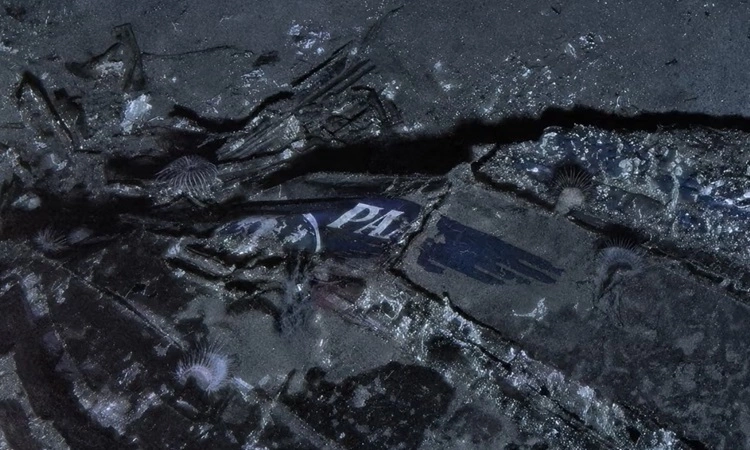
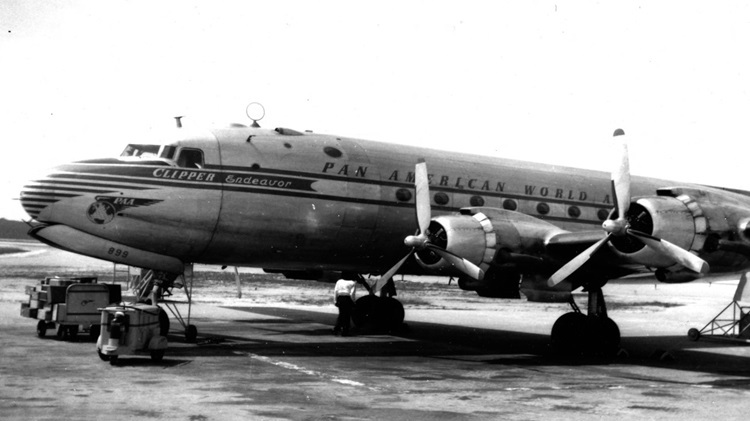
The long-lost wreckage of the Pan Am airliner, the "Clipper Endeavor," which tragically plunged into the Atlantic Ocean 74 years ago, killing 52 people, has been discovered. The find, made by the Air/Sea Heritage Foundation in collaboration with the Discovery Channel’s "Expedition Unknown" program, marks the end of a decades-long search and provides closure for the families of those lost. The incident, which occurred on April 11, 1952, was a significant event in aviation history, prompting critical reviews of safety protocols for long-distance overwater flights and ultimately leading to widespread changes in airline safety regulations.
The discovery was made in the waters off the coast of Puerto Rico, a region that has held the mystery of the Clipper Endeavor’s disappearance for over seven decades. The aircraft, a Douglas DC-4, was en route to New York from San Juan when it vanished shortly after takeoff. The loss of the aircraft and its passengers sent shockwaves through the nascent post-war aviation industry, which was rapidly expanding to connect continents and facilitate global travel.
A Tragedy Unfolding: The Final Moments of Flight 1-14
The ill-fated flight, Pan Am Flight 1-14, departed from San Juan, Puerto Rico, on the evening of April 11, 1952. On board were 64 passengers and 5 crew members, embarking on what was expected to be a routine transatlantic journey. The Douglas DC-4, a workhorse of the era’s air travel, was a familiar sight in the skies. However, mere minutes after lifting off from Isla Grande Airport, the aircraft encountered a catastrophic failure.
According to initial investigations and survivor accounts, the aircraft suffered severe damage to its engines shortly after departure. This forced the pilots to attempt an emergency landing in the ocean. Despite the aircraft being equipped with flotation devices and life vests for every individual onboard, the rapid descent and the unforgiving nature of the sea proved too much. The plane submerged quickly, taking with it the majority of its occupants.
In the immediate aftermath, rescue efforts were launched by the U.S. Navy and the U.S. Coast Guard. These efforts were hampered by the vastness of the ocean and the limited visibility, but they managed to rescue 12 passengers and all 5 crew members. Tragically, the remaining 52 individuals aboard were lost. The incident was a stark reminder of the inherent risks associated with early commercial aviation, particularly over long stretches of water.
The Genesis of the Search: A Personal Quest and a Television Expedition
The quest to find the Clipper Endeavor was not solely an institutional endeavor; it was deeply rooted in personal dedication. Russ Matthews, the president of the Air/Sea Heritage Foundation, was personally motivated by the tragedy. In 2019, Matthews was reportedly inspired by a historical account of the flight’s disappearance, sparking a personal mission to uncover the aircraft’s final resting place. His research led him to delve into Pan Am’s archives and consult with maritime historians, seeking any clues that might pinpoint the crash site.
Matthews’ dedication attracted the attention of the production team behind "Expedition Unknown," a popular television series that chronicles explorations of historical mysteries and uncharted territories. The partnership between the Air/Sea Heritage Foundation and the Discovery Channel provided the necessary resources and expertise to mount a large-scale search operation.
The search effort was further bolstered by the involvement of Deep Sea Vision, a company specializing in advanced underwater exploration. Tony Romeo, the director of Deep Sea Vision, brought cutting-edge sonar technology and submersible equipment to the mission. This advanced technology proved crucial in navigating the challenging underwater environment and sifting through vast expanses of the seabed.
Technological Prowess and a Breakthrough Discovery
The search area was extensive, covering over 34 square kilometers of the Atlantic seabed off Puerto Rico. The team employed sophisticated sonar equipment, capable of penetrating the ocean depths and detecting anomalies on the seafloor. After weeks of systematic surveying, the team’s advanced sonar detected a large object submerged at a depth of approximately 610 meters.
The initial sonar images were promising, showing a distinct shape consistent with an aircraft fuselage. The breakthrough came on June 2, when the team’s survey yielded clear photographic evidence. The images revealed the unmistakable outline of the Clipper Endeavor, remarkably intact despite its decades submerged. Crucially, the iconic blue and orange logo of Pan Am, featuring a globe, was visible on the aircraft’s fuselage, confirming the identity of the lost plane. The visual confirmation brought an immediate sense of closure and historical significance to the discovery.
Reconstructing the Narrative: Aviation Safety and the Legacy of the Clipper Endeavor
The loss of the Clipper Endeavor was not just a tragic accident; it served as a critical inflection point for aviation safety. The subsequent investigation by the U.S. Civil Aeronautics Board (CAB), the predecessor to the Federal Aviation Administration (FAA), identified significant shortcomings in safety protocols for overwater flights.
The CAB’s 1952 accident report highlighted a critical lack of standardized safety procedures for passengers traveling across large bodies of water. This included inadequate pre-flight briefings on emergency procedures, insufficient training for cabin crew in ditching scenarios, and a lack of readily accessible and properly functioning flotation devices. The report recommended a series of stringent measures to enhance passenger safety.
These recommendations were not merely suggestions; they led to a fundamental overhaul of aviation regulations. Key changes implemented following the Clipper Endeavor tragedy and similar incidents included:
- Mandatory Passenger Safety Briefings: Airlines were required to provide comprehensive safety demonstrations before each flight, detailing the use of life vests, emergency exits, and other safety equipment.
- Improved Flotation Devices: The design and distribution of life vests and rafts were standardized and significantly improved. Aircraft operating over water were required to carry sufficient devices for all passengers and crew.
- Enhanced Crew Training: Flight attendants received specialized training in ditching procedures, emergency evacuations, and first aid for water landings.
- Development of Overwater Flight Protocols: Airlines developed specific flight plans and procedures for extended overwater operations, including communication protocols and emergency response strategies.
- Increased Search and Rescue Capabilities: The incident spurred investments in search and rescue technologies and strategies, particularly for maritime aviation disasters.
The implementation of these measures dramatically reduced the fatality rates associated with aviation accidents over water. The legacy of the Clipper Endeavor, therefore, extends beyond the somber discovery of its wreckage; it represents a pivotal moment that reshaped the safety landscape of commercial aviation, saving countless lives in the years that followed.
Immediate Reactions and Future Implications
The discovery of the Clipper Endeavor has been met with profound emotion and a sense of historical significance. For the families of the 52 victims, the find offers a measure of closure and a tangible connection to their lost loved ones. While the wreckage itself cannot bring them back, its discovery provides a definitive end to the decades of uncertainty and unanswered questions.
A spokesperson for the Pan Am Historical Foundation expressed the solemnity of the occasion, stating that the discovery serves as a poignant reminder of the courage of early aviators and the sacrifices made by passengers. The foundation is committed to preserving the memory of those lost and ensuring that the lessons learned from this tragedy are never forgotten.
The discovery also presents new avenues for historical research. The wreckage can provide invaluable data on the structural integrity of aircraft from that era and the specific failure points that led to the crash. This information could further inform modern aviation engineering and safety standards.
Preservation and Remembrance
The Air/Sea Heritage Foundation has indicated that there are no immediate plans for the salvage or removal of the wreckage. Instead, the focus is on ensuring the site’s preservation as a maritime memorial. The foundation is reportedly working with the government of Puerto Rico to designate the area as a protected historical site. This would prevent unauthorized disturbance of the wreckage and allow for respectful remembrance.
The team’s next steps involve a more detailed examination of the wreckage using remotely operated vehicles (ROVs) to document its condition and surroundings. This will provide a comprehensive understanding of the aircraft’s final moments and its resting place. The findings will likely be shared with aviation historians, maritime archaeologists, and the public through documentaries and academic publications.
The discovery of the Pan Am Clipper Endeavor’s wreckage after 74 years is more than just a news event; it is a testament to human perseverance, technological advancement, and the enduring importance of remembering our past. It closes a chapter on a significant aviation tragedy while simultaneously underscoring the vital progress made in ensuring the safety of air travel for generations to come. The silent sentinel at the bottom of the ocean now stands as a powerful monument to the lives lost and the lessons learned, a somber yet essential piece of aviation history finally brought to light.
Related posts: