Vietnam mandates climate resilience rankings for cities to combat urban flooding and extreme weather events

Starting in early 2027, provincial and municipal governments across Vietnam will be required to formally assess and publicly disclose their climate resilience capabilities, marking a significant shift in the nation’s approach to urban planning and environmental disaster management. This initiative, spearheaded by the Ministry of Construction, aims to integrate climate adaptation into the fundamental infrastructure development of the country’s rapidly expanding urban centers.
The new regulatory framework, detailed by Nguyen Cao Vien, Deputy Director of the Urban Development Agency at the Ministry of Construction, during the Vietnam Sustainable Urban Development Forum on November 6, 2026, represents the first national standard for measuring the robustness of urban areas against environmental volatility. By forcing transparency and data-driven planning, the government hopes to curb the escalating economic and social costs of climate-related disasters that have plagued the country in recent years.
The Regulatory Framework and Implementation Timeline
The upcoming circular establishes a comprehensive evaluation system divided into five critical pillars: management policy, essential infrastructure, ecological health, social energy, and financial preparedness. Based on these metrics, cities and provinces will be categorized by their level of resilience—ranging from "optimal" to "poor" or "limited."
The mandate establishes a strict reporting timeline to ensure accountability. Provincial People’s Committees are required to complete their initial assessments and publish their resilience rankings by June 2027. Following the inaugural year, the deadline for annual disclosure will shift to March 31, starting in 2028.
Before this nationwide rollout, the Ministry of Construction piloted these criteria in high-risk regions including Cao Bang, Khanh Hoa, Hai Phong, and Quang Ninh. These areas have been on the front lines of intensifying typhoons and seasonal flooding, providing a practical testbed for the assessment models. The pilot programs demonstrated that when cities are forced to evaluate their specific vulnerabilities, they are better equipped to prioritize infrastructure spending and adjust zoning regulations accordingly.
Contextualizing the Urban Crisis
Vietnam’s urbanization rate has surged over the past two decades, with urban centers now contributing approximately 70% of the nation’s total economic growth. However, this development has come at a steep environmental price. Urban areas currently account for 70% of the country’s energy consumption and are responsible for 75% of national greenhouse gas emissions.
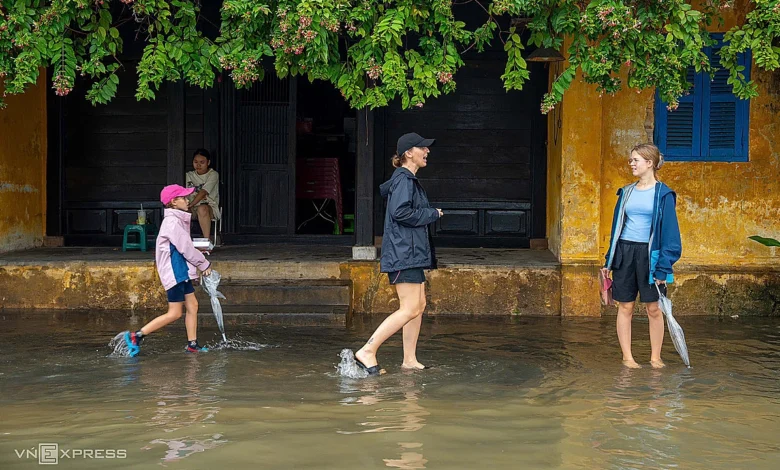
The current infrastructure, in many instances, is failing to cope with the changing climate. Experts have noted that traditional design standards—once considered robust—are now being routinely overwhelmed by record-breaking rainfall and rising sea levels. A notable example occurred last year in the Central Highlands province of Gia Lai, where a newly developed urban area experienced flooding of 1.4 to 2 meters, despite having been built to existing elevation standards.
Nguyen Cao Vien noted that the failure of many urban projects stems from a reliance on "grey" infrastructure—such as concrete drains and walls—without integrating "green" and "blue" solutions. The traditional approach often involves disconnected, piecemeal projects rather than an integrated strategy that incorporates natural water management, such as permeable surfaces, urban forests, and the preservation of natural river corridors.
The Shift Toward "Nature-Based" Resilience
A core component of the new policy is the adoption of the "thuan thien" (nature-based) philosophy. This strategy advocates for the preservation and restoration of natural water bodies to act as buffers during extreme weather events.
International examples are being used to guide local policy. The Bishan-Ang Mo Kio Park in Singapore serves as a blueprint for the Ministry of Construction. By removing a concrete canal and restoring the natural, meandering riverbed, Singapore created a multifunctional space that serves as both a community park and an effective flood-mitigation system. When heavy rainfall occurs, the park acts as a controlled flood zone, preventing water from surging into the surrounding urban infrastructure.
Experts from the French Development Agency (AFD), including specialist Vu Canh Toan, have emphasized that resilience does not mean the total prevention of natural disasters, but rather the ability to anticipate, prepare for, and recover from them. "The fundamental factor is to retain natural spaces, green and blue infrastructure, and design engineering projects that calculate for worst-case scenarios," Toan stated.
Economic and Social Implications
The economic argument for this transition is compelling. According to data from the World Bank, every $1 invested in climate-resilient infrastructure generates a return of $4 in economic and social benefits over the life of the project. Conversely, the "business as usual" approach creates a cycle of destruction and expensive reconstruction that drains provincial budgets and destabilizes local economies.
For local authorities, the ranking system will serve as a diagnostic tool. By identifying specific areas of failure—whether it is a lack of water retention zones or insufficient energy security—governments can move away from reactive, disaster-driven spending toward proactive risk management.
However, the implementation of these standards will likely face hurdles. The transition requires a massive overhaul of existing urban planning departments, many of which lack the technical expertise to model climate scenarios or integrate complex nature-based solutions into traditional construction projects. Furthermore, the financial burden of retrofitting older, high-density districts will be significant.
Looking Toward the Future
The Ministry of Construction’s move to codify resilience is a critical step in aligning Vietnam’s growth with global sustainability trends. As the country continues to face the disproportionate impact of climate change—characterized by increased flood risks, prolonged heatwaves, and erratic weather patterns—the ability to provide a safe living environment for residents will become a key indicator of governance quality.
Moving forward, the public nature of these rankings will likely create a competitive environment among provinces to improve their scores. This competitive pressure could stimulate private sector interest in "green" infrastructure, as companies look to align their projects with the government’s new standards to ensure long-term viability.
While the policy is a bold step, the true measure of success will depend on how effectively provincial leaders translate these rankings into tangible results. As climate risks continue to exceed historical design thresholds, the integration of ecological considerations into the urban core is no longer an optional aesthetic choice, but a requirement for the economic and social survival of Vietnam’s cities. The 2027 deadline acts as both a challenge and an opportunity for the nation to redefine what it means to be a modern, resilient, and livable urban environment in the face of an uncertain climate future.