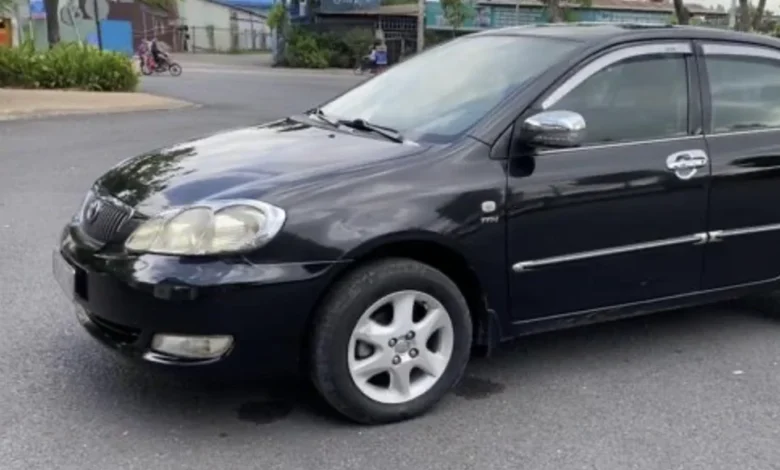
The Toyota Corolla Altis has long anchored its position as one of the most ubiquitous and trusted C-segment sedans in the Vietnamese automotive market. Spanning multiple generations since its local assembly and distribution debut, the model has gained a reputation for mechanical durability, low cost of ownership, and exceptional resale value. Powered predominantly by reliable 1.8-liter and 2.0-liter gasoline engines, the Altis has served everyone from private families and corporate fleets to government agencies. On the open pre-owned market, transaction values fluctuate considerably depending on the specific model year, variant, odometer readings, and overall mechanical condition.
Recent market surveys reveal a wide valuation spread for civilian-owned used models. A standard 2005 Toyota Corolla Altis generally commands between 120 million and 158 million VND, with manual 1.8G MT variants frequently trading around 120 million to 138 million VND. Moving up a generation to the 2010 models, prices adjust upward: the 1.8G MT variants are typically offered at 195 million to 206 million VND, whereas the automatic 1.8G AT versions capture between 255 million and 269 million VND. For the 2013 facelifted models, asking prices start at roughly 260 million VND for manual configurations, climbing to 320 million VND for the 1.8G AT and 350 million to 365 million VND for the top-tier 2.0V variant. Industry experts emphasize that these figures represent asking prices set by private sellers rather than final transaction values, which are typically subject to negotiation.
Parallel to the civilian used car market, a distinct segment of pre-owned vehicles has drawn significant public and media attention: government and institutional asset liquidation. Public agencies, local People’s Committees, and state-owned enterprises regularly auction off aging official fleets, offering budget-conscious buyers an alternative route to vehicle ownership. However, these liquidated units frequently come with complex histories, deferred maintenance, and specific technical disclosures that prospective buyers must carefully evaluate before placing a bid.
Chronology of Recent State Vehicle Liquidations
The liquidation of state-owned administrative vehicles follows a strict regulatory framework governed by public asset management laws. Over recent months, several notable listings involving Toyota Corolla Altis sedans have emerged from various provincial and municipal departments across Vietnam, highlighting the diverse conditions of retired government fleets.
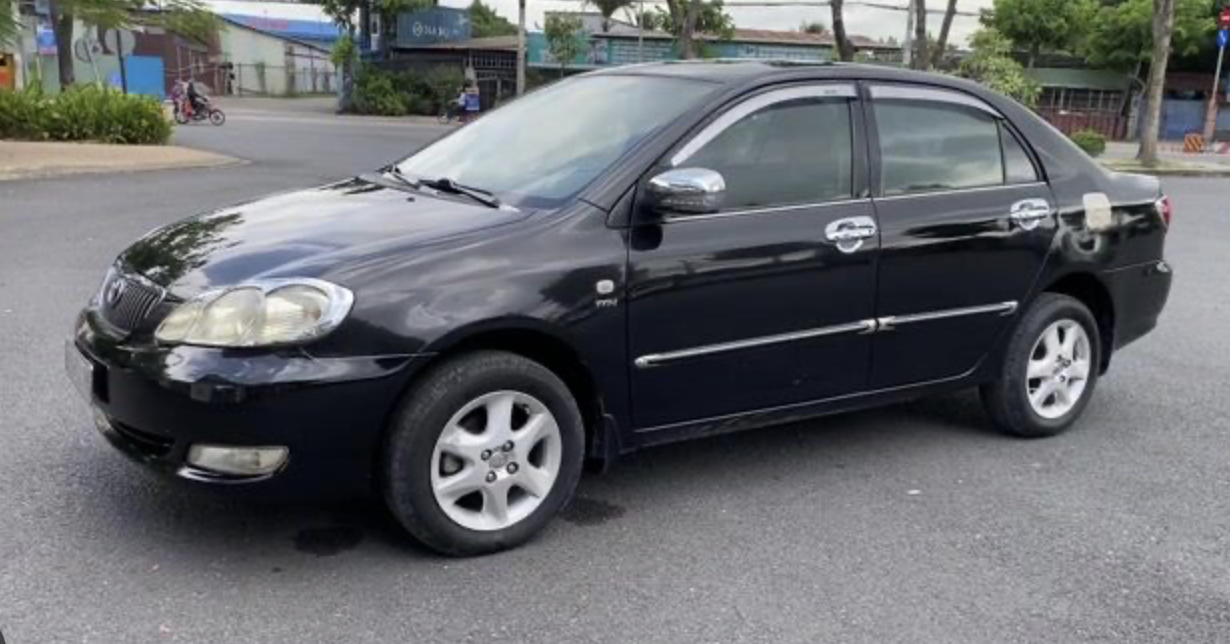
In Cần Thơ, the Office of the People’s Council and the People’s Committee of Mỹ Tú Commune initiated the auction of a local administrative vehicle with a remarkably low starting price of 87 million VND. Registered under the license plate 83D-0323 and managed by the Mỹ Tú Commune People’s Committee, this vehicle is a domestically assembled sedan manufactured in 2005. Factory specifications identify it under model code ZZE122, featuring engine number 1ZZ4413510 and chassis number ZZE1227506108. While its 87 million VND starting price sits well below the open-market valuation for standard 2005 Altis models, the liquidation notice lacks comprehensive details regarding the current health of the engine, transmission, body panels, and exact mileage, leaving potential buyers to shoulder the burden of estimating future reconditioning expenses.
A similarly structured liquidation effort took place in Thanh Hóa Province, where the Vietnam Fatherland Front Committee listed a 2013 Toyota Corolla Altis with a starting price of 111 million VND. According to institutional asset records, the vehicle was manufactured in 2013 and officially entered service in 2016. Over its operational lifespan, the sedan accumulated mileage well beyond standard regulatory thresholds and suffered notable wear and tear. Technical inspections determined that the projected repair and restoration costs would exceed 30% of the vehicle’s original value. Furthermore, the official documents omitted specific details regarding the exact engine displacement and transmission type, necessitating an on-site inspection by prospective bidders.
In Phú Thọ Province, the Vietnam Bank for Agriculture and Rural Development (Agribank), Phú Ninh Branch II, offered a black 2010 Toyota Corolla Altis for liquidation at a starting price of 177 million VND. Bearing the license plate 19A-000.70 and assembled locally, the vehicle carries chassis number 2ZR-X037878 and engine number RL4BC42E-7A5000924.
Detailed technical disclosures for this particular unit revealed substantial mechanical wear across critical assemblies. Inspection reports noted deterioration in vital components, including cylinder head gaskets, cylinder blocks, pistons, piston rings, connecting rods, engine cylinder heads, main and connecting rod bearings, the steering rack, tires, and the battery. Because these components form the core of the engine, steering system, and mechanical mobility, the vehicle requires an extensive overhaul. Although the 2010 Altis lineup was originally delivered with robust 1.8L and 2.0L powerplants, the liquidation dossier did not specify which exact engine variant this specific unit possesses.
In contrast to the heavily worn vehicles in Phú Thọ and Thanh Hóa, the Party Committee Office of Bắc Ninh Hòa Commune in Khánh Hòa Province listed a Toyota Corolla with a starting price of 130 million VND that exhibited far more stable mechanical integrity. Bearing the license plate 79A-005.66 and boasting an odometer reading of 151,060 kilometers, this vehicle underwent rigorous diagnostic checks before being put up for auction.
Technical Diagnostics and Mechanical Evaluations
Evaluating a retired government vehicle requires a thorough understanding of automotive engineering, structural integrity, and long-term wear patterns. The inspection reports associated with these state liquidations offer valuable insights into how C-segment sedans age under intensive municipal and institutional use.
For the Bắc Ninh Hòa Commune vehicle, technical evaluations confirmed that the body shell and chassis frame remained in relatively good condition. The exterior showed minimal scratching, and the overall frame structure displayed no signs of major structural compromise or structural repair from severe accidents. The engine operated smoothly, lacking the distinctive metallic knocking sounds associated with piston-slap or connecting rod failure, and showed no active oil leaks.
Furthermore, the transmission shifted smoothly through its gears, and the power steering system maintained adequate fluid pressure and assistance. Both the front and rear suspension systems continued to fulfill their damping, load-bearing, and handling responsibilities, though independent evaluators rated these components at a modest, average level of performance. Inside the cabin, the interior trim remained reasonably well-preserved, and the electrical lighting systems were fully functional. The wheels received average marks, with tire tread wear estimated at approximately one-third compared to a brand-new set. With a starting price of 130 million VND, this unit presents an appealing benchmark that undercuts several private-market 2005 listings, though buyers must verify the exact manufacturing year and trim level to ensure an accurate apples-to-apples comparison.
Conversely, vehicles like the Agribank liquidation unit in Phú Thọ illustrate the financial risks associated with deferred fleet maintenance. When a vehicle undergoes heavy utilization without timely replacement of rubber seals, internal engine components, and steering linkages, cumulative wear can transform a reliable Japanese sedan into a money pit. Replacing a complete set of internal engine components—ranging from pistons and rings to bearings and cylinder heads—requires specialized labor and costly OEM or aftermarket parts. Consequently, a seemingly attractive initial purchase price of 177 million VND can easily escalate once comprehensive mechanical rehabilitation is factored into the total cost of ownership.
Economic Implications and Strategic Advice for Used Car Buyers
The influx of liquidated government vehicles into the secondary market provides unique opportunities for budget-conscious motorists, but it also underscores the necessity of rigorous due diligence. For buyers navigating Vietnam’s sub-500 million VND used car market, understanding the trade-offs between civilian-owned pre-owned vehicles and state-liquidated assets is critical.
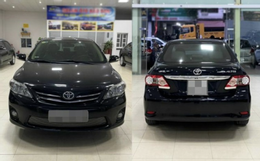
Civilian-owned Toyota Corolla Altis models generally offer greater transparency regarding maintenance history, as private owners are more likely to maintain service booklets and address minor mechanical issues promptly. The widespread availability of spare parts—both genuine and third-party—ensures that maintenance remains affordable, a primary reason for the model’s enduring popularity among first-time car buyers and ride-hailing operators.
However, older vehicles inevitably suffer from age-related degradation of rubber components, suspension bushings, and cooling systems, regardless of whether they were privately owned or operated by a state agency. For liquidated assets, prospective buyers face additional administrative and technical hurdles. State auctions require thorough examination of asset dossiers, legal clear titles, verification of outstanding fees, and precise assessments of technical conditions.
Financial analysts advise that when participating in public asset auctions, bidders must calculate the "total cost of acquisition," which encompasses the winning bid price, transfer taxes, registration updates, mandatory inspections, and the immediate cost of mechanical overhauls. In cases where repair estimates exceed a significant fraction of the vehicle’s residual value—such as the Thanh Hóa listing where projected repairs surpassed 30% of the baseline value—the financial viability of the purchase diminishes rapidly.
Ultimately, while the Toyota Corolla Altis remains a benchmark of reliability and enduring engineering in Vietnam, purchasing an aging unit—particularly one sourced from government fleet liquidations—demands professional mechanical inspection, meticulous legal verification, and a clear financial strategy. Buyers are encouraged to weigh the upfront savings against potential restoration liabilities to ensure that their investment aligns with their long-term transportation needs and budgetary limits.