Thailand has officially approved a significant policy shift that will see the excise tax on completely built-up (CBU) imported electric vehicles jump from the current 10% to 35% starting January 1, 2027. This major regulatory update applies directly to both battery electric vehicles (BEVs) and range-extended electric vehicles (REEVs). Specifically, the excise tax for imported BEVs will surge from 10% to 35%, while the rate for REEVs will climb from 15% to 35%.
According to statements from the Thai Ministry of Finance, the primary target of this aggressive tax adjustment is imported models that lack local manufacturing operations and fail to utilize domestic automotive components. The policy pivot represents a strategic evolution in Thailand’s automotive industrial master plan. Rather than continuing to position the nation purely as a lucrative consumer market for foreign finished goods, the government is aggressively pivoting toward cultivating robust local manufacturing ecosystems, deep supply chain development, and high-value domestic job creation.
Leveling the Playing Field for Local Investors
The Ministry of Finance, led by high-ranking officials including Ekniti Nitithanprapas, emphasized that the restructuring of the excise tax regime is designed to foster a fairer competitive landscape. Over recent years, numerous global automotive manufacturers—predominantly from China—have poured substantial capital into Thailand to construct state-of-the-art assembly plants, hire local engineering talent, and build intricate local parts-supplier networks.
By raising the tax floor on completely imported vehicles, the Thai government ensures that automakers who committed heavy capital investments to build local factories retain a viable, long-term competitive advantage. Conversely, brands that choose to bypass local manufacturing infrastructure and rely entirely on importation will face significantly compressed profit margins.
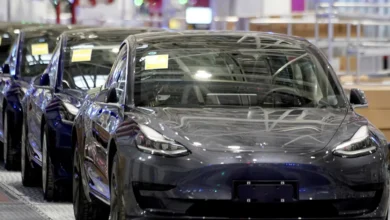
Industry analysts estimate that the incoming tax hike could elevate the retail prices of certain imported electric vehicles by up to 10%. However, the exact magnitude of the consumer price adjustment will ultimately depend on individual corporate pricing strategies, profit-margin absorptive capacities, and localized supply chain efficiencies. Premium international brands that currently possess zero production footprints in Thailand—such as Tesla, Volvo, Porsche, and Audi—are expected to absorb the heaviest competitive pressure once the policy takes effect. Meanwhile, established localized assemblers will enjoy enhanced cost flexibility.
The Evolution of Thailand’s EV Incentives: A Chronological Overview
To understand the weight of the 2027 tax hike, it is essential to examine the systematic evolution of Thailand’s electric vehicle promotion policies over the past several years. Known historically as the Detroit of Asia due to its decades-long dominance as an internal combustion engine (ICE) manufacturing hub dominated by Japanese giants like Toyota, Honda, Isuzu, Mitsubishi, and Mazda, Thailand recognized the global automotive paradigm shift toward electrification early on.
-
Phase 1: Market Stimulation (EV 3.0 and EV 3.5 Programs)
To spark domestic consumer interest and establish an initial EV user base, the Thai government rolled out aggressive subsidy and tax-incentive packages known as EV 3.0 and EV 3.5. These frameworks offered substantial cash subsidies to buyers of electric vehicles alongside temporary reductions in import duties and excise taxes.These generous incentives successfully drew a massive wave of foreign investment, particularly from aggressive Chinese automakers such as BYD and Great Wall Motor (GWM), which rushed to establish a beachhead in the Southeast Asian market.
-
Phase 2: The Imbalance of Import Dominance
While the early incentive programs successfully accelerated consumer adoption, they inadvertently created an import-heavy market structure. Data from the Electric Vehicle Association of Thailand (EVAT) reveals a striking imbalance: between January and September 2026, total EV sales reached approximately 190,000 units. Of that figure, completely imported vehicles accounted for a staggering 70% of the market, while locally manufactured units comprised only 30%.With seven operational EV manufacturing plants currently active within its borders, Thailand realized that relying heavily on foreign imports threatened the long-term viability of its domestic industrial base.
-
Phase 3: The 2027 Correction and Localization Mandates
Recognizing the urgent need to protect national industrial interests, the Thai cabinet legislated the 2027 tax increase. The government’s long-term vision requires foreign automakers to transition from mere sales distribution to localized production. Under the continuing preferential framework, electric vehicles manufactured directly within Thailand remain eligible for a remarkably low excise tax rate of just 2%. This creates a massive 33-percentage-point differential between locally built EVs and imported CBU models, strongly incentivizing foreign brands to localize their supply chains.
Corporate Responses and Market Realignment
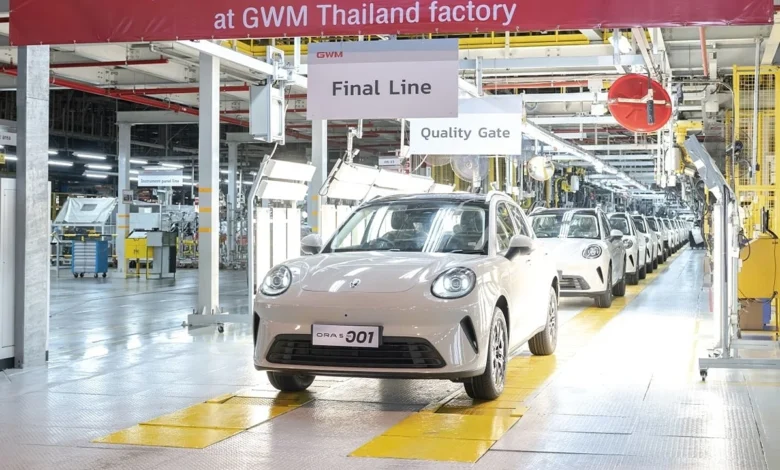
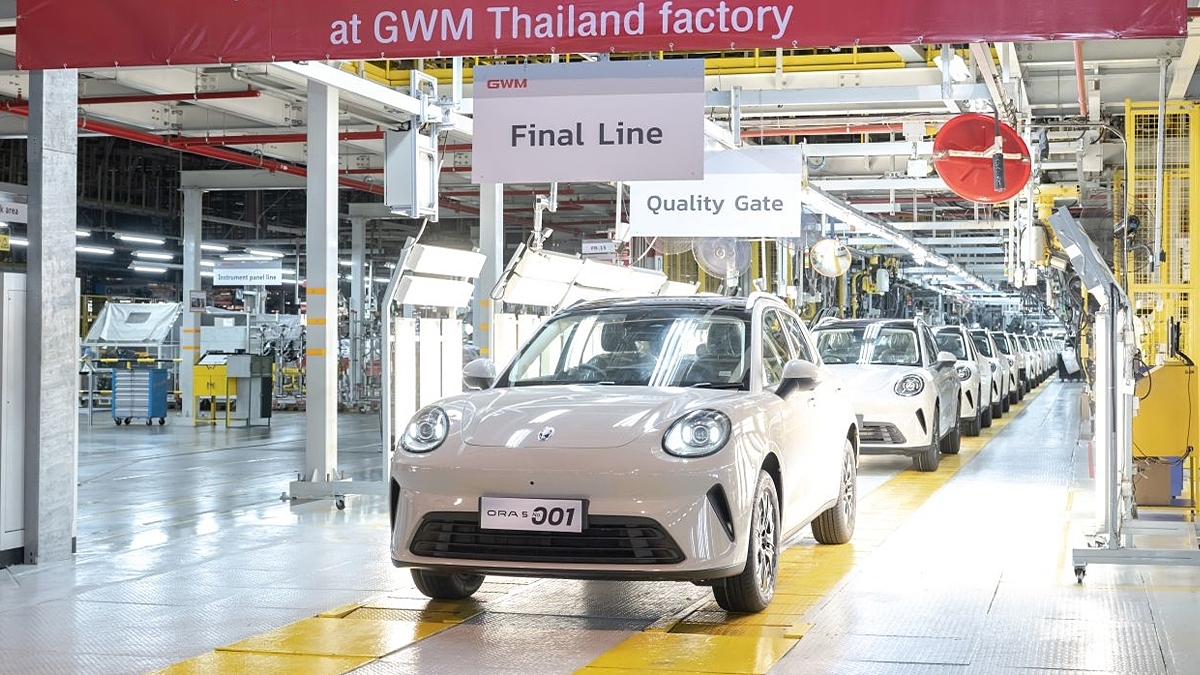
The impending regulatory tightening has already triggered strategic reassessments across the regional automotive sector. While early entrants like BYD and GWM have already completed or initiated local assembly operations—with GWM, for instance, rolling out advanced models like the Ora 5 from its Thai assembly lines—other major players are actively evaluating their options.
Emerging Chinese brands such as Dongfeng, Leapmotor, and XPeng are currently conducting feasibility studies regarding the establishment of dedicated manufacturing and assembly plants within Thailand to sidestep the looming 35% tax penalty.
Executives from leading Chinese automotive firms operating in the country have noted that while the tax increase will challenge pure import business models, it provides absolute clarity for brands willing to integrate into the Thai supply chain. Automakers that localize battery production, local component sourcing, and vehicle assembly will not only maintain price competitiveness in Thailand but will also leverage the country as an ideal export hub for the broader Association of Southeast Asian Nations (ASEAN) economic community.
Broader Economic Implications and Regional Dominance
Thailand’s strategic policy maneuver carries profound implications for the broader regional economy. As countries across Southeast Asia—including Indonesia, Vietnam, and Malaysia—vie to become the premier hub for green technology and electric vehicle manufacturing, Thailand is leveraging its deeply entrenched automotive manufacturing ecosystem to stay ahead of the curve.
By tightening import laws, Thailand is systematically upgrading its value-chain participation. Instead of acting as a passive terminal market where international brands offload finished products, the Thai government is ensuring that the green energy transition directly translates into high-skilled employment, technology transfer, and sustainable gross domestic product (GDP) growth.
Ultimately, the 2027 excise tax hike marks the maturation of Thailand’s electric vehicle strategy. By closing the door on unrestricted vehicle imports while keeping wide open the gateway for localized manufacturing investment, the nation is successfully safeguarding its legacy as the undisputed automotive capital of Southeast Asia while forcefully steering its future into the electric age.
Related posts: