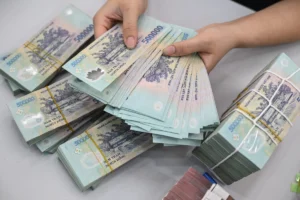
Dai Quang Minh Investment Corporation, a core subsidiary specializing in real estate within the Thaco Group ecosystem, has reported a significant financial resurgence for the first half of the year. The company recorded a profit of 1,043 billion VND, a six-fold increase compared to the same period in the previous year, signaling a robust recovery in the domestic property sector and reflecting the strategic realignment of its parent conglomerate.
Financial Performance and Market Rebound
According to the latest financial statement submitted to the Hanoi Stock Exchange (HNX), Dai Quang Minh’s performance has surpassed market expectations. For the first six months of the year, the company achieved a pre-tax profit exceeding 1,500 billion VND, representing an eight-fold increase compared to the same period in 2025. This surge in profitability highlights the company’s improved operational efficiency and its ability to monetize long-standing real estate assets.
Key profitability metrics have demonstrated marked improvement. The return on total assets (ROA) reached 1.06%, a significant jump from the sub-0.3% levels recorded during the first half of the previous year. Similarly, the return on equity (ROE) rose from 0.73% to 2.21%. These indicators suggest that the company is successfully transitioning from a period of heavy capital expenditure to one of sustained revenue generation.
As of the end of June, the company reported undistributed profits of approximately 8,500 billion VND. This figure includes a record-breaking profit of nearly 4,070 billion VND recognized during the previous fiscal year, which acts as a substantial buffer for future investment cycles.
Debt Structure and Capital Management
Despite the impressive profit growth, Dai Quang Minh maintains a significant liability profile, with total debt reaching over 51,580 billion VND. This debt structure is primarily composed of approximately 20,000 billion VND in bank loans and 1,500 billion VND in corporate bonds.
Analysts suggest that this leverage is consistent with the company’s ambitious capital-intensive projects, which require significant upfront liquidity. To support these operations, the company has undergone a period of "high-speed" capital injection throughout the year, with its charter capital increasing from 18,200 billion VND to 36,895 billion VND. This rapid expansion in capital base is widely interpreted as a strategic preparation for upcoming large-scale infrastructure and urban development projects, particularly those involving public-private partnerships (PPP) and regional connectivity.
Historical Context and Strategic Role in Thaco
Established in 2011, Dai Quang Minh has evolved into a vital pillar of the Thaco Group, acting as the primary vehicle for the group’s expansion into urban infrastructure, industrial zones, and high-end residential real estate. The company’s portfolio is diverse, spanning road infrastructure, maritime port construction, and integrated urban townships.
The ownership structure of Dai Quang Minh remains tightly linked to the leadership of Thaco. Thaco Group holds a 77.5% stake in the entity, while the family of Mr. Tran Ba Duong, Chairman of the Board of Directors of Thaco, retains the remaining 22.5%. Mr. Duong served as the legal representative of the company for a long period before transitioning these responsibilities to Mr. Tran Dang Khoa in early January of this year, a move that observers view as a professionalization of management as the company scales its operations.

Major Projects and Urban Development
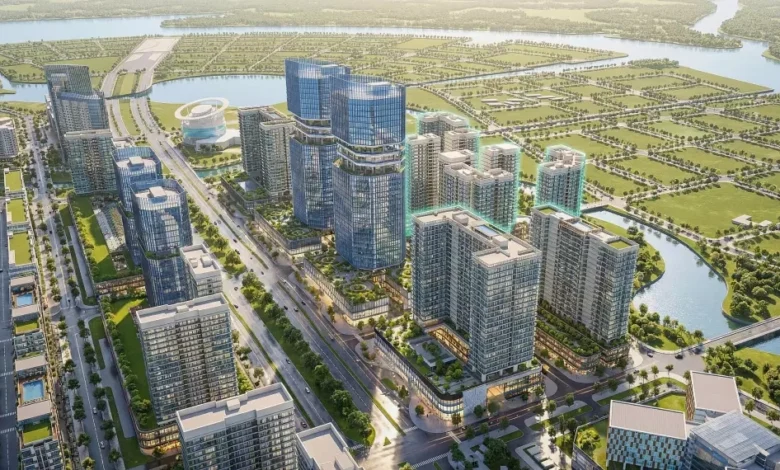
The company’s growth is currently underpinned by several high-profile projects that are crucial to the urban landscape of Ho Chi Minh City. Notably, the company has resumed development on a residential component within the Sala Urban Area—a flagship project that had been stalled for approximately eight years.
Furthermore, in a strategic move earlier this month, the Ho Chi Minh City People’s Committee allocated four land plots totaling 4.3 hectares in the Thu Thiem New Urban Area to Dai Quang Minh. This land allocation serves as payment for the company’s completion of the Ba Son Bridge project under a Build-Transfer (BT) contract. These land plots are zoned for mixed-use developments, including high-rise residential complexes and international-standard medical facilities, which are expected to generate significant long-term value.
Looking ahead, the company has set an ambitious agenda under the guidance of Mr. Tran Ba Duong. Plans for the current year include the commencement of 42 new projects and the finalization of 12 existing ones. The company has set a target revenue of 12,000 billion VND and plans to disburse over 21,000 billion VND in investment capital. These projects are closely linked to the broader development of Ho Chi Minh City, including the landscape enhancement of the Saigon River and the infrastructure connectivity projects connecting the city center to the Long Thanh International Airport.
Market Analysis and Future Implications
The financial turnaround of Dai Quang Minh is symptomatic of a broader trend in the Vietnamese real estate market, where developers with strong capital backing and clear government-supported infrastructure projects are beginning to see the fruits of long-term investments.
The successful completion of the BT project involving the Ba Son Bridge serves as a case study for the effectiveness of public-private cooperation in urban development. By exchanging infrastructure delivery for land, the company has secured prime real estate assets that position it well for future urban densification.
However, the high debt-to-equity ratio remains a point of focus for investors and creditors. While the company has shown a strong ability to generate profits, its long-term stability will depend on its ability to maintain project timelines and effectively manage interest rate risks associated with its bank loans. The aggressive capital increase suggests that the company is confident in its pipeline, but it also reflects the intense pressure to deliver high-yield returns to maintain its credit standing.
Conclusion
Dai Quang Minh stands at a critical juncture. With the backing of Thaco Group and a clear, government-aligned pipeline of infrastructure and urban projects, the company is well-positioned to remain a major player in the Southern real estate market. The shift in leadership earlier this year, combined with a focus on clearing project bottlenecks, indicates a shift toward operational maturity. As the company moves to execute its 42-project goal for the year, the market will be watching closely to see if the recent financial gains can be sustained in the face of evolving macroeconomic conditions and shifting regulatory landscapes in the real estate sector.
The company’s ability to balance its significant debt obligations with the capital-intensive nature of its infrastructure development will be the defining factor in its success over the next five years. For now, the strong half-year performance serves as a testament to the resilience of its business model and the continued demand for high-quality urban development in Vietnam’s economic hubs.