The upcoming APEC summit in Shenzhen, China, scheduled for November 18–19, 2026, has become the center of intense geopolitical and corporate scrutiny. While high-profile figures such as Tesla and SpaceX CEO Elon Musk and Mastercard CEO Michael Miebach are confirmed to accompany U.S. President Donald Trump, the attendance of NVIDIA CEO Jensen Huang remains shrouded in uncertainty. This potential delegation comes at a time when Huang is embroiled in a sensitive internal investigation regarding his personal conduct and alleged associations with a Chinese national, leading to significant volatility in NVIDIA’s market valuation.
The Context of the APEC Delegation
The APEC (Asia-Pacific Economic Cooperation) summit serves as a premier venue for dialogue between world leaders and top-tier business executives. For President Trump, the trip to Shenzhen is a strategic move to address ongoing economic tensions and foster diplomatic ties. The inclusion of figures like Elon Musk in the official delegation underscores a focus on technological innovation, energy policy, and financial infrastructure.
However, the spotlight has shifted toward the viability of Jensen Huang’s participation. Given that the U.S. government maintains strict export controls on advanced artificial intelligence chips—specifically the Blackwell series—to China, the optics of a prominent American chip-industry leader traveling to the host country while facing an internal probe are highly delicate. Observers note that the pressure from U.S. congressional committees, particularly those controlled by the Republican party, has created a significant hurdle for Huang’s travel itinerary.
Chronology of the Controversy
The situation escalated rapidly in early November 2026. The timeline of events is as follows:
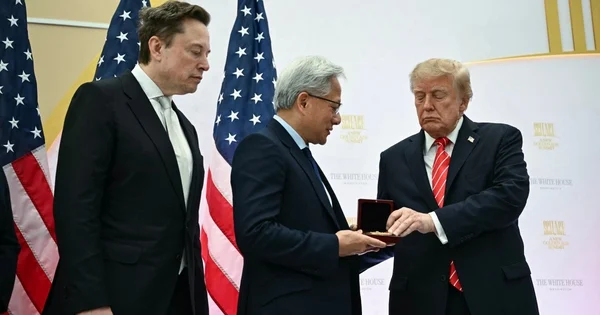
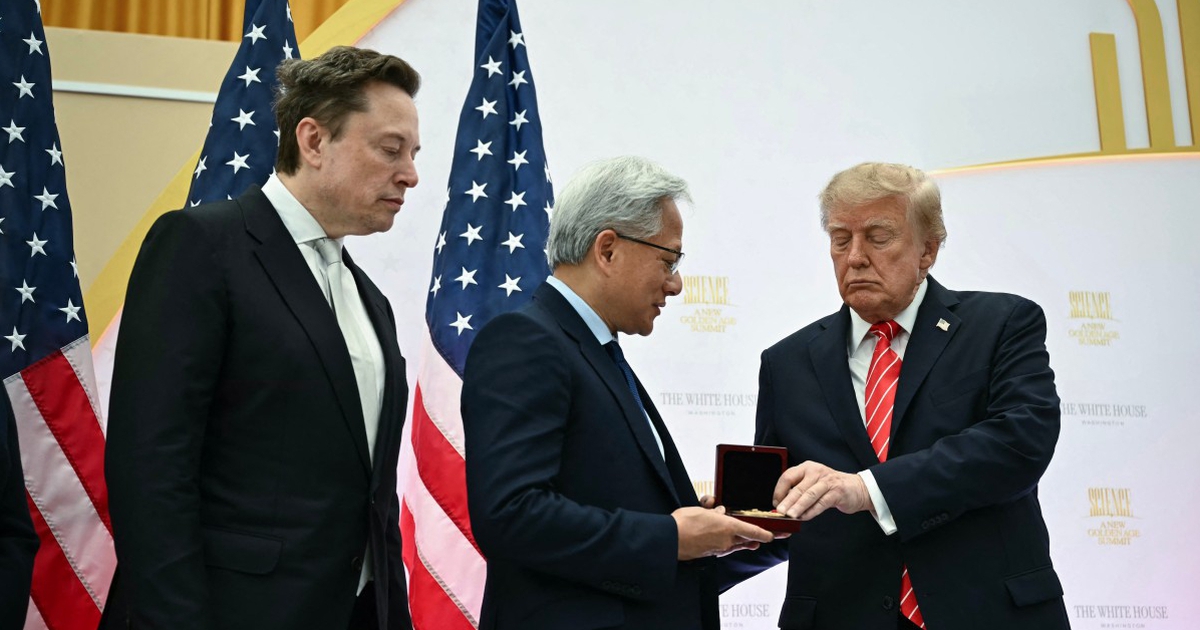
- October 8, 2026: President Trump honored Jensen Huang with a national medal for technology and innovation in Washington, D.C., an event witnessed by Elon Musk.
- Early November 2026: Reports surfaced regarding a personal relationship between Huang and a Chinese business executive, who was allegedly under the radar of foreign intelligence services.
- November 8, 2026: Jensen Huang issued a public statement, acknowledging personal misconduct but declining to provide specific details regarding the nature of the relationship.
- November 9, 2026: NVIDIA’s Board of Directors officially launched an internal investigation into the matter. Simultaneously, NVIDIA shares experienced a sharp decline of over 4% in trading.
- November 9, 2026: The Chinese Ministry of Foreign Affairs, through spokesperson Qu Guixian, dismissed all allegations of intelligence activity as "completely baseless."
- November 10, 2026: President Trump signaled his support for the executive, stating he had spoken directly with Huang and accepted his explanation that he was unaware of the individual’s alleged intelligence background.
Congressional Pressure and Legislative Oversight
The U.S. House of Representatives has taken an active interest in the matter. Three prominent committee leaders have requested that Jensen Huang attend a closed-door meeting on November 18 to clarify his interactions and assess potential risks to national security. Whether Huang will comply with this request remains unclear, as he must balance his corporate responsibilities with the legal and political expectations of the U.S. government.
President Trump has maintained a stance of cautious support. During recent press briefings, the President referred to Huang as a "highly respected" figure and noted that the FBI is currently investigating the claims to ensure all allegations are vetted. By keeping the door open for an exoneration, the White House is signaling that it does not wish to alienate a key player in the American semiconductor industry, even amidst the backdrop of a sensitive intelligence probe.
Market Implications and Corporate Governance
NVIDIA’s stock performance is highly sensitive to geopolitical developments. As the dominant supplier of AI-ready hardware, the company is at the epicenter of the U.S.-China technology competition. The current investigation has forced investors to reconsider the risks associated with key-man dependency.
If the internal probe finds that Huang’s associations violated corporate compliance protocols or federal regulations, it could lead to significant leadership restructuring at NVIDIA. Investors are wary of the potential for restricted access to the Chinese market—a market that has already been subject to various export restrictions on Blackwell-series GPUs. The uncertainty surrounding Huang’s ability to represent the company during the APEC summit serves as a proxy for the broader instability currently facing the U.S. tech sector in its dealings with China.
Geopolitical Strains and the APEC Summit
The APEC summit is intended to be a platform for the third meeting between President Trump and President Xi Jinping since the beginning of the year. The meeting is expected to cover a wide range of issues, including AI regulation, trade tariffs, and regional security.
When asked by reporters whether the issue surrounding Huang would be raised with President Xi, President Trump stated that he had no immediate intention to bring it up, though he acknowledged that the Chinese side is free to introduce the topic if they choose. This measured approach suggests that the White House is prioritizing broader bilateral stability over the specific, localized scandal involving the NVIDIA CEO.
Meanwhile, the CEO summit, which typically runs in parallel with the main APEC event, is seeing a decrease in enthusiasm from some American business leaders. Concerns over logistical challenges, scheduling conflicts, and the unpredictable nature of the outcomes of the summit have led to a "wait-and-see" approach among many in the C-suite.
Analysis of the Broader Impact
The intersection of the NVIDIA internal probe and the presidential delegation to China highlights the fragile ecosystem of modern corporate diplomacy. In an era where technological dominance is synonymous with national security, the private lives and personal associations of high-level executives are no longer private matters.
The scrutiny on Huang is part of a larger trend of "extreme vetting" for corporate leaders who interact with high-risk geopolitical environments. As the U.S. continues to tighten its grip on critical technologies like AI, the scrutiny of executives’ ties to foreign nationals—regardless of their intentions—will likely increase.
Furthermore, the dismissal of the claims by the Chinese government as "baseless" serves to underscore the difficulty of verifying intelligence-related allegations in an era of heightened distrust. As the November 18 meeting date approaches, all eyes remain on whether the NVIDIA CEO will choose to face the congressional committees, travel with the presidential delegation, or opt for a period of withdrawal to mitigate further reputational damage to his company.
For now, the situation remains fluid. The combination of legislative demands, internal corporate governance, and the high stakes of international diplomacy at APEC means that the resolution of this incident will likely set a precedent for how American executives navigate the complex, often conflicting, pressures of global business in the late 2020s. Whether Huang emerges from this as a symbol of resilience or as a casualty of the evolving U.S.-China technological cold war remains to be seen.
Related posts: