Ho Chi Minh City Speeds Up Regional Economic Integration with Southeastern and Mekong Delta Provinces through Strategic Investment Hubs


Ho Chi Minh City hosted a high-level conference on September 17 to advance investment connectivity, inter-provincial cooperation, and shared regional development with neighboring localities across the Southeastern and Mekong Delta regions. Drawing over 300 delegates, including municipal leaders, department directors, economic experts, and prominent business executives, the gathering marked a decisive shift from traditional, administrative-bound local development models toward an integrated, macro-regional economic landscape.
The strategic initiative was jointly organized by the People’s Committee of Ho Chi Minh City and the Investment and Trade Promotion Centre of Ho Chi Minh City (ITPC). The discussions centered on translating Resolution No. 27 on regional development into actionable programs and capitalizing on the newly enacted Urban Development Law recently passed by the National Assembly. By leveraging these modern legal and policy frameworks, municipal authorities aim to dismantle administrative silos, optimize resource allocation, and foster a globally competitive southern economic powerhouse.
Shifting from Localized Promotion to Regional Investment Ecosystems
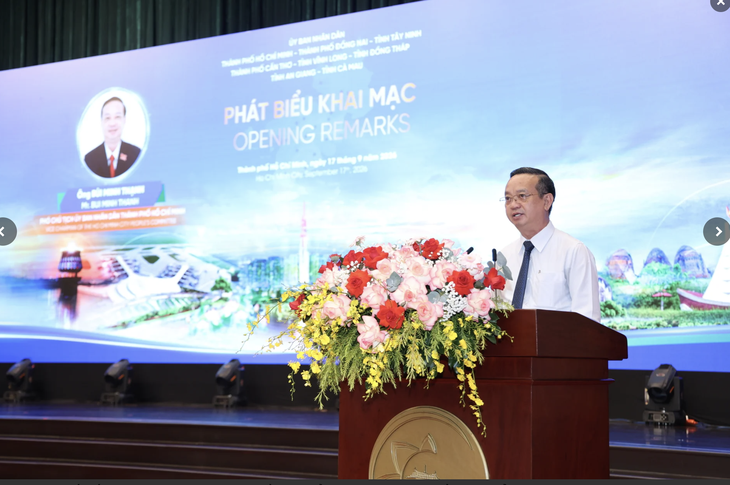
Delivering the opening address, Bui Minh Thanh, Member of the City Party Committee and Vice Chairman of the People’s Committee of Ho Chi Minh City, outlined the complementary strengths of the various jurisdictions involved. He emphasized that Ho Chi Minh City functions primarily as a national and international hub for commerce, finance, science and technology, innovation, professional services, and global connectivity. In contrast, surrounding provinces in the Southeastern and Mekong Delta regions possess competitive advantages in heavy and light manufacturing, industrial output, agriculture, renewable energy, logistics, tourism, natural resources, and expansive land reserves for industrial and urban expansion.
"If we successfully integrate regional planning with modern infrastructure, connect our urban centers efficiently with advanced logistics networks, align capital allocation with well-structured projects, and match technological manufacturing capacities with broad consumer markets, we will create a development space with a significantly higher level of competitiveness than any individual locality developing in isolation," Vice Chairman Thanh stated.
He urged local administrations to fundamentally transform their investment mindset from localized promotion to the co-creation of a unified regional investment ecosystem. Under this collaborative framework, domestic and foreign investors exploring opportunities in southern Vietnam will no longer view provinces through isolated administrative lenses. Instead, they will gain streamlined access to an integrated multi-province marketplace with synchronized supply chains and consolidated regulatory procedures.
To achieve this overarching vision, municipal leadership proposed three foundational focus areas for participating local authorities:

- Conducting rigorous joint reviews to select and prioritize key sectors and projects capable of forming cross-provincial value chains, ensuring that investment promotion aligns seamlessly with regional spatial planning and infrastructural master plans.
- Synchronizing individual project pipelines with accessible capital sources, advanced technologies, qualified investors, and target markets, while making full use of Ho Chi Minh City’s established financial instruments, enterprise networks, and global commercial channels.
- Upgrading inter-provincial communication mechanisms from episodic conference-based networking to structured, continuous external relations characterized by designated focal points, binding cooperative agreements, and rigorous milestone tracking to guarantee tangible outcomes.
Practical Frameworks for Implementation: Actionable Projects and Capital Mobilization
Moving beyond conceptual alignment, Pham Quang Nhat, Member of the City Party Committee and Director of ITPC, introduced a series of pragmatic operational measures designed to transform dialogue into executed projects. Director Nhat stressed that ITPC is committed to assuming an active implementation role rather than acting merely as an event organizer.
To operationalize regional investment connectivity, ITPC outlined four concrete execution steps:
- Standardizing Investment Portfolios: Localities must curate and standardize their investment portfolios around clear value chains and readiness levels. Each proposed project must feature comprehensive documentation regarding zoning, spatial footprint, scale, preferred investment modality, required infrastructure, completion timelines, and designated institutional focal points.
- Unified Tracking Systems: All cooperative initiatives will be logged into a centralized, continuously updated digital tracking platform. This system will record investor profiles, areas of interest, assigned lead agencies, mandatory response deadlines, resolution milestones, and final project statuses.
- Streamlined Intermediary Support: For viable investment proposals, ITPC will directly coordinate with competent authorities to monitor official responses. Issues exceeding local jurisdictions’ authority will be compiled and escalated systematically to higher governing bodies for swift resolution.
- Periodic Portfolio Reviews: Authorities will conduct regular, scheduled reviews of projects under research to identify bottlenecks, clear administrative hurdles, and convert preliminary memorandums of understanding into binding, legally sound commercial contracts.
Complementing these administrative mechanisms, Ho Chi Minh City’s Department of Finance presented five comprehensive financial and investment frameworks intended to accelerate regional integration and infrastructure delivery. Hoang Vu Thanh, Director of the Department of Finance, detailed these critical policy recommendations during the plenary sessions.
The first proposed framework involves a co-investment mechanism for inter-provincial infrastructure projects governed by the principles of joint decision-making, shared financial contribution, collective accountability, and mutual benefit. This model aims to resolve historical funding bottlenecks where cross-border bridges, highways, and waterways stalled due to fragmented budgetary responsibilities.
The second mechanism focuses on mobilizing non-state capital through aggressive promotion of Public-Private Partnerships (PPPs). The city plans to capture and monetize land value increments surrounding major transit corridors—specifically Ring Road 3, Ring Road 4, and urban mass rapid transit (MRT) lines—using the Transit-Oriented Development (TOD) model, alongside the issuance of localized municipal bonds.
The third strategy leverages the ongoing development of the International Financial Center in Ho Chi Minh City (VIFC-HCMC) to drive green bond issuances and attract institutional international capital toward regional green infrastructure and smart urban development projects.
The fourth measure addresses the chronic regional shortage of construction materials, particularly building stone and sand required for massive transport infrastructure rollouts. The proposal establishes legal, stable inter-provincial supply guarantees for state-backed civil and transportation engineering works.
Finally, the fifth framework introduces innovative green finance instruments, including the commercialization of carbon credits and the establishment of a dedicated Regional Development Fund. This fund will pool financial resources from participating jurisdictions to finance climate change adaptation, anti-flooding infrastructure, coastal protection, and regional livelihood preservation programs. The Department of Finance will serve as the primary coordination agency to synthesize regulatory feedback and advise the municipal government on formalizing these financial commitments into enforceable inter-provincial agreements.
Background Context and Strategic Implications
The push for enhanced regional integration in southern Vietnam comes at a critical juncture for the nation’s economic trajectory. The Southeastern region, anchored by Ho Chi Minh City, Binh Duong, Dong Nai, and Ba Ria-Vung Tau, has long served as Vietnam’s industrial and economic engine, contributing a disproportionate share of national gross domestic product (GDP) and attracting a substantial portion of total foreign direct investment (FDI). Meanwhile, the Mekong Delta serves as Vietnam’s agricultural and aquaculture heartland, supplying vital food security and export commodities while facing acute vulnerabilities from climate change, soil subsidence, and shifting hydrological patterns.
Historically, provinces within these two economic zones operated with a high degree of administrative autonomy, often resulting in fragmented infrastructure investments, redundant industrial park developments, and inefficient supply chain logistics. Recognizing these limitations, the central government enacted Resolution No. 27 to foster macro-regional synergies, optimize logistics corridors, and pool resources for transformative infrastructure projects.
The integration of these regions is further empowered by the Urban Development Law, passed by the National Assembly, which grants local authorities expanded legal latitude in spatial planning, land-value capture, and innovative project financing. By aligning the financial depth and international market access of Ho Chi Minh City with the manufacturing capacity and resource wealth of neighboring provinces, the municipal government seeks to insulate the regional economy against external shocks, elevate domestic supply chain resilience, and enhance the overall investment climate.
Broader Economic Impact and Outlook
The outcomes of the September 17 conference carry far-reaching implications for domestic enterprises, multinational corporations, and regional economic stability. For private sector investors, the transition toward a unified regional investment ecosystem promises reduced transaction costs, simplified regulatory compliance, and broader access to diversified operational assets. A manufacturer establishing a facility in a neighboring Southeastern province can now coordinate more seamlessly with logistics hubs, financial institutions, and export terminals located within Ho Chi Minh City, significantly shortening time-to-market and optimizing inventory management.
Furthermore, the concerted focus on climate resilience, green finance, and sustainable infrastructure addresses existential threats facing the Mekong Delta and low-lying urban areas. By establishing formal mechanisms for carbon credit monetization and localized green bond issuance, the southern region is positioning itself as a pioneer in sustainable growth models within Southeast Asia.
As the participating local authorities refine their standardized investment portfolios and operationalize the digital tracking platforms overseen by ITPC and the Department of Finance, the success of this initiative will depend heavily on inter-governmental execution speed and administrative follow-through. If implemented effectively, the multi-province economic partnership blueprint forged in Ho Chi Minh City could serve as a replicable benchmark for regional governance and economic development across Vietnam, ensuring sustained competitive advantage in an increasingly complex global economy.
Related posts: