AI adoption drives salary premiums and talent shift in Vietnam IT sector as 2024–2025 recruitment trends emerge


The landscape of Vietnam’s information technology (IT) labor market is undergoing a seismic shift as the widespread integration of Artificial Intelligence (AI) fundamentally alters recruitment requirements, compensation structures, and workforce expectations. According to a comprehensive report titled "Human Resources Challenges and Recruitment in the AI Era: 2024–2025," released by VietnamWorks inTECH, a division of Navigos Group, the emergence of generative AI is no longer a distant prospect but a current catalyst for structural change in the industry. The report, which draws from surveys conducted in July and August 2024 involving 1,500 professionals and nearly 500 businesses, underscores that companies are increasingly prioritizing candidates with AI proficiency, often at a significant financial premium.
The Financial Impact of AI Expertise
The survey data reveals a distinct "AI premium" in current salary negotiations. With over 62% of surveyed businesses indicating they are willing to pay more for AI-skilled personnel, the market is witnessing a clear divergence in compensation packages. Specifically, 43.7% of responding companies reported offering salary increases ranging from 10% to 20% for AI-specialized roles, while 18.4% of employers are prepared to offer salary premiums between 20% and 50% above standard industry benchmarks for similar technical roles.
This willingness to pay reflects a growing recognition among employers that AI-literate talent can deliver higher productivity and efficiency, justifying the added cost. The investment is viewed not as a luxury but as a strategic necessity for businesses aiming to remain competitive in an increasingly automated global economy.

Market Dynamics and Labor Mobility
The broader IT labor market in Vietnam showed signs of stability in the first half of 2024, with a turnover rate hovering at approximately 32%. However, the horizon remains volatile. Over 65% of IT professionals surveyed expressed an active interest in changing jobs or indicated plans to transition into new roles within the next 6 to 12 months.
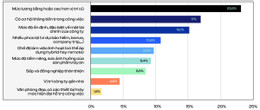
When searching for new opportunities, candidates are prioritizing financial stability—specifically seeking salaries that meet or exceed their current compensation—followed by career progression opportunities and the overall fiscal health of potential employers. A notable trend observed by recruitment experts is the growing number of professionals who are willing to take on expanded responsibilities, with this sentiment rising by 10% compared to the previous year. This suggests that while talent is mobile, candidates are increasingly conscious of their market value and are looking for roles that offer both security and a platform for professional growth in an AI-integrated environment.
The Evolution of Recruitment Channels
While traditional platforms remain staples for job hunting, the digital ecosystem is expanding. The report highlights that while platforms like LinkedIn and local job boards dominate, emerging social media networks are gaining traction. Notably, 4.4% of surveyed IT professionals now utilize the newer platform "Threads" to search for opportunities, and 2.4% of businesses have begun reaching out to talent through this channel. This shift suggests that companies are diversifying their recruitment strategies to meet talent where they congregate, moving beyond traditional job portals to more dynamic, real-time social engagement.
Recruitment Challenges: The Skill Gap
For employers, the recruitment process has become more complex. Data indicates that roles in product management, including Product Owners and Project Managers, are among the most difficult to fill, accounting for 25.6% of challenging vacancies. Employers frequently cite a mismatch between candidate skills and the specific technical requirements of the role as the primary barrier.

As of late 2024, the demand for talent is diversifying. While there is still a massive focus on software development, specifically "Backend" and "Frontend" roles (22.5% of projected demand) and product management (15.7%), there is a clear shift toward roles that intersect with AI and data science. The market is demanding engineers who can build, manage, and secure AI-driven applications, marking a significant evolution from the traditional development roles that defined the previous decade.
Expert Insights on Generative AI
Phan Thanh Hien, Director of Product and Technology at Navigos Group, emphasizes that the recent breakthrough in generative AI is a double-edged sword for the labor market. While it creates unprecedented opportunities for businesses to optimize productivity, it simultaneously demands a rapid evolution in human skill sets.
"The AI revolution is pushing the process of automation to new heights," Hien noted. "However, the human role in verifying, evaluating, and optimizing output remains crucial. Individuals who know how to harness the power of AI will far outperform those who stick to traditional working methods, with the latter group facing a significant risk of obsolescence."
According to the report, over 80% of IT professionals surveyed are already using AI to support their daily tasks, and nearly 60% utilize these tools on a daily basis. The skill sets required for these roles are shifting:
- For Software Developers: Proficiency in using AI to generate source code, combined with a stronger focus on solution design, testing, and debugging, is becoming the standard.
- For Quality Assurance (QA) Engineers: Mastery of AI to automate test script creation is becoming essential to reduce time-to-market and enhance overall efficiency.
Strategic Recommendations for the Future
The report concludes with a dual mandate for both employees and employers. For the workforce, the ability to adapt and leverage AI is no longer optional—it is a critical requirement for professional survival. The report suggests that professionals must continuously upskill, specifically focusing on machine learning and AI tool integration, to remain relevant.
For businesses, the recommendation is to shift from passive recruitment to proactive investment in training and an internal culture of technological adoption. Organizations that fail to build an infrastructure where employees can experiment with and apply AI effectively risk losing their competitive edge to more agile, AI-forward competitors.
Implications and Long-Term Outlook
The 2024–2025 period serves as a transition phase for the Vietnamese IT industry. As AI continues to mature, the definition of an "IT expert" is changing. Technical coding skills, while still foundational, are being augmented by the ability to manage AI logic and interpret complex outputs. The wage gap identified in the report is likely to widen in the short term, as companies compete for a limited pool of talent that possesses both deep technical expertise and the agility to work alongside advanced generative models.
Ultimately, the findings from Navigos Group serve as a diagnostic of a maturing market. By acknowledging the challenges of the AI transition—namely the need for continuous learning and the necessity of organizational change—Vietnam’s tech sector is positioning itself to capitalize on the global demand for AI-driven innovation. The next 12 to 18 months will likely be defined by a "race for talent" that is less about traditional headcount and more about the caliber and adaptability of the human-AI partnership within the workforce.