Hercules Truck Driver Remarkable Act of Physical Strength Clears Traffic Congestion in Ho Chi Minh City Narrow Alley

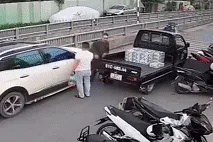
A video recently circulating across various social media platforms has captured a rare and extraordinary display of physical strength and quick-thinking problem-solving on a narrow street in Ho Chi Minh City. The footage, which has since gone viral, depicts a man—identified as the driver of a light commercial vehicle—manually lifting and shifting the rear of his truck to allow a blocked passenger car to pass. This incident, occurring in the heart of Vietnam’s most populous city, has sparked a wide-ranging discussion regarding urban logistics, the physical demands of the transport industry, and the unique challenges posed by the city’s intricate network of narrow corridors.
The event took place on the afternoon of July 18, 2024, in a residential area characterized by the "hem" or narrow alleys typical of Ho Chi Minh City’s urban planning. According to the footage provided by eyewitness Quach Dac Thanh, a small delivery truck had parked to offload goods, effectively obstructing the majority of the roadway. Due to the restricted width of the street, a passenger car following behind was unable to proceed, leading to a temporary stalemate that threatened to cause a significant localized traffic jam.
Chronology of the Incident
The sequence of events unfolded rapidly, lasting less than thirty seconds from the moment the obstruction was identified to the resolution of the conflict.
- Initial Obstruction: At approximately 2:30 PM, the light truck stopped to facilitate a delivery. The driver positioned the vehicle as close to the edge of the road as possible, but the physical constraints of the alley meant that the remaining gap was insufficient for a standard sedan to pass through safely.
- The Stalemate: A white passenger car arrived behind the truck. The car driver halted, realizing that any attempt to squeeze through would likely result in property damage. At this point, several bystanders and the car driver expected the truck driver to re-enter the cabin, start the engine, and perform a complex series of maneuvers to reposition the vehicle.
- The Manual Intervention: In a move that caught onlookers by surprise, the man associated with the truck did not return to the driver’s seat. Instead, he walked to the rear of the vehicle. Using a deadlift-style grip on the rear bumper and frame, he exerted a significant burst of force, lifting the rear tires off the pavement.
- The Shift: With the rear of the truck elevated, the man successfully pivoted the vehicle sideways by approximately 20 to 30 centimeters. This incremental shift was just enough to widen the gap between the truck and the opposite wall or curb.
- Resolution: Having cleared the path, the man signaled for the passenger car to proceed. The car successfully navigated the gap without further delay. The truck driver then returned to his task, and the flow of traffic in the narrow alley was restored.
Technical Feasibility and Biomechanical Analysis
The feat has been described by social media users as a display of "superhuman strength," with many comparing the driver to a "modern-day Hercules" or a professional "strongman." However, automotive experts and engineers have provided a more nuanced perspective on how such a maneuver is physically possible for an individual of average to above-average build.
Most light delivery trucks used in Ho Chi Minh City are designed with a front-engine, rear-wheel-drive configuration. When these vehicles are empty or have their load concentrated toward the front axle, the rear end becomes significantly lighter. Furthermore, the suspension systems in these trucks—often utilizing leaf springs—can provide a slight "rebound" effect that an experienced individual can leverage to initiate a lift.
By shifting the rear of the truck 20-30 centimeters, the driver was not necessarily lifting the entire weight of the vehicle (which could range from 1.5 to 2.5 tons) but rather overcoming the friction of the rear tires and the portion of the weight distributed over the rear axle. While still a grueling physical task requiring hundreds of kilograms of upward force, it is a feat achievable by those accustomed to the heavy manual labor inherent in the logistics and delivery sectors.
The Context of Ho Chi Minh City’s Urban Logistics
The incident highlights the daily struggles faced by delivery drivers in Ho Chi Minh City. The city’s infrastructure is a patchwork of modern boulevards and ancient, winding alleys. According to urban planning data, nearly 60% of the city’s residents live in or access their homes through alleys that are less than four meters wide.
As e-commerce continues to grow in Vietnam, the demand for "last-mile" delivery has surged. This puts immense pressure on drivers who must navigate vehicles into spaces that were never designed for motorized traffic. The July 18 incident is a microcosm of a broader systemic challenge: how to maintain a modern supply chain in a city with high-density, low-width infrastructure.
Drivers often find themselves in "no-win" situations where they must stop to fulfill a delivery but have no legal or physical space to do so without obstructing others. The manual shifting of the vehicle, while unconventional, represents a pragmatic—if physically taxing—solution to a recurring urban problem.
Social Media Reaction and Community Impact
The video has garnered thousands of shares and comments across platforms like Facebook and TikTok. The reactions have been largely positive, focusing on the driver’s willingness to go "above and beyond" to help a fellow motorist.
"This is the spirit of Saigon," one commenter noted. "Instead of arguing or making the car wait while he moved the truck the long way, he just used his own strength to solve the problem in seconds."
However, a secondary thread of conversation has emerged regarding the safety and health implications of such actions. Physical therapists and occupational health experts have warned that lifting heavy machinery in such a manner poses a high risk of acute spinal injury, muscle tears, and long-term joint degradation.
"While the intent was noble and the result was efficient, we must caution against the normalization of such physical stunts," stated an anonymous safety consultant. "The risk of the vehicle slipping, the handbrake failing, or the driver suffering a hernia is too high to recommend this as a standard solution for traffic management."
Safety Considerations and Official Guidelines
From a legal and safety standpoint, the incident raises questions about vehicle securing protocols. Experts pointed out that for a person to lift and shift the rear of a vehicle, the parking brake must either be disengaged or the tires must be able to slide across the pavement. If the vehicle were not properly secured, it could have rolled forward or backward on the incline, potentially pinning the driver or colliding with nearby property.
The Vietnam Road Traffic Law stipulates that drivers must ensure their vehicles do not obstruct traffic when stopping or parking. While the truck driver technically violated this by blocking the road, his subsequent action to clear the path demonstrated a level of "traffic culture" (văn hóa giao thông) that is often encouraged by local authorities—prioritizing mutual assistance and flexibility over rigid confrontation.
Comparative Incidents and Regional Trends
This is not the first time such an event has been captured on camera in Southeast Asia. Similar videos have surfaced from Thailand and Indonesia, where high-density urban environments frequently force drivers to perform improvised maneuvers. In a related incident mentioned in the source material, a pickup truck in Thailand was forced to swerve violently to avoid a head-on collision with a vehicle traveling on the wrong side of the road. These events underscore the high-stakes, high-stress environment of regional driving, where split-second decisions and physical intervention are often the only things preventing accidents or total gridlock.
Broader Implications for Urban Planning
The viral nature of the "Hercules Driver" video serves as a reminder to municipal authorities of the urgent need for infrastructure reform. Ho Chi Minh City has been working on a long-term plan to widen alleys and improve access for emergency vehicles and delivery trucks. However, the pace of urbanization often outstrips the pace of construction.
In the interim, logistics companies are increasingly looking toward smaller, electric cargo bikes and specialized micro-vehicles that can navigate narrow spaces without requiring the driver to manually lift the chassis. Until such technology becomes the standard, the physical resilience of human workers remains the "grease" that keeps the wheels of the city’s economy turning.
Conclusion
The incident on July 18 in Ho Chi Minh City remains a testament to the ingenuity and physical endurance of the city’s labor force. While the "truck-lifting" maneuver is an outlier and not a recommended practice for road safety, it has provided a moment of fascination for the public and a point of reflection for urban planners. It highlights the intersection of human strength and the limitations of the built environment, serving as a vivid example of the lengths to which individuals will go to maintain order in the chaotic flow of urban life. As the video continues to circulate, it stands as a tribute to the "silent heroes" of the road who, through sheer force of will—and muscle—keep the city moving forward.