Vietnamese Students at Cao Thang Technical College Develop AI-Powered Smart Classroom Camera System for Automated Attendance and Behavioral Monitoring

Artificial intelligence continues to permeate various aspects of modern society, reshaping industries, healthcare, and everyday consumer technology. Yet, within the realm of higher education, traditional operational bottlenecks have remained largely unchanged for decades. Among these persistent inefficiencies is the daily ritual of classroom attendance tracking. Traditionally, professors are required to manually call out names or pass around sign-in sheets—processes that are not only time-consuming and prone to human error but also vulnerable to proxy attendance, where students sign in on behalf of their absent peers. Recognizing this outdated dynamic, a dedicated team of undergraduate engineering students at Cao Thang Technical College has engineered an innovative, AI-powered smart camera system designed to revolutionize classroom management, automate roll calls, detect unauthorized intruders, and identify unusual student behaviors in real time.
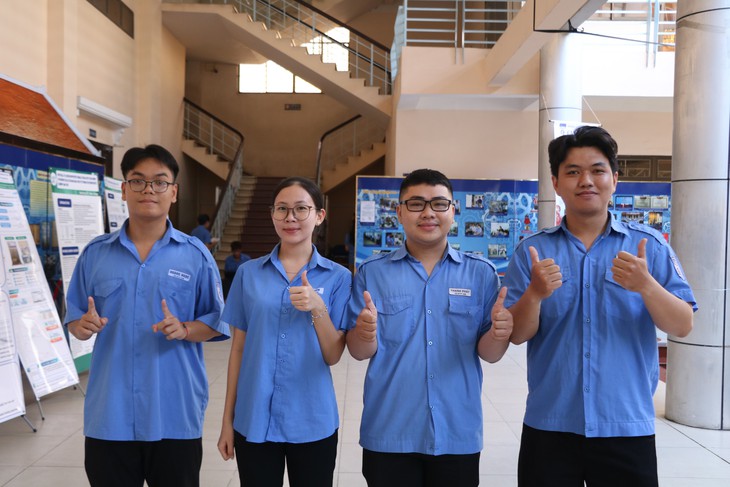
This groundbreaking project emerged as one of the standout technical innovations at the prestigious Student Research Symposium 2026 (SRS 2026), held on November 18 at Cao Thang Technical College. The annual conference serves as a vital international collaborative platform, bringing together brilliant young minds and academic researchers from vocational and technical institutions across Vietnam and Japan. The smart camera initiative, developed collectively by Nguyen Trung Nghia, Huynh Thanh Phat, Nguyen Bao Uyen, and Truong Hoang Ngoc—all students majoring in Electronic and Communication Engineering—demonstrates the practical application of cutting-edge computer vision in resolving everyday institutional challenges.
The Genesis of the AI Smart Classroom Concept
The conceptual foundation of the project was born out of sheer frustration with traditional classroom inefficiencies. According to Nguyen Trung Nghia, the project’s lead spokesperson, the inspiration struck during routine lectures where valuable academic time was routinely wasted on manual roll calls. Professors frequently had to pause their teaching to verify attendance, a practice that disrupted the flow of instruction and created administrative burdens. Furthermore, instances of fraudulent sign-ins undermined the integrity of attendance records.
Determined to create an autonomous, seamless alternative, Nghia and his peers pooled their technical expertise to design an integrated system. Instead of relying on expensive, proprietary hardware infrastructures, the student research team utilized commercially available, standard security cameras and coupled them with a custom-built artificial intelligence software framework designed specifically for complex video processing and spatial analysis.
Core Technological Capabilities and Functionality
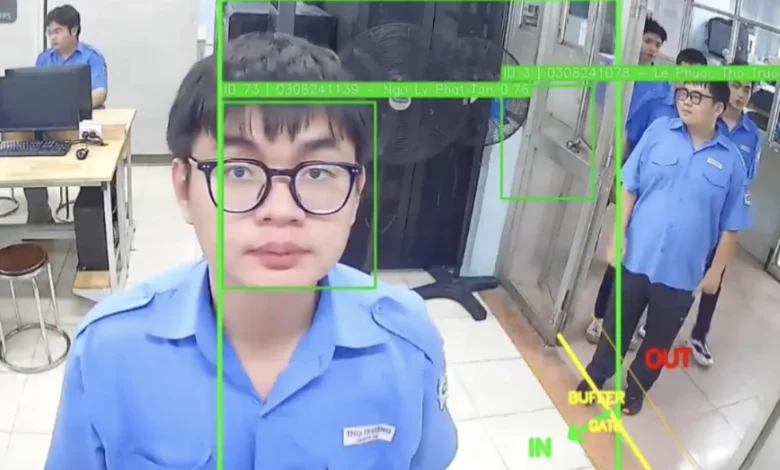
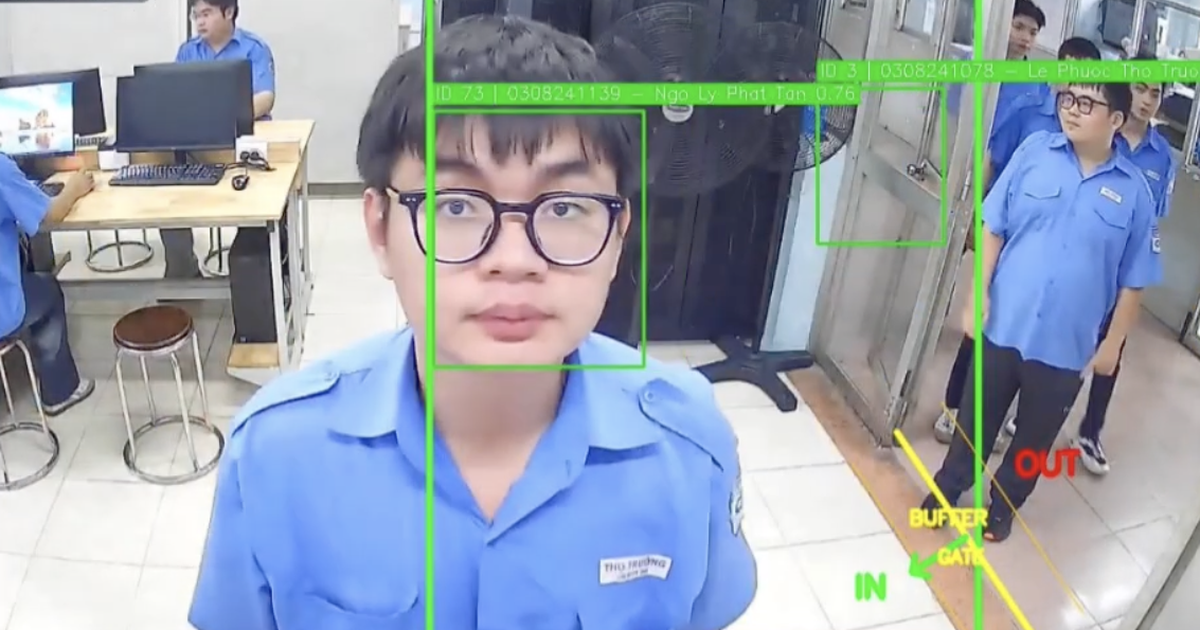
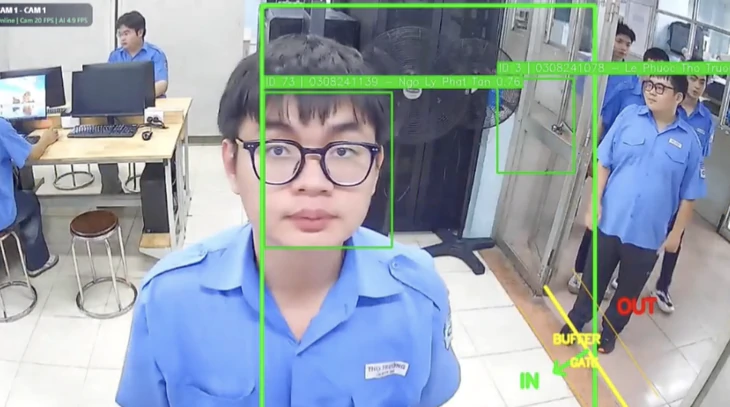
The newly developed AI camera system goes far beyond simple facial recognition, functioning as a comprehensive, multi-layered classroom monitoring and safety assistant. At its core, the system performs real-time facial recognition as students enter and exit the physical learning environment, instantly logging attendance data into an automated institutional database without requiring any active participation from the students or the instructor.
Beyond routine attendance tracking, the software is programmed to recognize external anomalies, specifically targeting unauthorized individuals. When the camera detects a face that does not match the pre-registered student database for that specific class, the hardware dynamically responds. Leveraging motorized tracking capabilities, the smart camera can autonomously pan, tilt, and zoom in to closely monitor the unidentified individual. Simultaneously, the system triggers an automated alert, dispatching a notification email directly to designated security personnel or administrative staff complete with time-stamped visual evidence.
In addition to perimeter security and attendance automation, the student team incorporated behavioral analysis algorithms capable of monitoring student well-being and classroom safety. The AI software is trained to identify unusual or disruptive behaviors, such as sudden physical altercations, accidental slips and falls, and even signs of severe fatigue like persistent head-nodding or sleeping during lectures. By monitoring postural shifts and movement patterns, the technology provides a subtle layer of oversight that can alert instructors to student disengagement or physical distress.
Rigorous Empirical Testing and Performance Metrics
To validate the efficacy of their research, the student team conducted comprehensive real-world testing within active laboratory environments at Cao Thang Technical College over a multi-month period. In controlled trials involving a cohort of 80 students, the facial recognition and automated attendance module demonstrated exceptional accuracy, correctly identifying 77 out of 80 individuals, achieving an impressive success rate of 96.25 percent.
The research team transparently documented the operational limitations encountered during the remaining three instances of failure. These minor discrepancies were primarily attributed to environmental factors, specifically extreme facial angles and direct overhead lighting that caused severe glare on the camera lens, temporarily obscuring facial feature extraction.
Conversely, the behavioral detection modules—particularly the identification of fatigue and unusual physical movements—yielded lower initial accuracy rates, fluctuating between 60 and 70 percent. The student engineers identified a distinct technical challenge inherent in densely populated classrooms: when multiple students sit closely together, their physical silhouettes frequently overlap within the camera’s two-dimensional field of view. This spatial occlusion occasionally confuses the neural network, resulting in false-positive behavioral alerts.
Expert Academic Evaluation and Future Directions
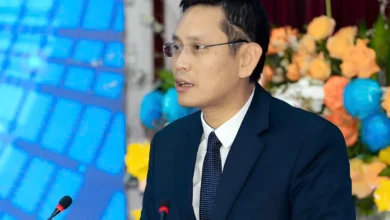
Faculty advisors overseeing the project have offered high praise for its practical ingenuity and immediate commercial potential. Master Tran Tu Nam Kha, a lecturer in the Department of Electrical and Electronic Engineering at Cao Thang Technical College, commended the research team for bridging the gap between theoretical engineering concepts and tangible, real-world utility. He noted that the system’s successful pilot implementation across several practical training classrooms over the past few months proves its foundational viability.
However, academic mentors have also provided constructive technical guidance for future development phases. To scale the system from a single-room prototype to a campus-wide deployment, the research team must refine algorithmic precision, expand the training dataset to account for diverse lighting and seating arrangements, and optimize the software to overcome localized hardware processing constraints. Expanding the infrastructure across dozens of lecture halls will require distributed computing capabilities to process heavy video data streams simultaneously without experiencing latency.
International Academic Exchange at SRS 2026
The unveiling of the AI smart camera system took place against the backdrop of the vibrant SRS 2026 conference, an event designed to foster cross-border academic collaboration. This year’s symposium featured a total of 42 research papers, evenly split between 22 projects presented by students from Cao Thang Technical College and 20 advanced projects contributed by delegations from three prominent Japanese Institutes of Technology, known as KOSEN schools: Ariake KOSEN, Fukushima KOSEN, and Gifu KOSEN.
All participating research papers were presented entirely in English, featuring formal oral presentations and interactive poster sessions that facilitated direct, rigorous dialogue between student innovators and visiting international experts. The collaborative environment highlighted the shared commitment of Vietnamese and Japanese technical institutions toward solving contemporary engineering problems.
Among the notable contributions from the Japanese delegation was a presentation by Chihiro Sakai from Ariake KOSEN, who introduced a sophisticated project tracking human movement using "reservoir computing"—an innovative subfield of recurrent neural network theory aimed at predicting complex spatial trajectories in three-dimensional environments. Sakai’s research utilized an Intel RealSense D435 depth-sensing camera to capture high-resolution visual imagery alongside spatial depth information, enabling real-time coordinate tracking of human subjects in 3D space. While skeletal tracking and predictive movement modeling remain under active development by the Japanese research team, the project underscored the high caliber of international research showcased at the symposium.

The Broader Impact of KOSEN Educational Models and Institutional Collaboration
The success of projects like the AI classroom camera at Cao Thang Technical College reflects the growing emphasis on practical, hands-on technical education within Vietnam, an educational philosophy heavily inspired by the Japanese KOSEN model. Originating in Japan, the KOSEN system comprises 51 public higher education institutions offering a specialized five-year engineering curriculum starting immediately after lower secondary school (middle school). Renowned for its intensive practical training, laboratory-driven curriculum, and close industry partnerships, the KOSEN model consistently achieves near-100 percent employment rates for its graduating technicians.
Organizers of the SRS 2026 symposium emphasized that the primary objective of the annual event is to provide a structured runway for young engineers to showcase empirical research, exchange cross-cultural methodologies, and apply advanced theoretical knowledge to real-world socio-technical challenges. By empowering students to tackle administrative inefficiencies, campus security concerns, and classroom engagement dynamics through artificial intelligence, institutions like Cao Thang Technical College are actively shaping the next generation of forward-thinking technology leaders.
Related posts: