Government Issues Action Plan to Implement National Master Master Plan for 2021-2030 Period with Vision to 2050

The Vietnamese Government has officially issued Resolution No. 402, promulgating a comprehensive action plan to execute the National Master Plan for the 2021–2030 period, with a forward-looking vision extending to 2050. Signed by Permanent Deputy Prime Minister Phạm Gia Khiêm (acting on behalf of the Government), this landmark decree operationalizes the foundational directives outlined in the National Assembly’s Resolution No. 81 and Resolution No. 252, which details amendments and supplemental articles to the overarching master strategy.
The ambitious program serves as the strategic blueprint for Vietnam’s socio-economic development over the next decade. By aligning regional spatial planning, infrastructure modernization, and human resource development, the administration aims to steer the nation toward high-income status while ensuring ecological sustainability and resilience against global economic and environmental shocks.
Setting Economic Benchmarks: Targeting $8,500 GDP Per Capita by 2030
At the core of Resolution No. 402 is a robust set of quantitative economic targets designed to accelerate Vietnam’s transition into a modern, industrialized developing nation. The Government has set a target for gross domestic product (GDP) growth to average over 8.0% annually for the 2021–2030 decade. To achieve this aggregate, growth projections are calibrated to accelerate during the latter half of the decade, with the 2026–2030 period targeted to reach 10% or higher per annum.
Should these targets materialize, Vietnam’s GDP per capita at current prices is projected to reach approximately $8,500 by 2030. This upward trajectory is expected to be propelled by significant advancements in productivity, scientific research, technological adoption, and innovation. The strategy emphasizes positioning Vietnam within the leading group of upper-middle-income countries globally, closing the development gap with more advanced regional economies.
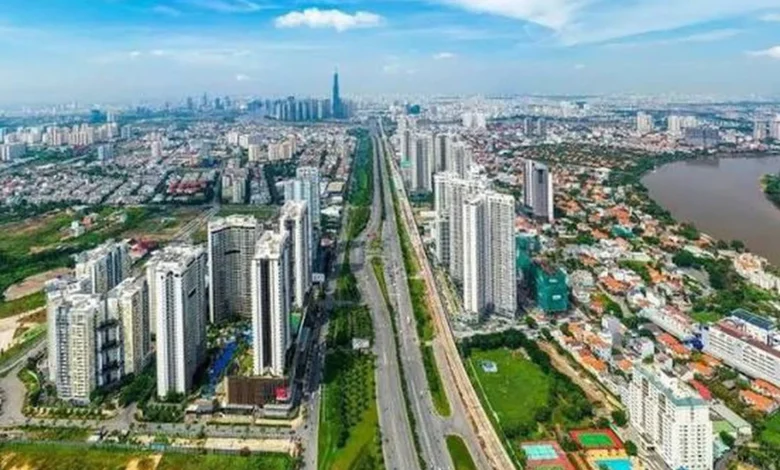
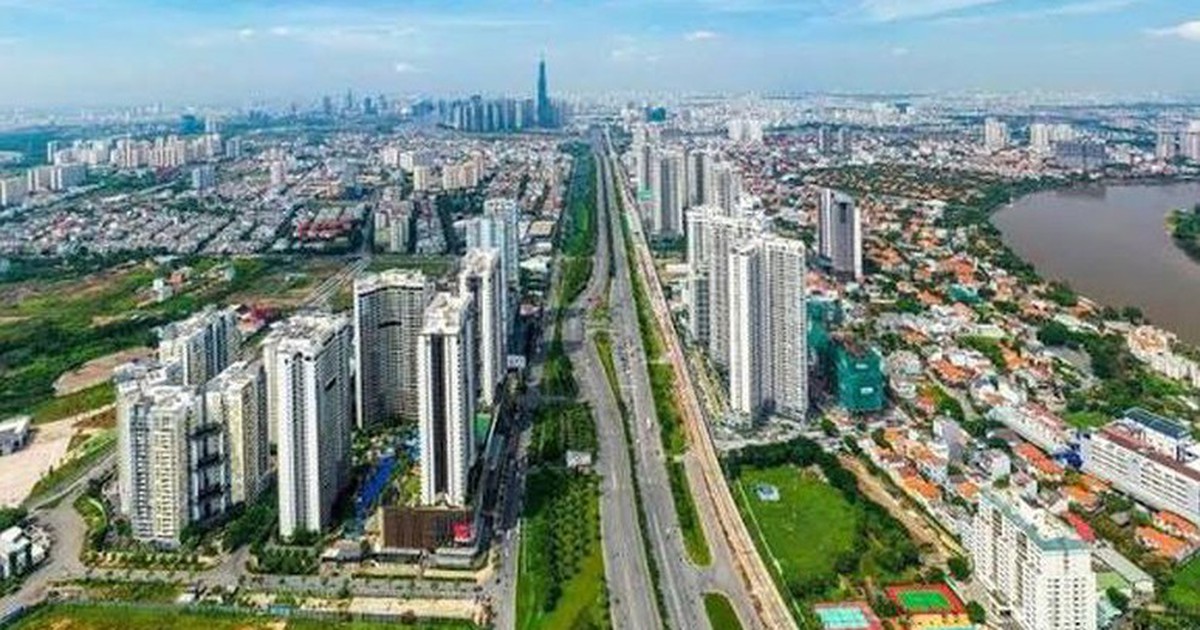
Furthermore, the implementation plan leverages the inherent comparative advantages of Vietnam’s socio-economic regions. It places special emphasis on consolidating and expanding the country’s two primary growth engines: the Northern dynamic region anchored by Hanoi and the Southern dynamic region anchored by Ho Chi Minh City. These metropolitan hubs are envisioned as prime magnets for high-value industries, capital investments, and cutting-edge technological enterprises.
Human Capital, Education, and Healthcare Transformation
Beyond macroeconomic indicators, the action plan places profound emphasis on human development, recognizing that sustainable long-term growth is inextricably linked to demographic stability, educational excellence, and robust public health systems.
The strategy mandates maintaining a stable replacement fertility rate, averaging approximately 2.1 children per woman of reproductive age, with the national population projected to reach approximately 105 million by 2030. The Human Development Index (HDI) is targeted to reach roughly 0.8, while average life expectancy is expected to rise to 75.5 years, with a minimum of 68 healthy life years.
In the education sector, Vietnam aims to establish a regionally advanced schooling system, securing a position among the top 10 countries in Asia for higher education quality. The blueprint sets a specific goal of having at least eight higher education institutions ranked within the top 200 universities in Asia, and at least one institution in the top 100 globally recognized for specific academic fields according to reputable international rankings.
The healthcare framework is slated for comprehensive modernization to match advanced regional standards. By 2030, the national healthcare network aims to achieve a density of 35 hospital beds and 19 physicians per 10,000 inhabitants, alongside an increase in the health insurance coverage rate to 15% of the population, ensuring equitable access to quality medical services across urban and rural demographics.
Strategic Spatial Organization and Infrastructure Development
To realize these multifaceted targets, the Government’s action plan outlines precise directives for spatial planning, infrastructure development, and economic zoning.
A primary task involves establishing the foundational framework of national infrastructure. This entails synchronized investments in transportation networks, urban utilities, rural amenities, energy grids, digital infrastructure, cultural facilities, and hydraulic systems. Special attention is directed toward building out multi-modal transport corridors along the North-South and East-West axes, as well as developing coastal economic belts that seamlessly integrate seaports, international airports, major border gates, and urban economic clusters.
Crucially, the plan introduces a localized growth model that identifies regions with unique strategic advantages to host major economic and financial hubs. These designated administrative-economic zones will be empowered with distinct institutional frameworks, special mechanisms, and preferential policies designed to offer breakthrough competitiveness on the global stage.
Resource management and environmental stewardship are woven directly into the spatial planning mandates. Ministries, central agencies, and provincial People’s Committees are instructed to optimize land and natural resource usage while proactively integrating climate change adaptation measures into all regional development projects.
Elevating High-Quality Workforce and Technological Capabilities
Recognizing that advanced infrastructure must be matched by specialized expertise, the action plan outlines rigorous directives for workforce development. The Government calls for systemic reforms to rapidly increase the proportion of certified, skilled labor, with a specific focus on high-tech sectors and emerging industries.
Priority fields slated for aggressive talent acquisition and domestic training include artificial intelligence, cybersecurity, electronics, semiconductor fabrication, digital technologies, biotechnology, environmental science, advanced materials, and robotics. Educational institutions are directed to align their curricula with international standards, particularly in foundational sciences and smart management practices, supported by targeted government policies designed to attract global experts and nurture domestic innovators.
Implementation Framework and Accountability
To ensure that Resolution No. 402 moves swiftly from policy formulation to tangible execution, the Government has established a strict accountability framework. Ministers, heads of ministerial-level agencies, and Chairpersons of provincial and municipal People’s Committees are held directly responsible for implementing the prioritized tasks and policy solutions within their respective jurisdictions.
Regular progress evaluations, inter-agency coordination meetings, and performance audits will be conducted to monitor the execution of the National Master Plan. Through this coordinated, whole-of-government approach, Vietnam seeks to lay a solid foundation for sustainable prosperity, enhancing its national competitiveness and securing its long-term development trajectory for the decades ahead.