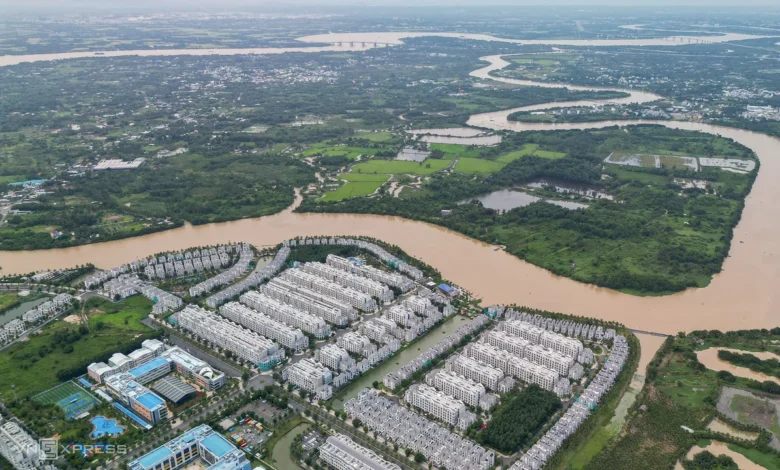
The Vietnamese real estate market, particularly the land plot segment, is currently grappling with a severe liquidity crisis that has persisted since 2022. Once the darling of speculative investors, land plots—defined as undeveloped residential land—are now languishing on the market, with sellers facing significant hurdles even when offering deep price discounts. This stagnation reflects a fundamental shift in investor sentiment, regulatory tightening, and a transition from speculative "land banking" to a focus on utility and immediate economic viability.
A Protracted Downturn: Real-World Case Studies
The struggle is best exemplified by individual investors who entered the market during the 2019-2021 boom. Mr. Tran Van Quang, an investor who purchased a 100-square-meter plot in Duc Hoa, Long An, in 2019 for VND 1.3 billion, serves as a poignant case study. Driven by promises of infrastructure development and potential administrative upgrades for the area, Mr. Quang held the land for years. Since 2022, he has been attempting to offload the asset. Despite initially attempting to break even and subsequently accepting a loss of VND 300 million, the property remains unsold.
Similarly, in Ho Chi Minh City, the situation is even more pronounced. A Hanoi-based investor, Ms. Hong, purchased a 140-square-meter plot in the former District 9 for VND 8.7 billion. By 2024, despite lowering her asking price to VND 7.7 billion—a loss of one billion dong—she has failed to secure a buyer. Her experience, involving extensive online listings and outreach to various brokers over three years, reveals a market where even aggressive price corrections are failing to stimulate demand.
Data-Driven Reality: The Q3 2026 Snapshot
Recent reports from industry analysts, including DKRA Consulting and Batdongsan.com.vn, provide the empirical evidence behind these personal anecdotes. In the third quarter of 2026, the southern region saw approximately 8,350 land plot products available on the market, originating from 99 different projects. However, the total consumption was a mere 116 units, representing a staggering absorption rate of approximately 1%.
The data indicates that new supply has remained virtually stagnant, while the volume of newly launched products in the quarter plummeted by 30%. Furthermore, Batdongsan.com.vn reports that land plots currently occupy the lowest rung of investor interest. In Q3, search demand for land plots accounted for only 9% of total real estate interest, the lowest among all property categories. Transaction volumes have plummeted by 81% compared to the previous quarter, with 51% of surveyed brokers confirming that transaction prices have effectively halved in some regions compared to the market peak.
Structural Shifts and the "Flight to Utility"
According to Dinh Minh Tuan, Regional Director for the South at Batdongsan.com.vn, the current liquidity drought is not merely a consequence of high interest rates or the broader economic slowdown. It is the result of a structural transformation in the real estate sector.
"The investor base that previously drove 90% of demand for land plots is largely exiting the market," Tuan notes. "They are being replaced by end-users, but this new cohort is not sufficiently large or eager to fill the void, particularly in areas lacking basic infrastructure, essential amenities, and employment hubs."
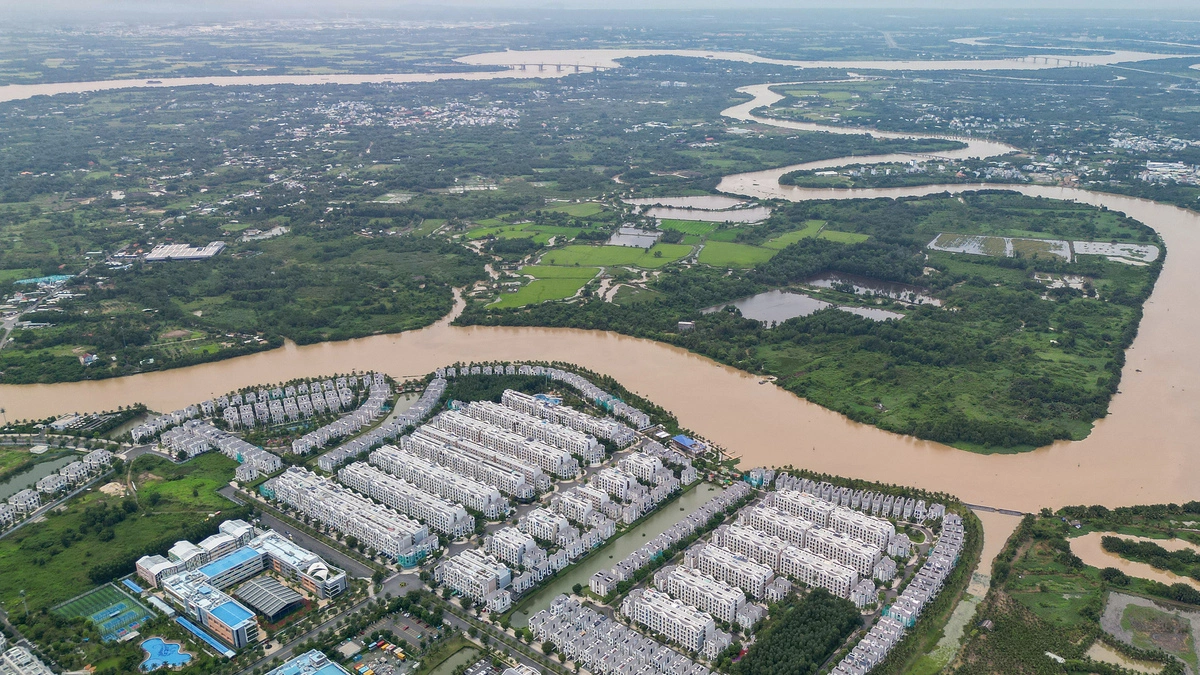
Historically, land plots were favored for their perceived potential for rapid capital appreciation. However, the market has undergone a fundamental shift toward "real value." Unlike condominiums or townhouses, which can be leased out to generate immediate rental income, undeveloped land plots offer zero cash flow during the holding period. For investors holding these assets, the lack of return on investment, combined with the rising cost of capital, has turned land into a financial burden.
The Developer’s Dilemma: Rising Costs and Legal Hurdles
The supply side is equally constrained. Vu Hong Thang, Deputy General Director of DKRA Group, highlights that the cost of project development has surged due to stricter legal requirements and higher standards for infrastructure investment.
"Developers must be extremely cautious before proceeding with new projects," Thang explains. "The cumulative effect of prolonged legal procedures and higher infrastructure standards has driven up the cost price of land, which in turn shrinks the margin for price discounts that might otherwise stimulate demand."
Furthermore, there is a growing disconnect between product offerings and market needs. Most new supply is concentrated in projects with complete legal documentation and premium infrastructure, yet these products are often priced out of reach for the average buyer. Meanwhile, the vast inventory of "zombie" plots—land sold years ago without accompanying houses or community amenities—remains stuck in a cycle of failed divestment attempts.
Chronology of the Land Market Crisis
- 2019-2021: The "Golden Era" of land speculation in Vietnam. Low interest rates and high liquidity fueled a surge in land prices, particularly in satellite cities around HCMC and Hanoi.
- 2022: The market hits an inflection point. Tightening monetary policy, credit restrictions on real estate, and increased scrutiny of land auctions lead to a sharp decline in transactional activity.
- 2023: The "Wait and See" phase. Prices begin to stagnate, and sellers start to realize that the market cycle has turned.
- 2024-2025: The period of forced deleveraging. Investors who relied on high leverage begin to accept significant losses to exit positions.
- 2026 (Q3): Current state. Market absorption reaches historic lows (1%). Focus shifts entirely to projects with clear legal status and high utility.
Long-Term Implications for the Market
The current state of the land plot market suggests a permanent shift in investment behavior. The era of "buying land and waiting for the price to rise" is effectively over. The market is moving toward a model where value is defined by immediate usability and proximity to existing urban infrastructure.
For the broader economy, the implications are two-fold. First, it underscores the importance of the new Land Law and related real estate regulations in filtering out speculative projects. Second, it highlights that real estate development must now prioritize the creation of living environments rather than the mere parceling of earth.
Industry experts believe that the market will not recover simply through the announcement of new infrastructure projects or minor price cuts. True recovery will depend on the real-world economic activity of the regions where these plots are located. Areas that lack schools, hospitals, jobs, and a critical mass of residents will likely continue to experience prolonged stagnation. For investors, the takeaway is clear: the risk-reward ratio of land plot speculation has been fundamentally altered, and those looking to enter the market must now adopt a long-term, utility-focused strategy rather than hoping for a return to the speculative booms of the past.
As the market continues to consolidate, we are likely to see a further bifurcation between "productive" land—that which is integrated into functioning urban centers—and "dormant" land, which may require years, or even decades, to find a buyer. The path forward for the Vietnamese real estate market is one of professionalization, where only those developers and investors who prioritize long-term value creation will survive.