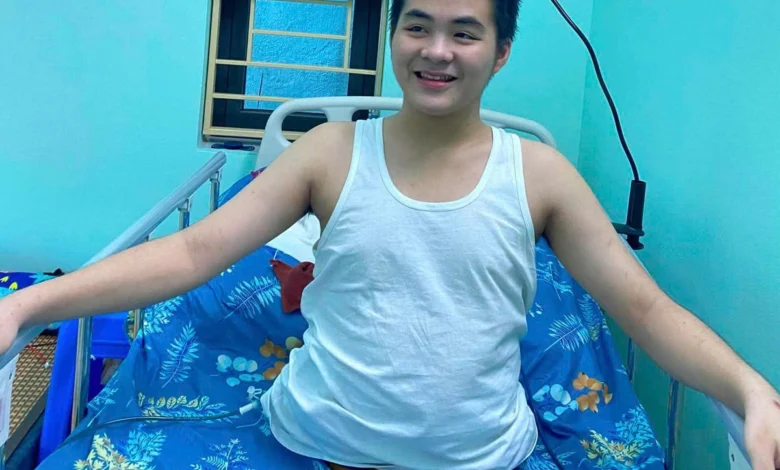
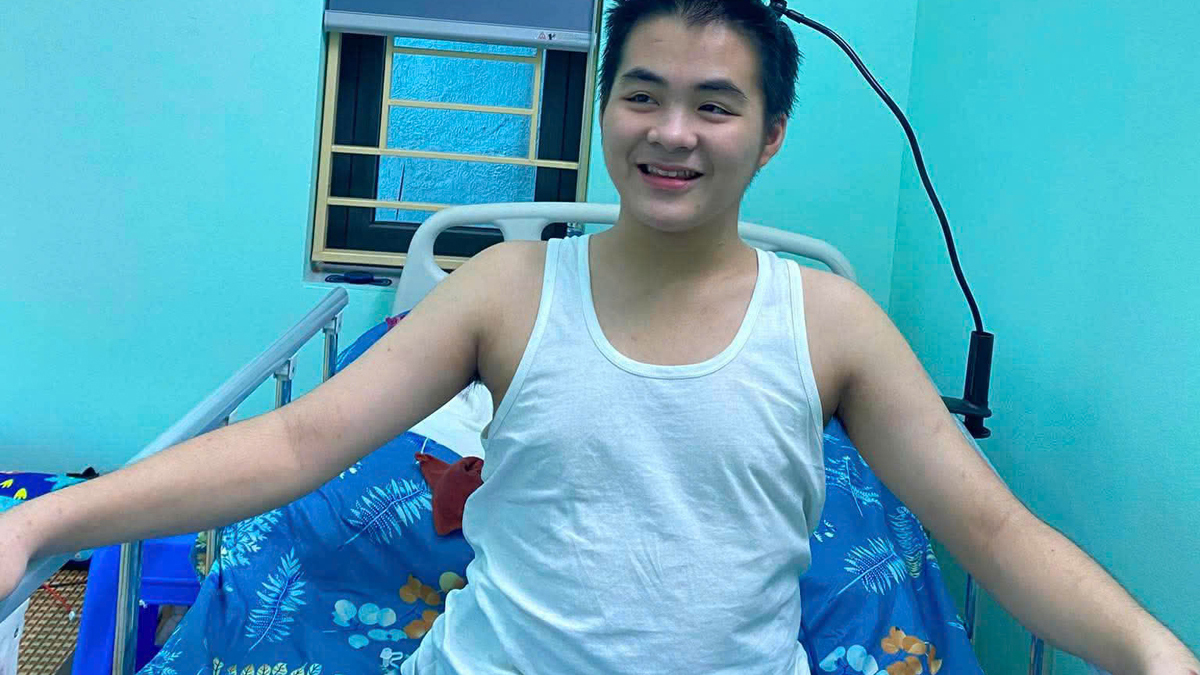
In the annals of medical history and human resilience, few stories are as harrowing or as inspiring as that of 17-year-old Duong Duc Hieu. A resident of Hanoi, Vietnam, Hieu has become a living testament to the limits of surgical science and the indomitable nature of the human spirit. After a catastrophic traffic accident necessitated a near-total lower-body amputation—a procedure so rare and complex that survival is measured in single-digit percentages—Hieu has not only survived but has begun to carve out a new existence from the remains of a life nearly lost.
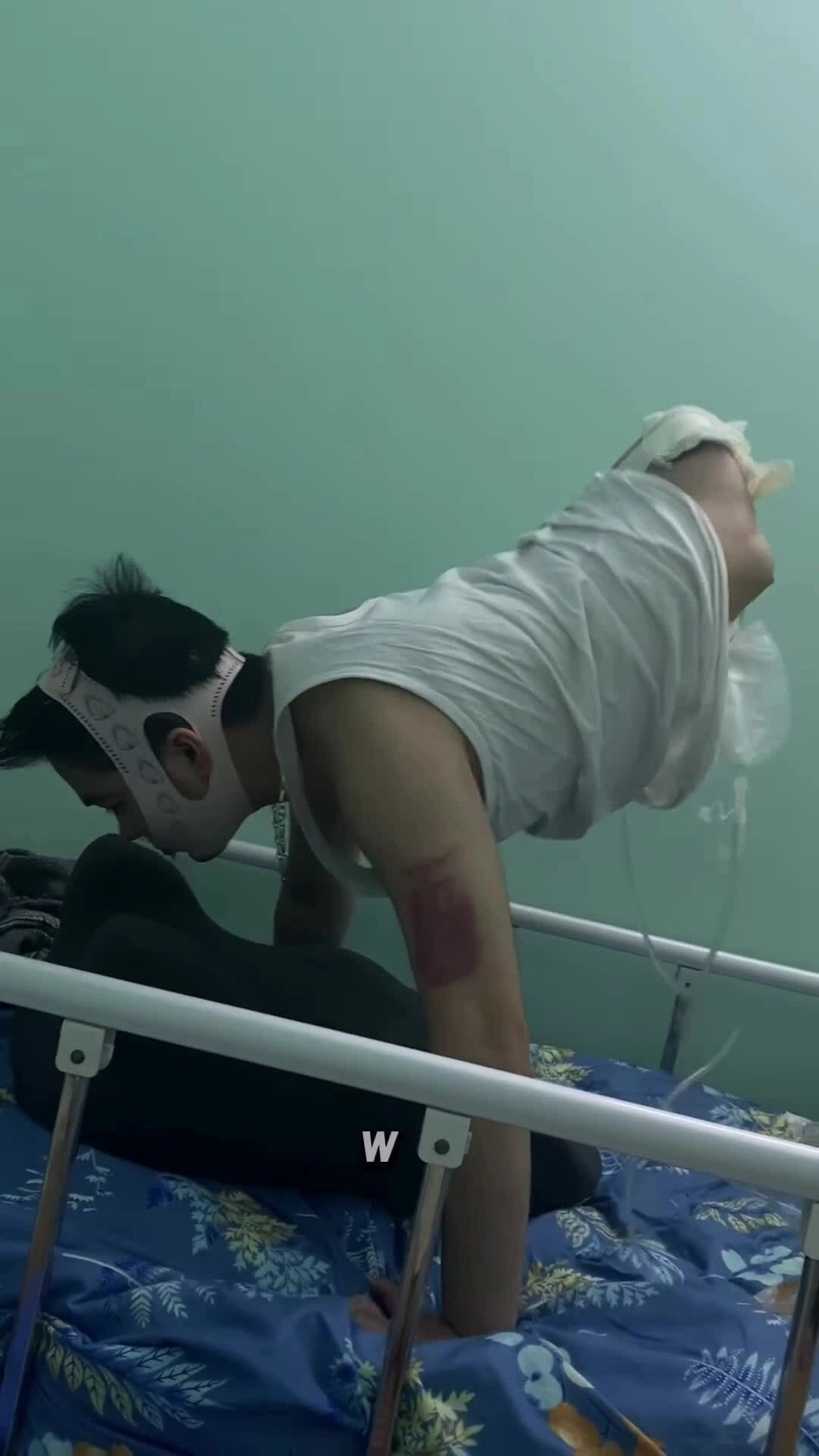
The journey of Hieu is one of radical adaptation. Every morning at 10:00 AM, he wakes up in a specialized bed equipped with safety railings. With the assistance of his mother, he performs his daily hygiene routine before engaging in a grueling physical exercise: push-ups. Using only his arms and what remains of his upper torso, he lifts himself off the mattress, performing up to 50 repetitions. For a young man who lost his entire lower body, including his pelvic frame, this display of strength is more than just exercise; it is a daily reclamation of his agency.
The Chronology of a Catastrophe
The event that divided Hieu’s life into "before" and "after" occurred on the morning of Saturday, January 3. It was a day that began like any other for his mother, Tran Ngoc Hoa, a 38-year-old worker at a local industrial park in Xuan Mai, Hanoi. Her routine was shattered when a colleague arrived at work with news of a horrific accident on a nearby road. The colleague described a young man in a white shirt, trapped under a heavy truck, reaching out his hand in a desperate plea for help.
Instinctively gripped by a sense of dread, Ms. Hoa checked her home security cameras and found that Hieu had left the house. Her frantic calls to his mobile phone went unanswered. Moments later, a stranger—a driver who had witnessed the scene—called her to deliver the news every parent fears: her son had been involved in a "very grave" accident.
Upon arriving at the scene, Ms. Hoa was met with a sight of unimaginable carnage. While Hieu had already been rushed to the emergency room, the state of the vehicle and the volume of blood left on the pavement led her to scream in anguish. At the hospital, the prognosis was even bleaker. Surgeons informed her that Hieu’s chances of survival were less than 5%. Despite the overwhelming odds, Ms. Hoa’s resolve was instantaneous. "There is still a spark of hope," she recalled telling the medical staff. "I cannot lose my son."
A Medical Feat: The Hemicorporectomy Challenge
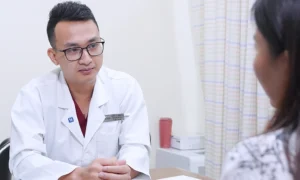
Hieu was admitted to Military Hospital 103 in a state of critical traumatic shock. He suffered from massive blood loss and multi-organ failure after a heavy truck had essentially crushed his lower half. Dr. Vu Minh Duong, Deputy Head of the Surgical Intensive Care Department at Military Hospital 103, noted that in his years of treating severe trauma, he had never encountered a case of such complexity.
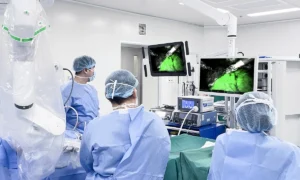
The medical team immediately activated an internal emergency protocol. The resulting surgery was a radical procedure known in medical literature as a translumbar amputation or hemicorporectomy. This involves the removal of the entire body below the waist, including the legs, pelvic bone, urinary system, and lower digestive tract.
In Hieu’s specific case, the damage was so extensive that surgeons had to remove the pelvic frame entirely—a factor that makes his survival even more statistically improbable. Most survivors of similar traumas retain at least a portion of the pelvic structure to support the internal organs. Hieu’s surgery required:
- The removal of the bladder and external genitalia.
- The diversion of both ureters to the skin (urostomy) to allow for the passage of urine.
- The creation of a colostomy (artificial anus) on his side, as the rectum and original anal canal were destroyed.
- Continuous dialysis and the administration of high-spectrum antibiotics to combat the high risk of sepsis.
Dr. Duong explained that the primary challenge post-surgery was the closure of the massive wound surface. The area where the body was severed was vast, leaving a high vulnerability to infection. To address this, Military Hospital 103 collaborated with the Le Huu Trac National Burn Hospital to treat necrotic tissue and facilitate skin grafting and wound healing.
The Psychological Battle and Phantom Limb Syndrome
Survival was only the first stage of Hieu’s recovery. Once stabilized, he entered a period of profound psychological and neurological distress. He began to suffer from "Phantom Limb Pain," a phenomenon where the brain continues to receive signals from nerve endings that once led to the now-missing limbs. Despite having no legs, Hieu’s brain perceived intense, sharp, and crushing sensations in his non-existent feet.
In the initial weeks, Hieu was unaware of the extent of his loss. He would often complain to his mother that his legs felt "tired" or that they were "not positioned straight." Unable to break his heart while he was still in a fragile state, Ms. Hoa initially told him that his legs were being treated in a separate ward and would be reattached later. During bouts of excruciating phantom pain, Hieu would weep and beg his mother to call the doctors to "return his legs."
The transition to accepting his new reality was gradual. As his mind cleared and the physical pain became more manageable, the truth became unavoidable. Ms. Hoa, who had spent her nights researching similar cases and success stories of people with disabilities worldwide, became his primary pillar of support. She emphasized that while he had lost his legs, his hands and his intellect remained intact.
Adaptation to a New Reality
Six months after the accident, Hieu’s life has stabilized into a "new normal." His mother resigned from her job at the industrial park to provide full-time care. The family, who affectionately refers to the 17-year-old as "the baby," has witnessed a transformation in his temperament. Hieu has moved from denial and grief to a state of stoic acceptance.
"I asked him, ‘Are you used to it yet?’ and he replied, ‘I am used to it,’" Ms. Hoa shared. This acceptance has fueled a drive for productivity. Hieu has turned to the digital world to find a sense of purpose. He spends his afternoons on social media platforms like Facebook and Zalo, offering engagement and interaction services for online businesses. While the income is modest and the client base fluctuates, the work provides him with a vital connection to the outside world and a sense of professional identity.
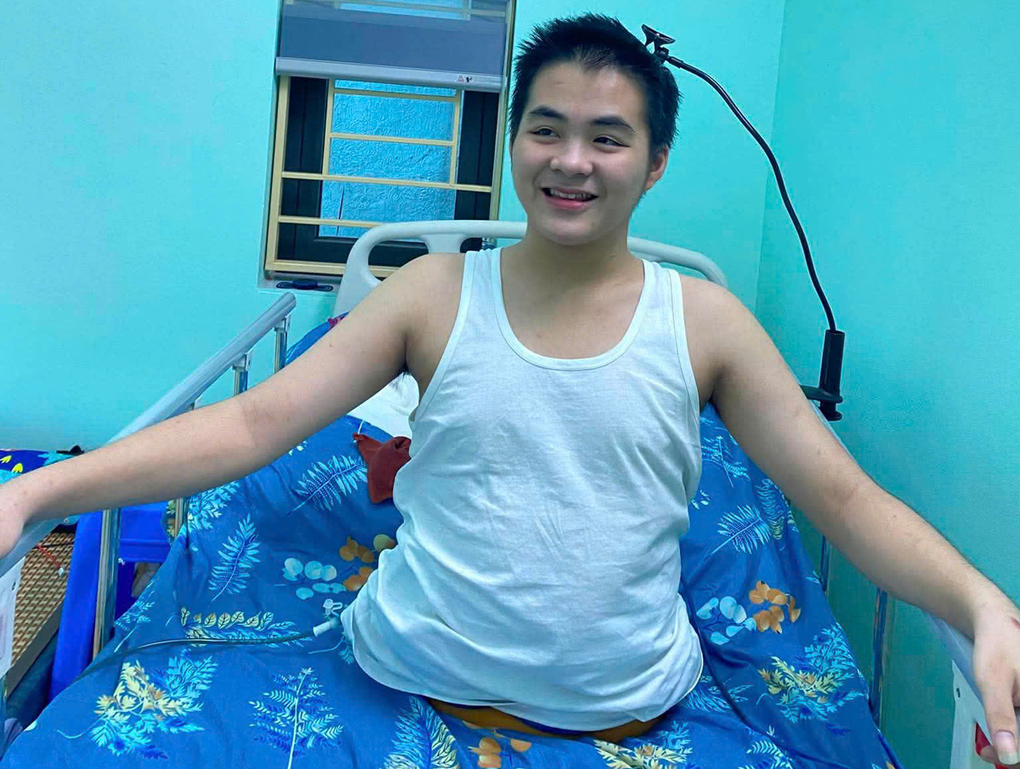
His physical recovery is equally bolstered by his pre-accident lifestyle. Before the tragedy, Hieu was a dedicated gym enthusiast with a strong athletic foundation. This residual muscle mass and cardiovascular health have been instrumental in his ability to perform upper-body exercises and manage the physical strain of sitting in a wheelchair.
Future Implications and Technical Support
The medical community continues to monitor Hieu’s progress with keen interest. Because he lacks a pelvic frame to support his spine and internal organs, his ability to sit upright for extended periods is limited. To rectify this, his family is currently working with specialists to commission a custom orthotic jacket.
This device, made of specialized medical-grade plastic, will function as an "artificial pelvis." It will provide a rigid structure to support his spinal column and encase his lower torso, creating a stable base that will allow him to sit in a wheelchair more comfortably and for longer durations. This technical intervention is crucial for his long-term goal: pursuing a formal education in Information Technology. Hieu dreams of becoming an IT professional, a career path that relies on cognitive skill rather than physical mobility, offering him a route to financial independence.
Broader Context: Trauma and Resilience in Vietnam
Hieu’s case highlights several critical issues within the Vietnamese socio-medical landscape. First, it underscores the rising capabilities of Vietnam’s military medical system in handling extreme trauma cases that would have been fatal only a decade ago. The successful coordination between different specialized hospitals (Hospital 103 and the National Burn Hospital) reflects a maturing healthcare infrastructure.
Secondly, the accident brings renewed attention to the issue of road safety. Vietnam has long struggled with high rates of traffic accidents involving heavy vehicles and motorcycles. According to the National Traffic Safety Committee, while fatalities have seen a downward trend in recent years, the severity of injuries remains a significant public health burden, often leaving young victims with life-altering disabilities that require lifelong care and state support.
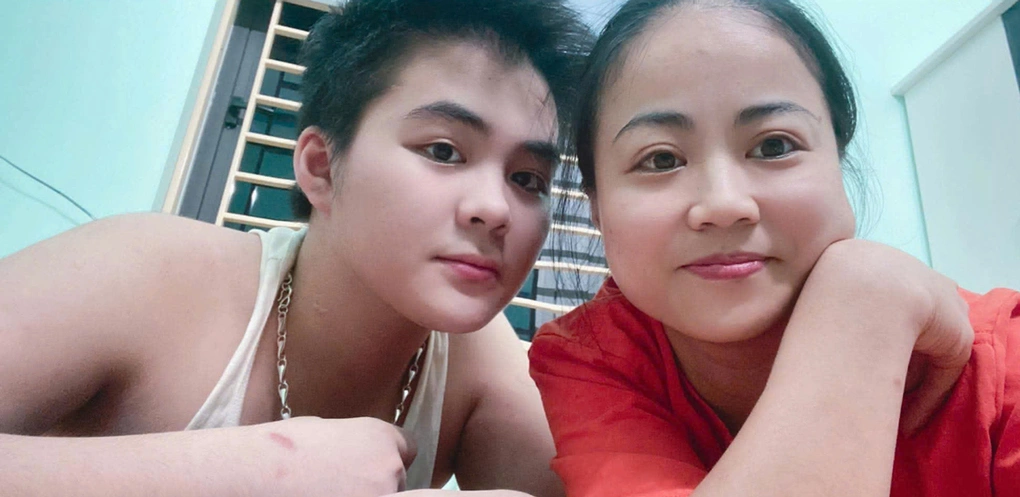
Finally, Hieu’s story is a profound study of the "caregiver burden" and the strength of the Vietnamese family unit. The decision of Ms. Hoa to sacrifice her career and dedicate her life to her son’s rehabilitation is a common narrative in a country where social safety nets for the disabled are still developing, and the family remains the primary source of long-term healthcare.
A Doctor’s Reflection
For Dr. Vu Minh Duong, Hieu is more than just a patient; he is a symbol of why the medical profession exists. Even when Hieu was no longer under his direct care, the doctor continued to follow his recovery closely. "As an intensive care physician, there is no greater happiness than seeing a life that was seemingly extinguished now reviving with such strength and hope," Dr. Duong remarked.
The "miracle" of Duong Duc Hieu is not merely that he survived a 95% mortality event, but that he has chosen to live with a smile. In a world that often measures value by physical wholeness, Hieu and his family are redefining what it means to be complete. As he navigates the digital landscape of Hanoi from his specialized bed, Hieu is no longer just a victim of a tragic accident; he is a pioneer of a life lived in two dimensions, proving that the human heart remains whole even when the body is not.