The Meticulous Art of Agarwood Carving: Preserving a Fragrant Heritage in Khanh Hoa

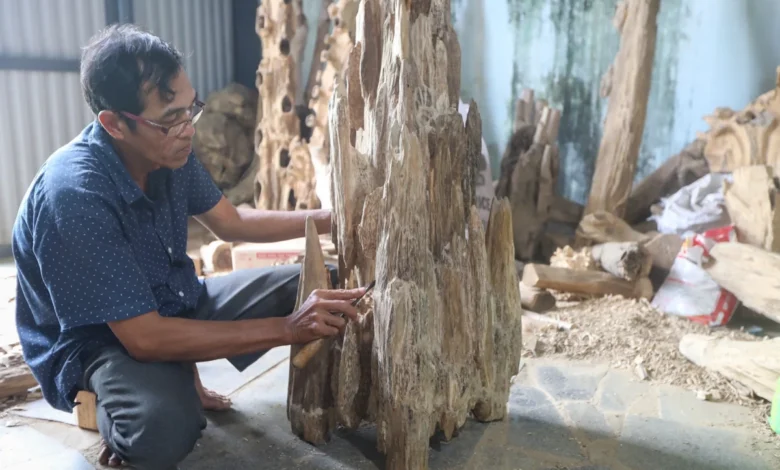
In the tranquil village of Van Thang, nestled within Vietnam’s coastal Khanh Hoa province, a centuries-old craft of unparalleled precision and patience thrives: the carving of agarwood. This ancient art, known locally as "soi tram" (agarwood inspection and carving), transforms raw Aquilaria wood into highly prized fragrant resin, representing not only a significant economic activity but also a profound cultural legacy for the community. The rhythmic scrape of knives and chisels against wood fills the air in workshops, revealing the hidden treasures of agarwood, a substance revered across Asia for its unique aroma in incense, perfumery, and traditional medicine.
The Demanding Craft of ‘Soi Tram’: Precision and Patience
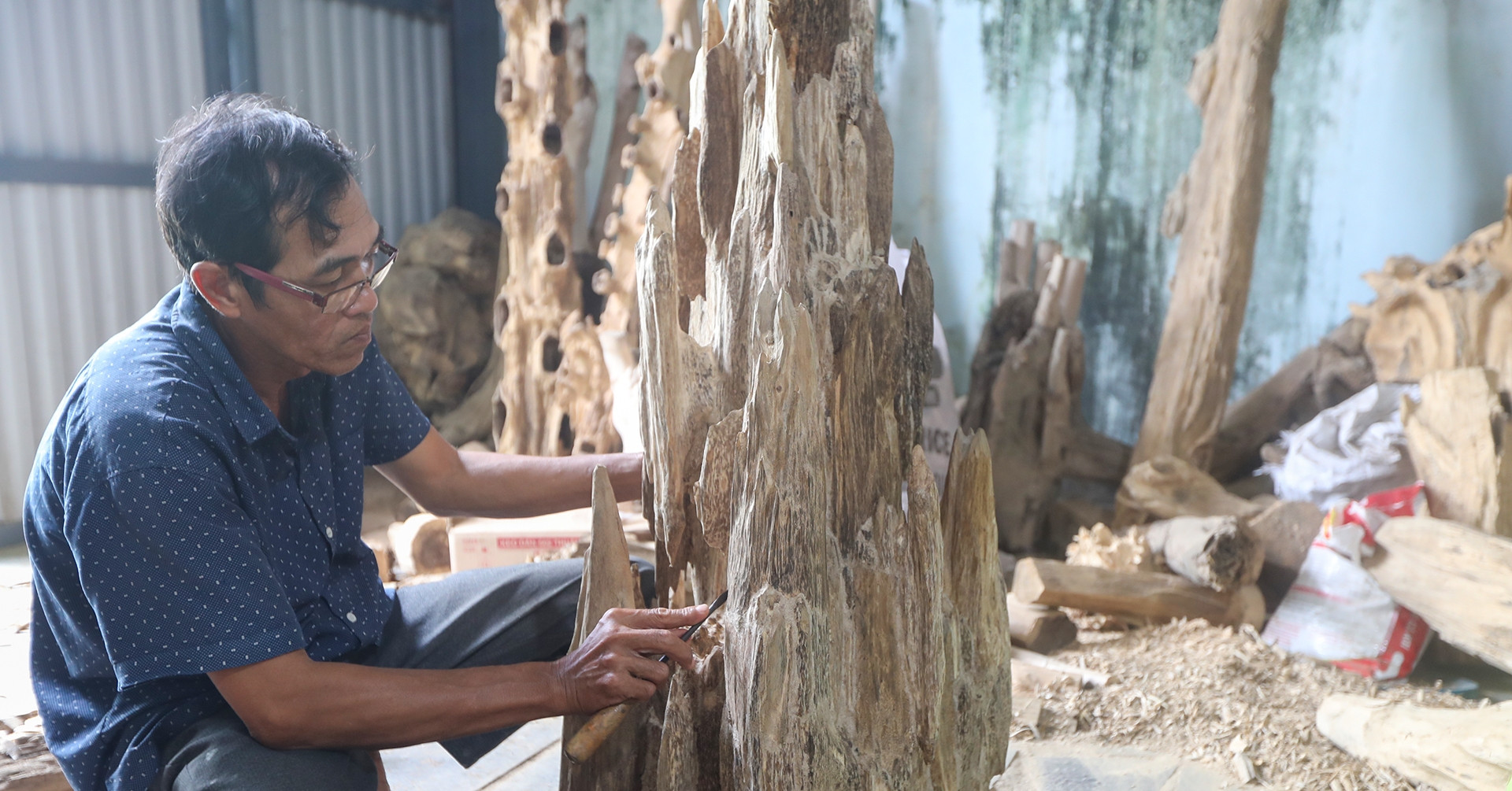
The workshops of Van Thang are hubs of intense focus, where artisans like Duong Ngoc Thai, 64, dedicate their lives to this intricate craft. With over four decades of experience, Mr. Thai demonstrates the meticulous process. A piece of agarwood, weighing approximately 200 grams, lies illuminated under a simple lamp as he works. One hand firmly holds the agarwood, while the other wields a small, sharp chisel, deftly navigating the wood’s intricate grain to extract the precious resin. "Even though it looks simple, holding a natural piece of agarwood and extracting the valuable essential oil within can take an entire day," Mr. Thai explains. "Just one slip of the knife, one wrong cut, can damage the entire piece, reducing its value significantly."
Mr. Thai’s journey into agarwood carving began before he turned 20, learning from his father the delicate art of handling tools, understanding wood patterns, and identifying the elusive agarwood hidden deep within the Aquilaria tree. The process of preparing a pristine piece of agarwood is multi-staged and laborious. Initially, the rough Aquilaria log, after being harvested and stripped of its outer bark and white sapwood, is brought to the workshop. Artisans then use larger chisels to meticulously remove the peripheral, less valuable wood, gradually approaching the core where the resinous agarwood resides. The final, most delicate stage involves small, specialized carving tools to painstakingly remove every last trace of non-resinous wood, leaving behind only the pure, fragrant agarwood. This precision is paramount, as the market value is directly tied to the purity and integrity of the agarwood piece.
Another seasoned artisan, Sau Thoi, also 64, echoes Mr. Thai’s sentiment, having spent more than 40 years mastering the trade. He is currently working on a raw agarwood log weighing around 10 kilograms, standing 80 centimeters tall and 50 centimeters wide – a piece he estimates will take nearly a month to fully carve into a valuable feng shui artifact suitable for display in a living room or office. "This craft was passed down by my ancestors," Mr. Thoi states. "Once you get used to the hands and eyes, you’ll stay with it for life."
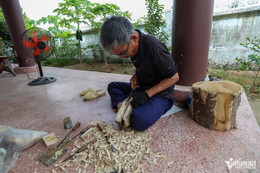
The inherent dangers of the craft are a testament to the artisans’ dedication. Working daily with razor-sharp knives and chisels, cuts, and lacerations are almost inevitable, a common experience for nearly every agarwood carver. Many who attempt to learn the trade quickly abandon it after a few bleeding incidents or after spending days yielding no valuable product. The profession demands not just skill, but an extraordinary level of patience and perseverance. "Even a slight miscalculation, and the knife goes astray, rendering the piece worthless," Mr. Thai shares. "Hot-tempered individuals cannot endure this profession."
Khanh Hoa’s Fragrant Legacy: A Historical Perspective
Agarwood, known globally as "wood of the gods," is a highly aromatic resinous wood formed in the heartwood of Aquilaria trees when they become infected with a specific type of mold. This infection triggers the tree to produce a dark, fragrant resin as a defense mechanism, which impregnates the wood, creating agarwood. Its value stems from its rarity, complex fragrance, and diverse applications in spiritual rituals, traditional medicine, and luxury perfumery. Historically, Vietnam, particularly regions like Khanh Hoa, has been renowned for producing some of the finest agarwood in the world. The province’s climate and geography have long fostered the growth of Aquilaria species, making it a natural hub for agarwood production.
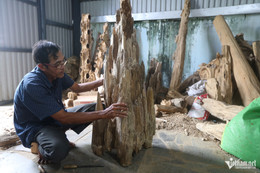
For centuries, wild agarwood was the primary source, leading to extensive harvesting and, eventually, the endangerment of wild Aquilaria populations. This historical context underscores the importance of the shift towards cultivated sources and sustainable practices that the Van Thang community is now embracing. The deep connection between the people of Van Thang and agarwood is not merely economic; it is cultural, inherited through generations, shaping their identity and way of life.
Economic Realities and Market Evolution
For Mr. Thai, this craft has been both a livelihood and the cornerstone of his family’s income for over four decades. His daily earnings average around 300,000 VND (approximately $12-13 USD), which he supplements by tending to five sao (about half an acre) of rice fields when workshop work is slow. Among his four children, three have chosen to follow in his footsteps, ensuring the continuity of the family’s agarwood legacy.
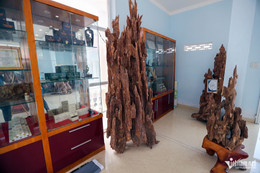
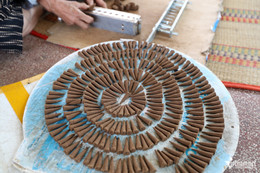
The products emerging from Van Thang’s workshops are diverse, catering to various markets and price points. From raw agarwood chips and intricate carved pieces for ornamental display (agarwood landscapes, Buddha statues) to wearable items like bracelets, necklaces, and prayer beads, the artisans transform the precious wood into a multitude of forms. They also produce agarwood incense cones, incense sticks, and powdered agarwood. Prices vary widely, with smaller items ranging from a few hundred thousand to several million VND. A high-grade 30-gram box of agarwood incense cones can fetch around 1.2 million VND (approximately $50 USD). Exquisitely carved agarwood pieces, particularly those with naturally occurring intricate patterns and high resin content, can command tens of millions of VND, depending on their grade and craftsmanship. The value is determined by the amount of essential oil, the fragrance profile, its purity, and its longevity. Top-tier agarwood can even be traded at several hundred thousand to several million VND per gram, rivaling the price of gold.
The Cooperative’s Role and Embracing Digital Frontiers
Tran Cong Duc, Chairman of the Van Thang Agarwood Cooperative, highlights the scale of the industry in the area. Currently, over 400 households in the commune are involved in the agarwood carving trade, producing a wide array of products including agarwood incense, carved pieces, and decorative items. The Van Thang Agarwood Cooperative itself comprises 14 official members and is linked to approximately 50 other households. Their products are sold directly to customers, tourists seeking unique souvenirs, and those looking for meaningful gifts.
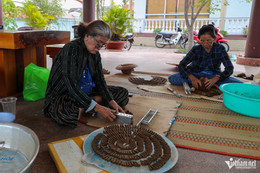
While local and tourist sales form the backbone of their market, some products have found their way to international markets in China, Japan, and India. However, Mr. Duc acknowledges that export volumes remain limited, and the cooperative lacks large, stable distribution channels, still relying heavily on traditional traders. This situation underscores a common challenge for traditional craft villages in Vietnam: scaling up production and market access while maintaining artisanal quality.
In recent years, a new "marketplace" has emerged for Van Thang’s agarwood artisans: social media platforms. Facebook, TikTok, and Shopee have become vital tools for direct marketing and sales. Artisans now film themselves meticulously carving, shaping, and producing incense, then upload these videos online. This direct engagement allows them to showcase their craft, build trust with potential buyers, and reach a broader customer base far beyond the confines of their village. This digital transformation represents a significant adaptation, allowing a traditional industry to leverage modern technology for survival and growth.
Cultivating Sustainability: A Future for Agarwood
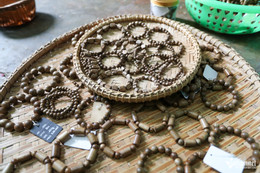
The agarwood industry in Van Thang has faced its share of adversity. Mr. Duc recalls a challenging period in the 1990s when the agarwood market collapsed due to fluctuating demand and traders ceasing purchases. Many skilled artisans were forced to abandon their craft and seek alternative employment. However, the village eventually recovered, largely by shifting its focus from selling raw materials to diversifying into finished products like agarwood incense, prayer beads, Buddha figures, and carved pieces.
Crucially, the source of raw materials has also undergone a significant transformation. Historically, wild agarwood (trầm rừng) was the primary source. Today, the majority of agarwood comes from Aquilaria trees cultivated in mountains and home gardens, typically harvested after 10-15 years. Furthermore, some growers are now adopting advanced methods, such as inoculating Aquilaria trees with microbial fungi to induce agarwood formation. This innovative approach helps to limit reliance on natural forest resources, ensuring a more sustainable foundation for the industry’s long-term development. This move towards cultivation and controlled inoculation is vital for conservation efforts and securing a stable supply chain, mitigating the environmental impact associated with historical over-harvesting of wild trees.
Challenges and Enduring Resilience
Despite these advancements and adaptations, challenges persist. The market, while recovering, remains somewhat dependent on traders, and establishing direct, stable export channels is an ongoing goal. The meticulous nature of the craft also means production cannot be easily scaled up or standardized like other manufactured goods. Each piece of wood presents a unique challenge; artisans must carefully observe its natural shape and internal structure to determine which parts to keep and which to discard. Sometimes, a curved piece of wood may hold immense value, while other times, a tiny, deeply embedded resin vein dictates the worth of an entire product. This individualistic approach to each piece ensures artistic integrity but limits mass production.
Yet, the artisans of Van Thang remain resilient. Their commitment to the craft is a testament to the enduring power of tradition and the human spirit’s ability to adapt. The sight of young apprentices, often children of veteran carvers, learning the ropes suggests a hopeful future for this fragrant heritage. As the delicate scent of agarwood wafts through the village, it carries with it stories of dedication, artistic mastery, and a community’s unwavering commitment to preserving a craft that is as precious as the wood itself. The journey from raw log to exquisite, fragrant artifact is not just a commercial endeavor; it is a cultural narrative, painstakingly carved, piece by precious piece, by the skilled hands of Van Thang.
Related posts: