As the deadline for new road safety regulations approaches, automotive forums and parenting groups across Vietnam have become hubs of intense debate and anxiety. With the mandatory requirement for child safety seats looming, thousands of car owners find themselves in a state of indecision. Despite having researched various products for months, many parents are still reluctant to finalize their purchases, citing a lack of clear technical guidance and the fear of investing in equipment that may not meet future official standards.
The Regulatory Landscape and the Looming Deadline
The catalyst for this surge in concern is the Law on Road Traffic Order and Safety, which introduces more stringent protections for young passengers. Under the new framework, specific provisions require children under a certain age and height to be secured in specialized Child Restraint Systems (CRS) when traveling in private passenger vehicles. The regulation aims to align Vietnam’s road safety standards with international best practices, significantly reducing the risk of injury or fatality in the event of a collision.
Specifically, the Ministry of Transport issued the National Technical Regulation on Child Safety Devices on Automobiles, coded as QCVN 123:2024/BGTVT. While the regulatory intent is clear—to save lives—the practical implementation has hit a significant bottleneck. As of mid-2024, the infrastructure required to certify these seats within Vietnam is still being established, leaving both consumers and retailers in a state of "legal limbo."
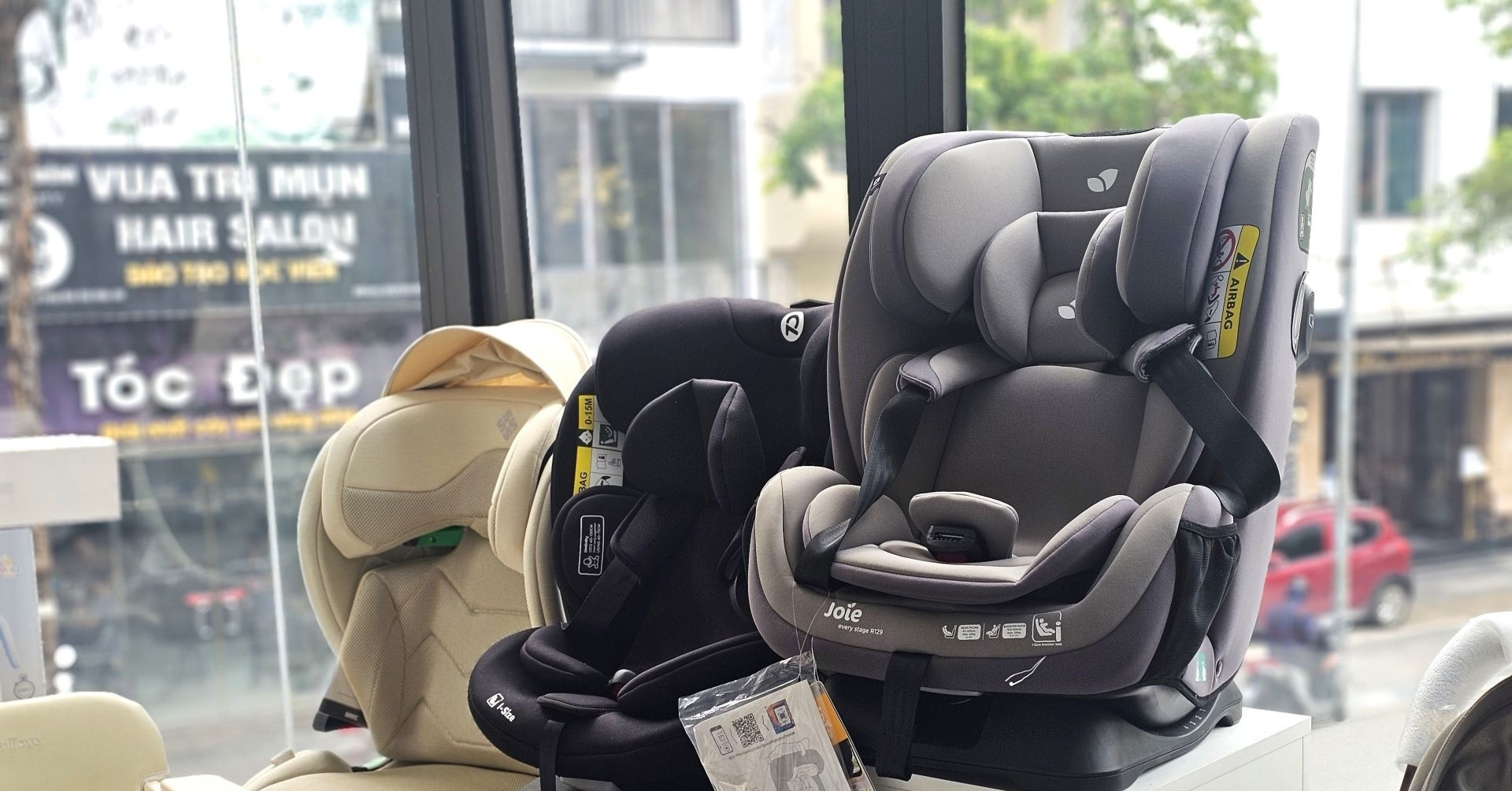
Parental Dilemmas: Safety vs. Standardization
For many families, the decision to purchase a child seat is not merely a matter of compliance but a significant financial investment. Mr. Nguyen Minh Duc, a resident of Tu Liem, Hanoi, who owns a seven-seater SUV, expresses a sentiment shared by many. Although he frequently travels with his four-year-old daughter and fully supports the safety initiative, he remains hesitant to "pull the trigger" on a purchase.
"I have seen seats ranging from a few million to over ten million VND," Mr. Duc noted. "If I buy one now and the authorities later release a list of approved products that does not include the model I chose, it would be a massive waste of money. On the other hand, if I wait past the July 1st milestone, I risk being penalized for non-compliance."
This apprehension is echoed by Ms. Hoang Thu Trang from Thanh Xuan, Hanoi. After taking her six-year-old son to several showrooms to test various models, she left empty-handed. Retailers often claim their products meet European (ECE R44/04 or R129) or American (FMVSS 213) standards. However, Ms. Trang points out that there is currently no official confirmation that these international certifications will be automatically recognized by Vietnamese regulators. "Spending several million VND is a major decision for any family. We need certainty that the product is both legal and effective," she said.
The Technical Gap: A Lack of Certified Testing Agencies
The primary source of consumer hesitation lies in a recent report from the Vietnam Register (VR) to the Ministry of Construction. According to the report, while QCVN 123:2024/BGTVT is technically in effect, there is currently no domestic organization fully equipped and authorized to perform the necessary testing and certification for these safety devices.
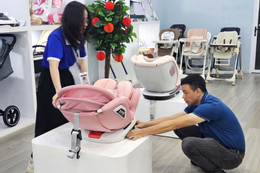
This creates a paradox: the law requires the use of standardized equipment, but the mechanism to prove a product meets that standard is not yet operational. To address this, the Vietnam Register has proposed a temporary solution. They have requested the Ministry of Construction to allow the Motor Vehicle Testing Center (VMTC) to conduct interim testing and certification for a period of six months, or until a permanent specialized agency is established.
This regulatory lag has stifled the market. While foot traffic in baby gear and automotive accessory shops has increased by an estimated 30-40% in recent weeks, actual sales figures have not kept pace. Mr. Nguyen Linh, an owner of an automotive accessory shop in Hanoi, observed that customers spend hours asking detailed questions about ISOFIX attachments and crash test ratings, only to conclude the visit by saying they need more time to "think it over."
The "Yellow Plate" Loophole: A Risky Alternative
In a concerning development, some car owners have begun discussing ways to circumvent the regulation entirely. On social media platforms, a segment of drivers has suggested switching their private vehicle registration from "white plates" to "yellow plates" (commercial vehicle registration).
The logic behind this maneuver is based on the current draft of the regulation, which primarily targets private passenger cars. Some believe that by registering as a commercial vehicle—such as a contract car or a taxi—they might be exempt from the mandatory child seat requirement. However, legal experts warn that this "loophole" is fraught with disadvantages. Commercial vehicles are subject to more frequent and rigorous technical inspections, higher insurance premiums, and stricter regulations regarding parking and route access. Furthermore, prioritizing a bureaucratic workaround over the physical safety of a child is a gamble that experts strongly advise against.
Supporting Data: Why Child Seats are Non-Negotiable
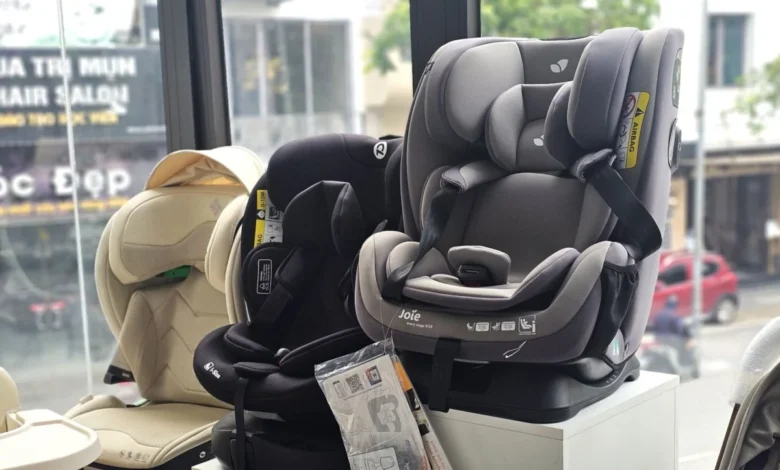
While the legal debate continues, the scientific data regarding child safety is unequivocal. According to the World Health Organization (WHO), the use of a correctly installed child restraint system can reduce the risk of death for infants by approximately 70% and for small children by 54% to 80% in the event of an accident.
In Vietnam, road traffic accidents remain a leading cause of injury for children. Standard vehicle seatbelts are designed for adults with a minimum height of 1.45 meters. When used on a child, the lap belt often rests on the abdomen rather than the pelvis, and the shoulder belt can cross the neck rather than the chest. In a crash, this can cause devastating internal injuries or strangulation.
| Age Group | Recommended Device | Safety Impact |
|---|---|---|
| Infants (0-2 years) | Rear-facing seat | Prevents neck and spinal cord injury |
| Toddlers (2-4 years) | Forward-facing seat with harness | Distributes impact forces across the body |
| Children (4-10 years) | Booster seat | Ensures seatbelt fits correctly over strong bones |
Chronology of the Safety Initiative
The road to mandatory child safety seats in Vietnam has been a multi-year process:
- 2020-2022: Initial proposals were floated by road safety advocacy groups and the Ministry of Public Security to include child protection in the new traffic laws.
- Early 2024: The Ministry of Transport officially issues QCVN 123:2024/BGTVT, setting the technical bar for safety devices.
- June 2024: The Vietnam Register reports the lack of certified testing centers, leading to the current state of consumer uncertainty.
- July 1st Milestone: The expected commencement of the new Law on Road Traffic Order and Safety, though enforcement specifics regarding child seats continue to be refined.
Broader Impact and Expert Recommendations
The transition to mandatory child safety seats represents a significant cultural shift in Vietnam. For decades, it has been common practice for parents to hold children in their laps or allow them to stand in the footwell of cars. Changing these habits requires more than just a law; it requires a reliable supply chain of certified products and clear communication from the government.

Industry experts suggest that despite the current lack of domestic certification, parents should not wait until the last minute. "The goal of the law is protection, not punishment," says a road safety consultant. "If a seat carries a reputable international certification like ECE R44/04 or the newer i-Size (R129) standard, it is fundamentally designed to save a child’s life. Waiting for a local stamp of approval while driving without any protection is a dangerous priority."
Furthermore, the government is encouraged to provide a "grace period" where traffic police focus on education rather than fines. This would allow the market to stabilize and give the Vietnam Register time to authorize testing agencies.
Conclusion: Prioritizing Lives over Paperwork
As the "G-hour" approaches, the tension between regulatory readiness and public safety remains high. For parents like Mr. My in Bac Ninh, who is considering waiting until after July 1st to see how the situation unfolds, the risk is real. While his children are older and may only require booster cushions, the lack of clarity on whether these cushions need ISOFIX attachments or specific local labels keeps him from buying.
The consensus among safety advocates is clear: the technicalities of "conformity certification" should not overshadow the primary objective of the law. While the government works to finalize the certification infrastructure, the responsibility falls on parents to choose reputable, internationally-tested products. In the long run, the establishment of QCVN 123:2024/BGTVT will likely lead to a safer, more regulated market, ensuring that every child in Vietnam is afforded the same level of protection as those in developed nations. For now, the message to parents is to prioritize the physical security of their children over the fear of a potential administrative mismatch.