V-Green Temporarily Suspends EV Charging Station Franchise Applications to Review National Network Planning and Optimization Strategy

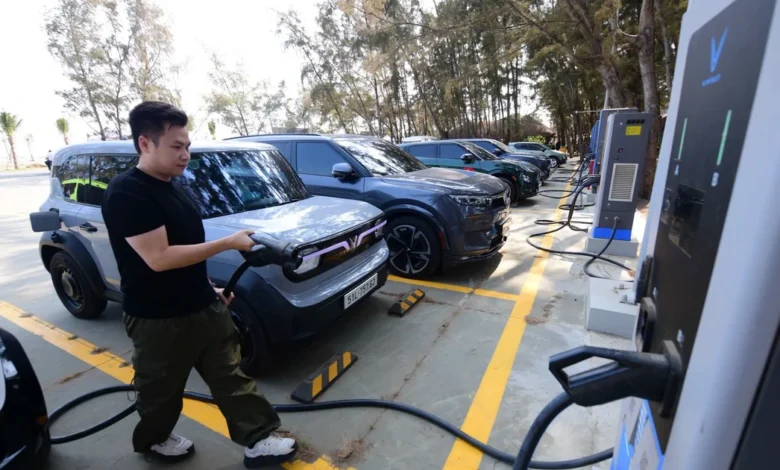
V-Green Global Charging Station Development Joint Stock Company, a key entity within the Vingroup ecosystem, has officially announced a temporary suspension of new franchise applications for its electric vehicle (EV) charging station network, effective from August 6, 2024. This strategic pause is intended to allow the company to conduct a comprehensive review of its existing network planning and to prepare for the next phase of its national development strategy. According to the company, the suspension is a proactive measure to ensure that the rapid expansion of Vietnam’s EV infrastructure aligns with long-term efficiency, technical standards, and geographical demand.
Established by billionaire Pham Nhat Vuong, the Chairman of Vingroup, V-Green was created to spearhead the development of a comprehensive charging infrastructure that currently serves VinFast electric vehicles exclusively. The company’s decision to pause the "V-Green Partner" franchise program comes at a time when Vietnam is witnessing a significant surge in electric vehicle adoption, necessitating a more calculated approach to infrastructure density and grid stability.
Detailed Timeline and Administrative Procedures
The suspension officially commenced at 0:00 on August 6, 2024. V-Green has clarified that this is not a termination of the franchise model but a necessary "re-calibration" period. For investors and partners who had already submitted complete application dossiers prior to this deadline, the company confirmed that the appraisal process would continue as scheduled.
The anticipated timeline for feedback on these pending applications is no later than August 16, 2024. Furthermore, for those locations that have already received planning approval, partners must finalize all administrative requirements and sign formal cooperation contracts before September 15, 2024. V-Green warned that failure to meet this mid-September deadline would result in the expiration of the planning approval, at which point the company reserves the right to withdraw, adjust, or reallocate those specific locations to other partners or internal projects.
The V-Green Strategic Vision and Market Context
V-Green was spun off from VinFast’s charging station division earlier this year with the specific goal of becoming a global leader in EV infrastructure. By making V-Green an independent entity, Vingroup aims to alleviate the capital expenditure burden on VinFast, allowing the automaker to focus on vehicle production and global sales while V-Green focuses on the "hardware" of the EV transition.
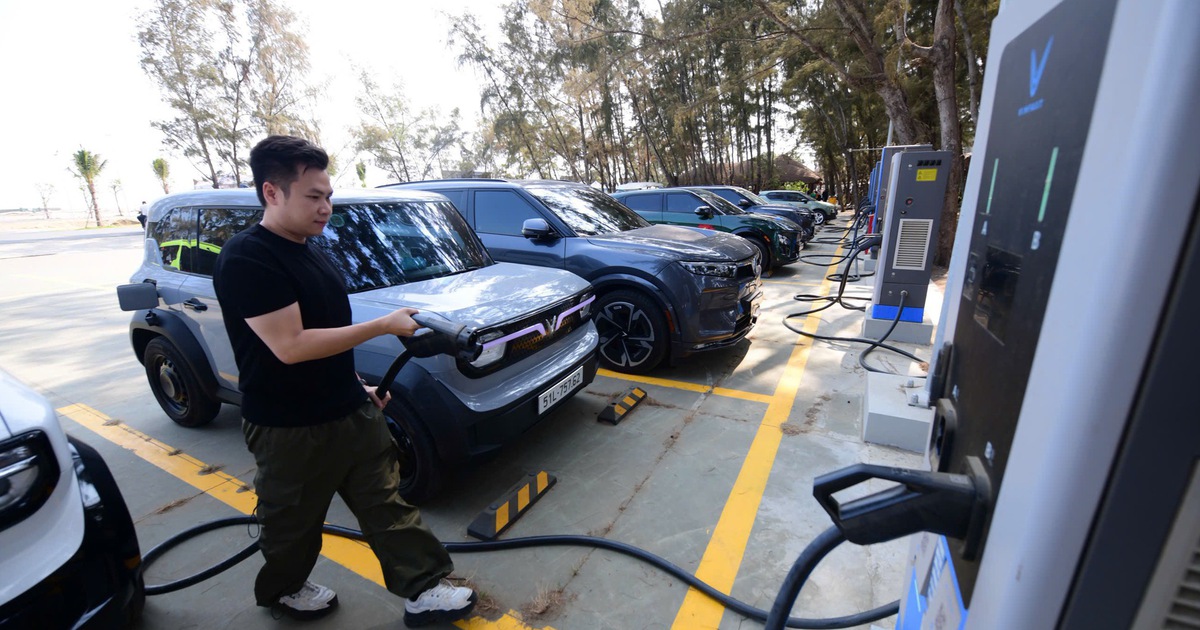
To date, V-Green has successfully deployed more than 150,000 charging ports across all 63 provinces and cities in Vietnam. This makes it the largest and most comprehensive charging network in the country. While the network is currently dedicated to VinFast vehicles, its sheer scale provides a formidable competitive moat as international competitors, such as China’s BYD and Geely, begin to enter the Vietnamese market. These competitors currently face a significant hurdle: the lack of a widespread, accessible charging network, as V-Green has not yet opened its stations to third-party brands.
Analysis of the Franchise Investment Model
The franchise program offered by V-Green has attracted considerable interest from local entrepreneurs and landowners. Under the publicized policy, V-Green offers a revenue-sharing model where partners receive 750 VND per kilowatt-hour (kWh) of electricity dispensed at their station. This incentive is guaranteed for a minimum of 10 years, providing a predictable revenue stream for investors.
Beyond the monetary sharing, V-Green provides comprehensive technical support, including management software, payment processing systems, maintenance services, and marketing support. This "plug-and-play" business model was designed to accelerate the density of the network by leveraging local land assets.
However, the financial barrier to entry remains a critical consideration for potential franchisees. The cost of equipment varies significantly based on the power output and charging speed:
- AC 11 kW Chargers: Approximately 10.2 million VND per unit (after a 15% discount for full payment). These are typically suited for residential areas or long-stay parking.
- DC 20 kW Chargers: Approximately 85 million VND.
- DC 30 kW Chargers: Upwards of 121 million VND.
- DC 60 kW Chargers: Approximately 236 million VND.
- DC 120 kW Fast Chargers: Nearly 354 million VND.
It is important to note that these figures represent equipment costs only. Investors must also account for site preparation, electrical grid connection, the installation of transformers, construction permits, and ongoing operational overhead. A small-scale charging point can easily require an initial investment of several hundred million VND, while large-scale hubs with multiple high-capacity fast chargers can require billions of VND in capital.
The Necessity for Planning Review
The decision to pause applications for a planning review highlights the complexities of urban development in Vietnam. As charging stations proliferate, several challenges have emerged that require a centralized strategic response:
- Grid Capacity: High-speed DC chargers place immense localized strain on the electrical grid. V-Green must coordinate with the Vietnam Electricity (EVN) group to ensure that new franchise locations do not compromise local power stability.
- Geographical Optimization: To avoid "cannibalization" between franchise partners, V-Green needs to ensure that stations are not placed too close together. Conversely, they must identify "blind spots" where infrastructure is lacking despite high vehicle traffic.
- Standardization: As the technology evolves, V-Green is likely looking to standardize the ratio of slow AC chargers to ultra-fast DC chargers based on the specific use case of the land (e.g., shopping malls vs. highway rest stops).
Market Reactions and Implications
Industry analysts view this move as a sign of organizational maturity. Rather than pursuing growth at any cost, V-Green is prioritizing the sustainability of its partner ecosystem. If the network becomes over-saturated in certain districts, the ROI for individual franchisees would drop, potentially leading to station closures and a fragmented user experience.
Existing partners with signed contracts are unaffected by this suspension, as V-Green confirmed that all current agreements remain in full legal force. This reassures current investors that the company is committed to its long-term revenue-sharing promises.
For the broader Vietnamese EV market, the pause signals a temporary bottleneck. Potential investors who were on the fence will now have to wait for the "next phase" of development. This may provide a small window of opportunity for independent charging startups or international providers to secure land leases, although competing with Vingroup’s localized influence and existing footprint remains a daunting task.
Future Outlook: Phase Two of V-Green
The "next phase of development" alluded to by V-Green is expected to involve more advanced charging technologies and potentially a more integrated smart-grid approach. There is also ongoing speculation regarding whether V-Green will eventually open its network to other EV brands. While the current focus is on supporting VinFast’s market dominance, the long-term profitability of a charging network often depends on high utilization rates, which are best achieved by serving a multi-brand fleet.
Furthermore, V-Green’s mandate includes international expansion. As VinFast expands into markets like the United States, Philippines, Thailand, and Indonesia, V-Green is expected to play a role in securing infrastructure partnerships abroad. The lessons learned during this Vietnamese planning review will likely form the blueprint for their international deployment strategy.
Conclusion
V-Green’s temporary suspension of franchise applications is a calculated tactical move aimed at ensuring the long-term viability of Vietnam’s primary EV charging artery. By enforcing a strict deadline of September 15 for current approvals and halting new entries, the company is effectively clearing the "administrative backlog" and preparing for a more data-driven approach to infrastructure placement.
For investors, the message is clear: EV charging in Vietnam is a high-potential but capital-intensive industry that requires meticulous planning. As the company reviews its network, the industry awaits the unveiling of the updated planning criteria, which will define the landscape of Vietnamese green transportation for the next decade. V-Green continues to be the linchpin in Vingroup’s green mobility ecosystem, and its evolution from a rapid-growth startup to a strategically disciplined infrastructure giant is a pivotal development for the nation’s energy transition.