Understanding the Correct Use of the Left Lane on Expressways According to Traffic Police Explanations

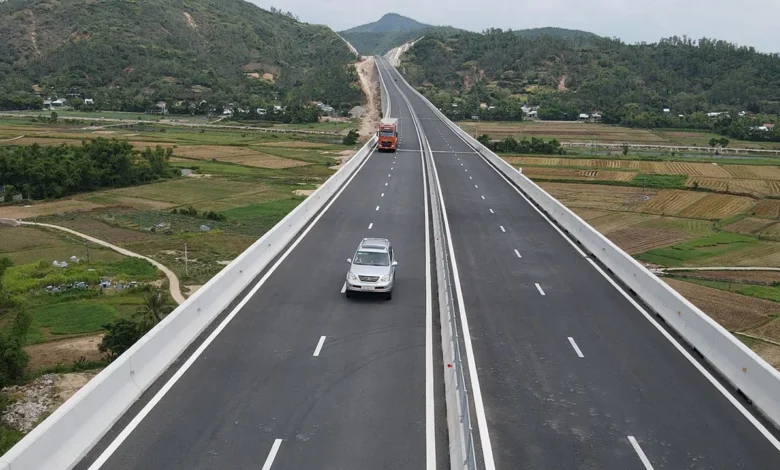
The legal framework governing traffic on Vietnam’s rapidly expanding expressway network has become a focal point of public discourse, particularly concerning the etiquette and legality of lane usage. Recent clarifications from the Traffic Police Department (C08) under the Ministry of Public Security have sparked a significant debate among motorists regarding the "left lane" and whether drivers are obligated to yield when traveling at the maximum permitted speed. According to the latest interpretations of the Law on Road Traffic Order and Safety 2024 and Decree 168/2024, the regulation of expressway traffic relies on two distinct scenarios: driving at the maximum speed limit and driving below the maximum speed limit.
The Legal Distinction: Maximum Speed vs. Lower Speed
The fundamental principle enshrined in Vietnamese traffic law dictates that vehicles traveling at a lower speed must stay to the right of the direction of travel. This rule applies regardless of whether the road is a standard highway or a multi-lane expressway. However, the application of this rule becomes complex when a driver is already traveling at the maximum speed limit allowed for that specific route.
Under the Law on Road Traffic Order and Safety 2024, if a motorist is driving in the leftmost lane (often referred to as Lane 1) and is maintaining the maximum speed—for example, 120 km/h on a segment where 120 km/h is the ceiling—they are not legally required to move to the right to allow a following vehicle to pass, provided the following vehicle is not an emergency vehicle on duty. The rationale provided by the Traffic Police is that if the leading vehicle is already at the limit, any vehicle attempting to pass it would, by definition, be exceeding the legal speed limit.
However, the Traffic Police Department emphasizes a critical caveat: this legal standing does not override the importance of driving culture and safety ethics. While a driver at 120 km/h might not be "breaking the law" by holding their lane, authorities strongly recommend yielding the lane if it is safe to do so. The following vehicle may be facing an emergency that is not immediately apparent, such as transporting a person in critical condition to a hospital or experiencing a mechanical failure like a stuck throttle or brake malfunction.
The Absence of "Overtaking" on Multi-Lane Expressways
One of the most significant clarifications provided by the C08 is the technical definition of "overtaking." In the context of an expressway with multiple lanes moving in the same direction, the traditional concept of "overtaking" (which usually involves moving into a lane of opposing traffic) does not exist. Instead, the maneuver is classified as a lane change or simply "passing."
Because expressways are designed with segregated carriageways, a vehicle in the right lane moving faster than a vehicle in the left lane is not considered to be "overtaking on the right" in a prohibited sense. This distinction is vital for understanding why the law focuses on lane discipline rather than "passing" maneuvers. If a driver in the left lane is moving slower than the maximum limit, they are obstructing the flow of traffic, and it is their responsibility to move to the right, allowing faster-moving traffic to utilize the left lane.
Chronology of Regulatory Development
The evolution of expressway regulations in Vietnam has tracked the country’s infrastructure boom. Over the last decade, the North-South Expressway project and various regional links have shifted the driving environment from predominantly mixed-traffic provincial roads to high-speed, controlled-access environments.
- The 2008 Law on Road Traffic: This served as the primary foundation but lacked specific, nuanced provisions for high-speed expressway behavior, leading to common "lane-hogging" habits where drivers stayed in the left lane regardless of speed.
- The Rise of Expressway Networks (2015–2023): As routes like the Phap Van-Cau Gie, Long Thanh-Dau Giay, and various segments of the North-South Expressway opened, conflicts between "slow" left-lane drivers and "fast" following drivers increased, leading to a rise in tailgating and aggressive driving.
- Decree 100/2019 and Decree 123/2021: These introduced stricter penalties for stopping or parking on expressways and for failing to signal during lane changes, but the "left lane" issue remained a grey area in terms of enforcement.
- The 2024 Reform: The Law on Road Traffic Order and Safety 2024 was drafted to specifically address the realities of modern infrastructure. It clarifies that the left lane is intended for higher speeds and that staying in the left lane while moving slowly is a punishable offense.
Safety Implications of Lane Hogging
Safety experts and driving instructors associated with the annual "Car Awards" have highlighted the severe risks associated with improper lane usage. When a vehicle travels slowly in the left lane, it creates a "rolling roadblock" effect. This often forces faster drivers to engage in "zigzagging"—frequently changing lanes to bypass the slow vehicle.
Data from road safety audits suggests that frequent lane changing at high speeds is one of the leading causes of expressway collisions. The "blind spot" on the right side of a vehicle is typically larger than on the left; therefore, when a driver is forced to pass a slow-moving vehicle on the right, the risk of a side-swipe collision increases significantly.
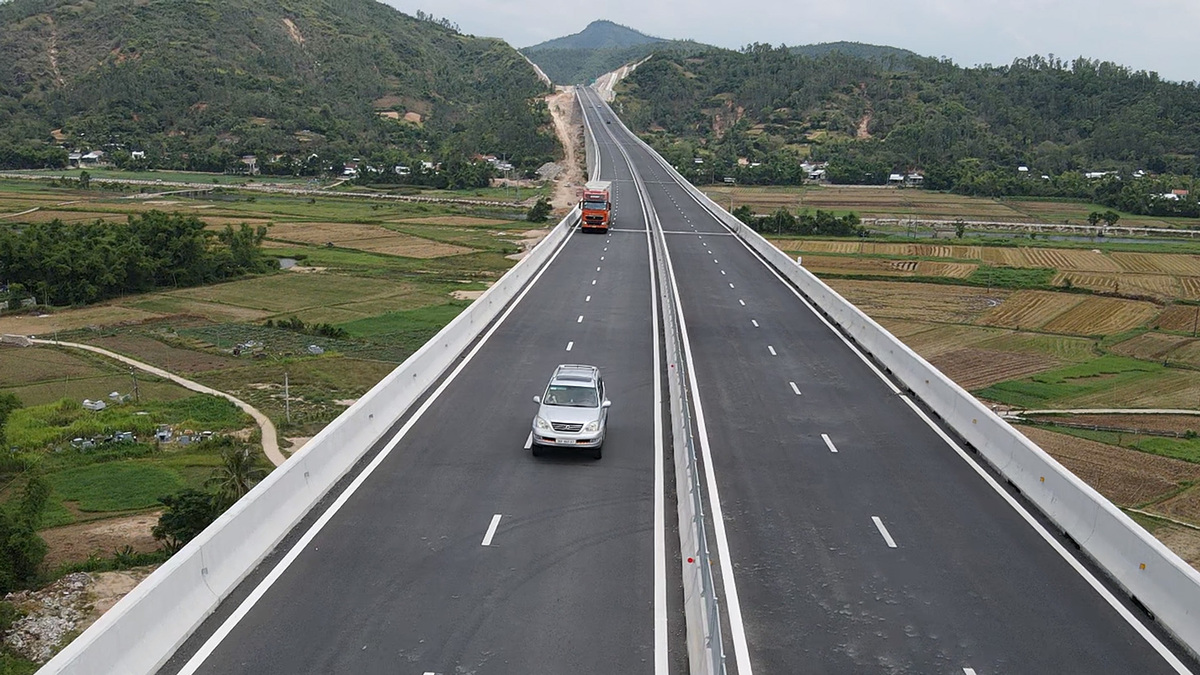
Furthermore, the "filling the gap" phenomenon occurs when slow drivers occupy the left lane. Faster drivers, frustrated by the obstruction, often tailgate (follow too closely), reducing the reaction time available if the lead driver suddenly brakes. If the slow driver eventually decides to move over without proper observation, or if the faster driver loses patience and swerves, the result is often a high-speed multi-vehicle pile-up.
International Benchmarking and Future Proposals
The Traffic Police Department has acknowledged that many developed nations have long-standing "Keep Right Except to Pass" laws. In Germany, the Autobahn operates on a strict principle where the left lane is exclusively for passing. Once a maneuver is complete, the driver must return to the right. Similar laws exist in many states in the U.S. and across the United Kingdom.
Vietnam is currently moving toward a similar model. The C08 is currently researching and advising on supplementary regulations that would formally designate the leftmost lane on expressways as an "overtaking lane" or "passing lane." On certain routes, authorities have already begun installing advisory signs that read: "Slow vehicles stay to the right."
The proposed changes would likely include:
- Formalizing the requirement to return to the right lane after passing, regardless of whether one is traveling at the maximum speed.
- Increasing the use of "smart" camera systems (ITS) to detect and fine drivers who "hog" the left lane while traveling below the speed limit.
- Standardizing signage across all expressway segments to ensure drivers are aware of lane-specific speed requirements.
Official Responses and Driver Education
The C08’s recent clarification is part of a broader effort to improve "traffic culture" in Vietnam. Officials argue that law enforcement alone cannot solve the issue; it requires a shift in driver psychology. Many drivers in Vietnam prefer the left lane because they perceive the road surface to be in better condition or because they want to avoid merging traffic from entrance ramps. However, this individual preference compromises the collective safety and efficiency of the road network.
"Yielding the lane is not just about following the law; it is about safety and civilization," a representative from the Traffic Police stated. "If you are in the left lane and someone behind you signals to pass, and you have the space to safely move to the right, you should do so. It reduces the chance of aggressive behavior and keeps the traffic flow predictable."
Impact on Expressway Capacity and Efficiency
The efficiency of an expressway is measured by its "throughput"—the number of vehicles that can pass a point in a given time. Lane hogging significantly reduces this capacity. When the left lane is blocked by a vehicle traveling at 80 km/h on a 120 km/h road, the entire multi-lane system effectively slows down to the speed of the slowest vehicle, causing "phantom traffic jams" where traffic halts for no apparent reason miles behind the original obstruction.
By enforcing stricter lane discipline, Vietnam aims to maximize the return on its multi-billion dollar investment in the expressway system. Ensuring that the left lane remains clear for faster traffic allows the network to operate at its designed capacity, reducing travel times for passengers and lowering logistics costs for the transport of goods.
Conclusion and Recommendations for Motorists
As the new regulations take hold, motorists are advised to adopt a "right-lane-first" mentality. For those traveling on expressways, the safest course of action is to stay in the right or middle lanes whenever possible. Use the left lane only when passing another vehicle or when maintaining the maximum allowable speed while remaining vigilant of traffic behind.
If a vehicle behind you flashes its lights or signals with a blinker, the safest and most professional response is to check your mirrors, signal, and move to the right as soon as a safe gap appears. This not only adheres to the recommendations of the Traffic Police but also contributes to a safer, more efficient driving environment for all. The transition to high-speed infrastructure requires a corresponding transition in driving habits, moving away from provincial road mentalities toward the disciplined lane management required for modern expressways.