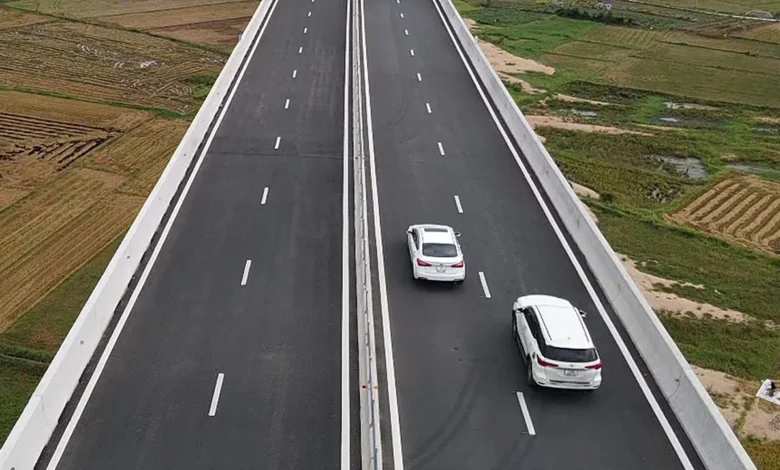
The Traffic Police Department under the Ministry of Public Security has recently clarified a significant point of confusion regarding traffic laws on Vietnam’s rapidly expanding expressway network, stating that the legal concept of "overtaking" does not technically exist on roads with multiple lanes in the same direction. According to Colonel Nguyen Quang Nhat, Head of the Department of Information, Dissemination, and Education on Traffic Order and Safety, the movement of vehicles on expressways is governed by lane usage regulations rather than the traditional definitions of overtaking applied to narrower, single-lane roads.
This clarification comes in response to a heated public debate among motorists and readers of major news outlets like VnExpress. The central point of contention involves a common scenario: if a driver is traveling at the maximum permitted speed—for instance, 120 km/h—in the leftmost lane, are they legally obligated to yield to a vehicle behind them that is signaling to pass? The Traffic Police Department’s guidance aims to resolve this ambiguity by aligning driver behavior with the Law on Road Traffic Order and Safety 2024, while also emphasizing the importance of driving culture and safety ethics.
The Legal Distinction Between Overtaking and Lane Switching
Under the newly refined legal framework, specifically the Law on Road Traffic Order and Safety 2024, "overtaking" is a concept strictly reserved for roads that have only one lane for each direction of travel. In such cases, a vehicle must move into the lane of oncoming traffic (the left side) to pass the vehicle in front before returning to its original lane. This maneuver is inherently high-risk and requires specific legal definitions to ensure safety.
However, expressways in Vietnam are designed with at least two lanes per direction. On these multi-lane roads, the action of moving past a slower vehicle is classified as lane switching or moving within designated lanes. Colonel Nhat explained that because there are multiple lanes available, a driver who wishes to go faster than the vehicle in front can simply change to an adjacent lane, provided they follow safety protocols. Therefore, the traditional restrictions and specific "overtaking" maneuvers do not apply in the same way.
The exception to this rule occurs on specific expressway segments that have been narrowed to a single lane per direction due to terrain or ongoing construction. On these stretches, "No Overtaking" signs are explicitly posted, and the legal prohibition of overtaking remains in full effect to prevent head-on collisions.
Chronology of the Debate and Infrastructure Evolution
The debate over lane etiquette has intensified as Vietnam accelerates its "Eastern North-South Expressway" project, aiming to complete a comprehensive high-speed road network. Historically, many drivers in Vietnam were accustomed to two-lane national highways where overtaking was a constant and dangerous necessity. As they transitioned to modern expressways like the Long Thanh–Dau Giay or the Trung Luong–My Thuan routes, old habits clashed with new infrastructure.
The timeline of this legal clarification follows several years of public outcry regarding "lane hogging." In 2022 and 2023, social media platforms were frequently flooded with dashcam footage of vehicles cruising at 80 km/h in the 120 km/h lane, refusing to move over and causing "phantom traffic jams." This led the Traffic Police and the Directorate for Roads of Vietnam to reassess how traffic is organized.
By mid-2024, the Ministry of Transport and the Traffic Police Department began implementing more rigorous lane organization strategies. This included piloting regulations that restrict heavy trucks and large passenger buses to the rightmost lanes to keep the left lanes clear for faster-moving light vehicles. The current statement by Colonel Nhat serves as the definitive legal interpretation of these ongoing changes.
Analyzing the 120 km/h Scenario: Law vs. Ethics
One of the most frequent questions posed by the motoring public is whether a driver at the speed limit must yield. Colonel Nhat clarified that if a driver is already maintaining the maximum speed of 120 km/h in the left lane, they are not technically violating the law if they choose to stay in that lane. Since the vehicle behind is also prohibited from exceeding 120 km/h, there is no legal basis for the following vehicle to demand a "pass" to go even faster.
However, the Traffic Police Department adds a crucial layer of nuance regarding "driving culture." Even if a driver is at the limit, they are encouraged to move to the right if it is safe to do so. Colonel Nhat noted that the vehicle behind might be in an emergency situation that is not immediately obvious, such as transporting a person to the hospital or experiencing a mechanical failure like a stuck throttle or brake malfunction.
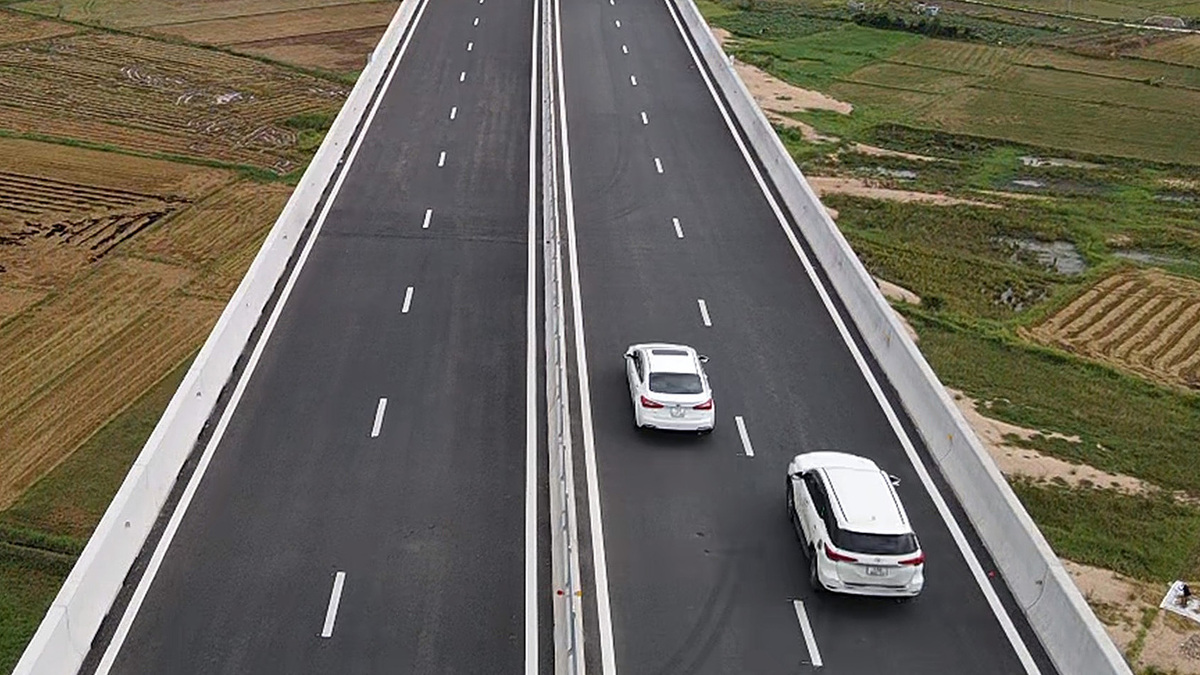
"From the perspective of traffic culture and safety, if conditions are safe, drivers should still yield," Colonel Nhat stated. "Moving to the right lane to let a faster vehicle pass can prevent aggressive driving, tailgating, and potential accidents caused by the frustration of the following driver."
Supporting Data and Traffic Safety Implications
The push for clearer lane regulations is backed by sobering data. According to statistics from the National Traffic Safety Committee, nearly 25% of accidents on expressways are attributed to improper lane changes or a failure to maintain safe distances. Furthermore, "inappropriate speed for the lane" is a contributing factor in many rear-end collisions.
On expressways with a 120 km/h limit, the difference in kinetic energy between a vehicle traveling at 80 km/h and one at 120 km/h is massive. When slower vehicles occupy the left lane, they force faster drivers to "weave" through traffic, moving to the right to pass and then back to the left. This weaving behavior is significantly more dangerous than a system where slower traffic consistently stays right.
By clarifying that "overtaking" does not exist on expressways, the Traffic Police are essentially telling drivers that they have the autonomy to use any lane to maintain their speed, as long as they do not exceed the limit and do not impede the flow of traffic. The data suggests that a "keep right except to pass" philosophy—even if not yet a rigid law in Vietnam—is the most effective way to reduce expressway fatalities.
Official Responses and Organizational Adjustments
The Traffic Police Department is not merely issuing statements; they are actively working with the Ministry of Construction and the Ministry of Transport to reorganize traffic flow. Colonel Nhat revealed that the department has advised on new traffic patterns where passenger buses and heavy trucks are strictly prohibited from the leftmost lane on certain expressway segments. This has already been seen on routes like the Cao Bo–Mai Son expressway.
Furthermore, the Traffic Police are researching potential amendments to the Law on Road Traffic to provide more specific regulations for "passing lanes." While current laws focus on speed and general lane usage, future iterations may explicitly designate the leftmost lane as a "passing only" lane, similar to the Autobahn in Germany or major Interstates in the United States.
For now, the official recommendation remains:
- Slower vehicles must stay right: If your vehicle’s technical capabilities or your personal comfort level limit you to a lower speed, you are legally required to use the rightmost lane.
- Signal clearly: When changing lanes to pass a slower vehicle, drivers must use indicators, ensure a safe distance, and avoid switching across multiple lanes at once.
- Maintain Distance: Regardless of lane choice, the rule of maintaining a safe following distance (usually 70-100 meters at high speeds) remains paramount.
Broader Impact and Future Outlook
The clarification by the Traffic Police is expected to have a profound impact on how traffic law is enforced and how drivers are trained. Driving schools are expected to update their curricula to emphasize expressway lane etiquette, moving away from the "overtaking" terminology that applies to rural roads.
For the judicial system, this clarification simplifies the process of determining fault in expressway accidents. If "overtaking" does not exist, then disputes over "overtaking on the right" (a common fine on old highways) are eliminated on expressways. As long as a driver stays within the speed limit and changes lanes safely, passing a vehicle on its right side is a legitimate maneuver on a multi-lane expressway.
As Vietnam aims to have over 5,000 kilometers of expressways by 2030, the maturation of driving behavior is just as important as the asphalt being laid. The Traffic Police Department’s move to redefine these concepts is a step toward a more sophisticated, safe, and efficient transport system. By focusing on "lane usage" rather than "overtaking," the authorities are fostering a smoother flow of traffic that matches the high-speed nature of modern infrastructure.
In conclusion, while the law does not currently mandate that a driver at the maximum speed must yield the left lane, the overarching message from the authorities is one of cooperation. The expressway is a shared resource, and the efficient movement of all vehicles depends on drivers understanding that the left lane is best utilized for those traveling at higher speeds, while the right lanes provide a safe haven for those moving more cautiously. The Traffic Police Department will continue to monitor traffic patterns and provide further counsel on legal adjustments to ensure that Vietnam’s expressways remain as safe as they are fast.