The landscape of Vietnam’s information technology (IT) recruitment sector is undergoing a profound structural transformation as generative artificial intelligence (AI) shifts from a peripheral interest to a core operational requirement. On October 7, 2024, VietnamWorks inTECH, the specialized IT recruitment brand under Navigos Group, released a comprehensive report titled "The State of IT Human Resources and Recruitment in the AI Wave – 2024-2025." The study, based on primary data collected from 1,500 employees and nearly 500 enterprises throughout July and August 2024, provides a definitive look at how AI is fundamentally reordering the labor market, salary benchmarks, and the essential skill sets required for modern software development and management.
The Current State of the IT Job Market
Data from the first half of 2024 indicates that the IT employment sector in Vietnam has reached a level of stabilization, with a turnover rate hovering at approximately 32%. This figure represents a cooling period following the volatile shifts observed during the post-pandemic era. However, beneath this relative calm lies a highly mobile workforce. The report highlights that over 65% of IT professionals are either currently seeking new opportunities or are actively planning to transition to new roles within the next 6 to 12 months.
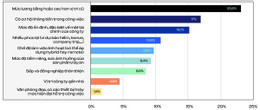
This high level of mobility is driven by three primary factors: a desire for salaries that meet or exceed current market benchmarks, the search for clearer pathways for professional advancement, and the demand for long-term financial stability within their employing organizations. Interestingly, there has been a notable 10% increase in the number of candidates willing to take on heavier workloads and multi-disciplinary responsibilities compared to the same period last year. This trend signals that in a competitive market, top-tier talent is increasingly willing to trade higher effort for career growth and increased visibility.

Emerging Recruitment Trends and AI Integration
The survey provides a stark look at which roles are currently the most challenging to fill. Employers cited product management and product development roles as the most difficult to source, accounting for 25.6% of responses. Most businesses reported that these roles remain vacant primarily because candidates fail to meet the specific, evolving requirements of the firms, particularly regarding their ability to integrate AI-driven workflows into product lifecycles.
Looking toward 2025, the demand for IT personnel is becoming increasingly specialized. While core technical development remains essential, there is a massive surge in demand for roles involving AI and data science. Backend and frontend developers remain the most sought-after positions (22.5%), followed by Product Owners, Product Managers, and Project Managers (15.7%).
The "AI Premium" in Salary Structures
Perhaps the most significant finding from the Navigos Group report is the emergence of an "AI salary premium." Recognizing the specialized expertise required to develop, manage, and implement AI models, companies are increasingly willing to pay a premium for this specific talent pool.
The data shows that 43.7% of surveyed enterprises offer salaries for AI-specialized roles that are 10% to 20% higher than standard IT positions. Even more striking, 18.4% of respondents confirmed that they are paying a premium ranging from 20% to 50% for AI-literate talent. This trend reflects a market-wide realization that AI is no longer a luxury but a fundamental engine for business efficiency and competitive advantage.

Professional Shifts and Skill Evolution
Phan Thanh Hien, Director of Product and Technology at Navigos Group, emphasizes that the breakthroughs in Generative AI have created vast opportunities for enterprises. "AI is not just a tool; it is a catalyst for the total re-engineering of work processes," Hien noted. "For IT personnel, the ability to leverage AI is now the defining factor in productivity."
According to the report, over 80% of IT professionals surveyed are already utilizing AI to assist in their daily tasks, with nearly 60% using these tools on a daily basis. This is causing a seismic shift in how traditional roles are performed:
- Developers: Instead of writing code from scratch, developers are now focusing on architecture, system design, and AI-assisted code generation, using AI to identify bugs and optimize performance.
- Quality Assurance (QA) Engineers: These professionals are shifting toward automated test script generation using AI, which significantly reduces testing time and increases coverage.
- Product Managers: AI is being used for data analysis and market research, allowing managers to make data-driven decisions at a much faster pace.
Hien warns that those who fail to adapt risk becoming obsolete. "The era of the ‘traditional coder’ is ending. The industry now demands professionals who can function as ‘AI-augmented engineers.’ The risk of being phased out is very real for those who ignore this technological evolution."
Strategies for the Future: A Two-Pronged Approach
The report concludes with clear recommendations for both candidates and enterprises. For employees, the message is one of continuous, aggressive upskilling. Beyond technical coding skills, workers must master the art of "prompt engineering," AI model fine-tuning, and the ethical implementation of AI.
For businesses, the focus must shift toward culture and investment. Companies are encouraged to invest in internal training programs and create a corporate culture that encourages experimentation with AI. "Success in this new era requires a flexible mindset," Hien stated. "Enterprises must provide the infrastructure and the training necessary for their staff to thrive in an AI-integrated environment. The goal is not to replace humans with AI, but to empower humans to produce more value through AI."
Broader Implications for the Vietnam Tech Ecosystem
The data from VietnamWorks inTECH highlights that the Vietnamese tech market is at a crossroads. As global companies move their R&D centers to Southeast Asia, the ability to provide a workforce that is not only technically proficient but also "AI-ready" will determine Vietnam’s standing in the global digital economy.
The shift toward higher salary brackets for AI talent is likely to persist as the scarcity of experienced AI practitioners remains a bottleneck. For the next 12 to 24 months, the market will likely see a period of intense competition for specialized talent, characterized by high turnover rates and a frantic race for certification in AI-related frameworks.
Ultimately, the findings from the 2024-2025 report serve as a wake-up call for the entire industry. The transition is no longer coming; it is already here. For the 65% of professionals looking for new jobs, the ability to showcase their AI proficiency during the interview process will be the primary determinant of whether they secure these higher-paying, more stable, and more impactful roles. For companies, the ability to integrate AI into their DNA will be the difference between those who lead the next wave of innovation and those who are left behind.