Lynk & Co 900 Hybrid Vehicle Erupts in Flames on Hangzhou Street Sparking Safety Concerns

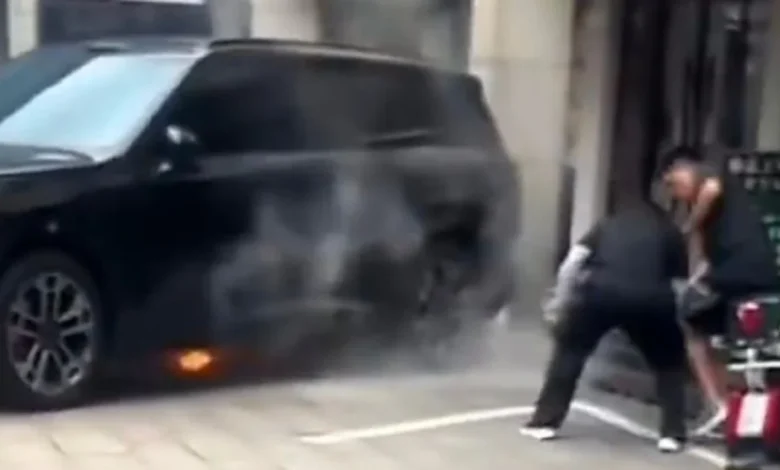
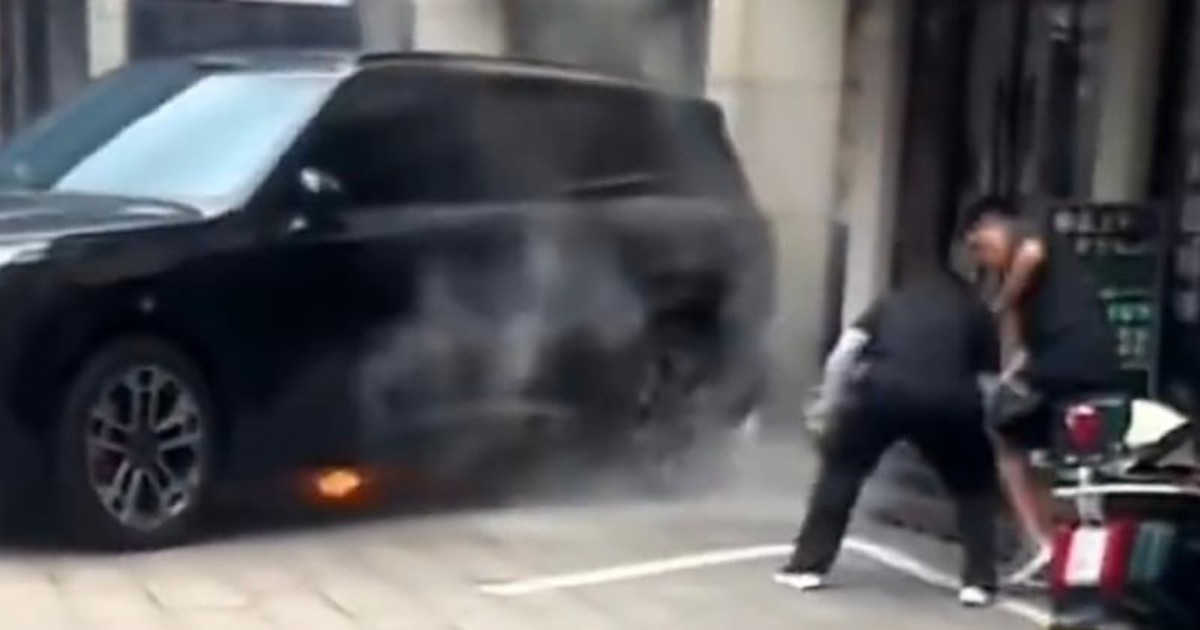
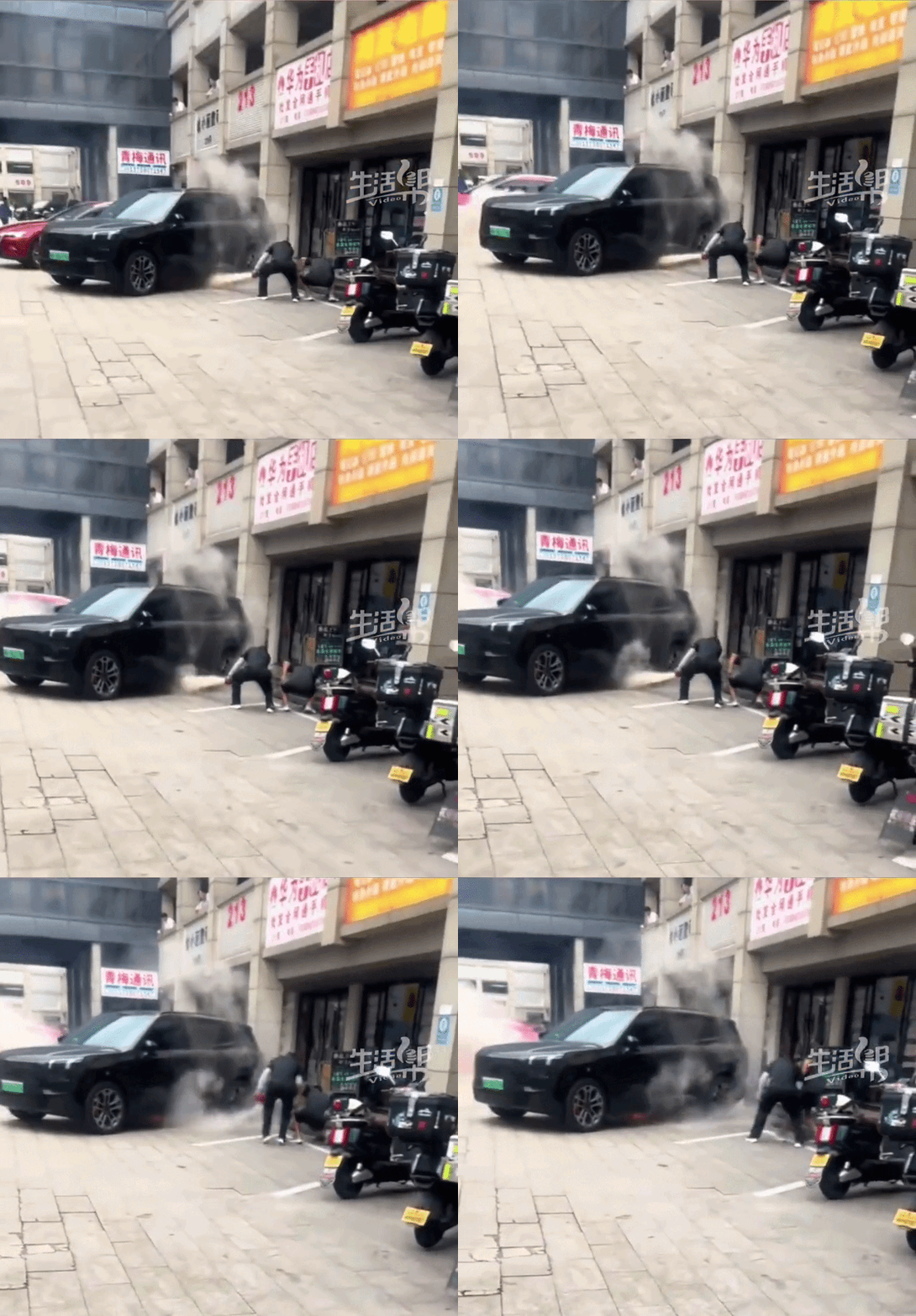
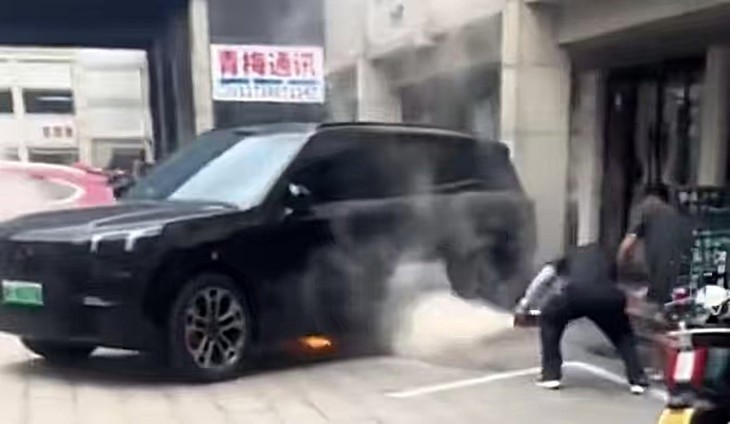
A harrowing incident occurred on the afternoon of September 9 in the bustling city of Hangzhou, located in China’s Zhejiang province, when a Lynk & Co 900—a high-tech plug-in hybrid electric vehicle (PHEV)—suddenly caught fire while navigating a local thoroughfare. The incident, which was captured on video by onlookers and subsequently circulated across various social media platforms including Weibo, has reignited critical discussions regarding the safety protocols and structural integrity of modern hybrid vehicles. As the automotive industry shifts rapidly toward electrification, the spontaneous combustion of such vehicles remains a significant point of concern for both manufacturers and regulators.
The event, which took place at approximately 4:00 PM, began when smoke was observed billowing from the underside of the vehicle. Within moments, flames became visible, forcing the driver to pull over immediately. Emergency services were alerted to the scene, and local firefighters were able to extinguish the blaze before it could spread to adjacent vehicles or surrounding infrastructure. While there were no reported casualties, the incident left the vehicle severely damaged and has prompted a swift investigation by the manufacturer.
Preliminary Investigation and Official Statements
By September 10, the Lynk & Co Lingyue service center in Hangzhou issued an official statement to address the growing public concern surrounding the vehicle’s sudden failure. According to the dealership, their preliminary investigation suggests that the fire was not caused by a failure of the high-voltage battery pack, which is often the primary suspect in electric vehicle (EV) and hybrid fires.
Instead, the dealership’s technical team posited that an external factor was the catalyst. They reported that a passenger or individual in the vicinity had accidentally dropped a portable power bank—a lithium-ion device commonly used for charging mobile phones—onto the road. The device reportedly slid beneath the chassis of the Lynk & Co 900, where it subsequently ignited. The dealership argued that the heat generated by the compact power bank caused localized combustion of the materials underneath the vehicle, rather than a "thermal runaway" event originating from the car’s proprietary battery system.
While this explanation provides a potential narrative for the fire, it has not yet been verified by independent investigators or the relevant transport authorities. The official cause remains subject to confirmation by government forensic experts who are tasked with evaluating the wreckage to determine if any systemic design flaws contributed to the rapid spread of the fire.
Understanding the Technology of the Lynk & Co 900
To understand the implications of this incident, it is necessary to examine the architecture of the Lynk & Co 900. The model is a sophisticated plug-in hybrid, designed to offer a balance between traditional internal combustion power and electric range. It is equipped with advanced battery packs—either 44.9kWh or 52.4kWh in capacity—supplied by industry leaders CATL and CALB. The larger battery option utilizes CATL’s "Freevoy" technology, which is specifically optimized for high-performance hybrid applications.
These battery packs are encased in reinforced, protective shells designed to withstand impacts and prevent external damage. However, the undercarriage of a modern vehicle is not comprised solely of the battery housing; it also features various aerodynamic covers, sound-dampening materials, and water-shielding panels, many of which are constructed from lightweight polymers or composites. From a physics perspective, these materials are flammable under extreme heat. Therefore, it is theoretically possible for an external heat source—such as a burning power bank—to initiate a fire by igniting these protective layers, even if the vehicle’s own electrical system remains intact.
Comparative Analysis: Power Banks vs. Vehicle Batteries
The claim that a 10,000mAh portable power bank could trigger a vehicle fire has invited skepticism from some industry analysts. A standard 10,000mAh power bank typically stores approximately 0.037kWh of energy. In contrast, the 44.9kWh battery in the Lynk & Co 900 contains more than 1,200 times the energy of such a device.
While the energy discrepancy is vast, technical experts note that the potential for a fire is not dictated solely by total capacity, but rather by the concentration of energy, the state of the cells, and the proximity to combustible materials. If a power bank is damaged upon impact or subjected to thermal stress, it can experience a rapid discharge, creating intense, focused heat that can melt through vehicle under-cladding and ignite surrounding components. This underscores a broader safety issue: as commuters carry more lithium-ion devices in their vehicles, the risk of "secondary" fire hazards grows, even in cars designed with the highest safety standards.
Broader Implications for the Hybrid Market
The Hangzhou incident serves as a stark reminder of the challenges facing the rapid adoption of New Energy Vehicles (NEVs) in China and globally. China remains the world’s largest market for EVs and PHEVs, with millions of these vehicles on the road. As the fleet ages, the frequency of such incidents, whether caused by manufacturing defects, maintenance neglect, or external environmental factors, is likely to be scrutinized with increasing intensity.
For manufacturers like Lynk & Co, a joint venture between Geely and Volvo, maintaining consumer trust is paramount. The company has invested heavily in safety, leveraging Volvo’s rigorous engineering standards. A swift and transparent resolution to this incident is essential to preventing reputational damage. If the investigation confirms the dealership’s theory, the case may evolve into a public awareness campaign regarding the dangers of carrying loose lithium-ion devices inside or around vehicles. If, however, the investigation finds evidence of a structural or electrical failure, the manufacturer could face significant recall pressures.
Chronology of Events and Industry Context
- September 9, 2026 (16:00): A Lynk & Co 900 hybrid catches fire on a street in Hangzhou, China. Bystanders record the incident, showing flames originating from beneath the vehicle.
- September 9, 2026 (Evening): Emergency services arrive and extinguish the fire. The footage goes viral on Chinese social media, prompting questions about battery safety.
- September 10, 2026: Lynk & Co Lingyue Hangzhou issues a statement claiming the fire was caused by an external object (a portable power bank) rather than the vehicle’s battery.
- Ongoing: The vehicle is held by local authorities for forensic analysis. Awaiting official certification of the investigation results.
This incident also highlights the need for standardized safety testing that accounts for external debris. Most regulatory crash tests focus on the impact of the vehicle against static or moving objects, but few account for the ignition of foreign objects trapped underneath the undercarriage. As the profile of vehicles changes—specifically the increased use of under-body plastics and composites—automakers may need to integrate more fire-resistant materials in the underbody to mitigate the risk of fires caused by road debris.
The Road Ahead
As the investigation into the Lynk & Co 900 incident continues, the automotive community is watching closely. The outcome will likely serve as a benchmark for how hybrid vehicle manufacturers manage public relations and safety disclosures in the wake of an emergency.
For the consumer, the takeaway is one of cautious vigilance. While the automotive industry continues to innovate, the integration of high-energy storage systems requires a paradigm shift in how we handle both the vehicle and the portable electronics we bring into our daily commute. Safety is not merely the responsibility of the manufacturer; it is a shared obligation that includes the maintenance of the vehicle and the responsible handling of the lithium-ion batteries that have become ubiquitous in modern life.
Moving forward, regulatory bodies in China are expected to review the data provided by the Lynk & Co investigation. Should this turn out to be an isolated incident caused by a third-party object, it may be categorized as an anomaly. However, if any systemic weakness in the undercarriage shielding is identified, we could see new industry requirements for fire-retardant chassis coatings or enhanced thermal protection for critical vehicle components. Until the official report is released, the industry remains in a state of watchful waiting, underscoring the complexities inherent in the global transition to electrified mobility.