Developing data infrastructure for digital transformation and fostering digital economy is the strategic priority for Vietnam in the current era.


At the opening session of the Vietnam – Asia DX Summit 2024, held on May 28, Minister of Information and Communications Nguyen Manh Hung emphasized that digital transformation represents the creation of a new, inexhaustible resource: data. In a historic shift, humanity is moving away from the traditional model of consuming and depleting natural resources to one where development generates new, renewable assets. Historically, economic progress was synonymous with the depletion of finite raw materials; today, growth is driven by the generation and intelligent application of digital data.
This paradigm shift marks a departure from the industrial-age mindset. As the world becomes increasingly interconnected, the ability to harvest, process, and extract value from data has become the primary differentiator for national competitiveness. Vietnam, recognizing this, has positioned itself to align with leading global economies in prioritizing the development of a robust, comprehensive national data infrastructure.
The National Strategy for Data to 2030
Recognizing the critical importance of digital information, the Ministry of Information and Communications (MIC) has successfully advised the Prime Minister on the approval of the "National Data Strategy to 2030." This policy framework serves as the backbone of Vietnam’s ongoing digital transformation, providing a roadmap for building the foundational infrastructure required for a digital nation.

The strategy is not merely a technical guideline but a comprehensive vision for national development. It encompasses the construction of high-speed data centers, the implementation of cloud computing, and the establishment of legal frameworks that ensure data sovereignty, security, and ethical use. By 2030, the government aims to have a fully integrated national data ecosystem that facilitates seamless interaction between public services, private sector innovation, and the citizenry.
Expert Perspectives on Data Governance and Execution
On May 29, during a follow-up seminar titled "Effective Corporate Governance and Management Based on Data," Tran Minh Tan, Deputy Director of the National Institute of Information and Communications Strategy (under the MIC), elaborated on the implementation phases of the national strategy.
According to Mr. Tan, the strategy, which was formally promulgated in early 2024, is anchored by six core principles. At its heart, the strategy dictates that data must be the central focus of all organizational activities, whether public or private. He emphasized, "Data infrastructure—comprising cloud data, large-scale data, structured data, and unstructured data—will form the foundation for national digital transformation and the development of artificial intelligence (AI) applications."
The state’s role, according to Mr. Tan, is that of a lead facilitator. The government provides the overarching guidance, ensuring that all citizens and businesses can participate in and benefit from the data economy. The strategy sets three primary goals: first, the development of public data for societal advancement; second, the promotion of open data to foster market growth; and third, the protection of data security while facilitating the cross-border flow of information, ensuring that data remains a "living asset" within Vietnam.

Operational Challenges for Ministries and Localities
The transition to a data-driven administration requires more than just high-level policy; it requires granular execution at every level of government. Mr. Tan noted that the MIC has developed a concrete action plan for ministries, branches, and local governments to follow.
A key task currently being pushed is the publication of data catalogs. Each ministry and provincial authority is tasked with identifying their internal data resources and integrating them into a national framework. This prevents the "silo effect," where data is trapped within individual departments, making it inaccessible for inter-agency cooperation. By standardizing data formats and sharing protocols, the government aims to create a unified digital environment where information can flow freely and securely, enabling more accurate policy-making and efficient service delivery.
The SME Perspective: Digital Transformation at Scale
While the government focuses on national infrastructure, the private sector—particularly Small and Medium Enterprises (SMEs)—faces unique challenges in the transition to a data-driven model. Nguyen Ngoc Le, Business Center Director at MISA, a leading Vietnamese tech company, highlighted that for many firms, the primary obstacle is not just technology, but the mindset of management.
Speaking at the summit, Ms. Le argued that SMEs should not wait until they have reached a massive scale to implement data-driven strategies. "Businesses need to calculate and have a plan to manage and operate based on data from the very beginning," she stated. "The cost of restructuring data when a company is large is significantly higher than building a robust data culture during the startup phase."

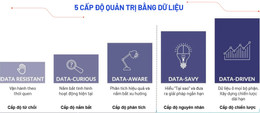
According to MISA’s analysis, many Vietnamese SMEs are currently "stuck" at the second level of data maturity—the level of basic data capture—without moving toward advanced analytics or predictive modeling. To move beyond this, companies need to invest in enterprise resource planning (ERP) systems that allow for a holistic view of operations.
Overcoming the Triple Barrier
Ms. Le identified three main barriers that prevent SMEs from effectively operating based on data: disjointed applications, a lack of data consistency, and the prohibitive cost of sophisticated systems.
- Application Fragmentation: In many organizations, different departments use disparate software solutions that cannot communicate with one another. This leads to manual data entry, which is prone to error, and results in fragmented, incomplete datasets.
- Inconsistent Data Architecture: Without a unified standard, information collected in one department often fails to align with data from another. This makes it impossible for leaders to obtain a "single source of truth" for decision-making.
- Cost and Complexity: Many SMEs find traditional, comprehensive ERP systems to be overly complex and expensive, leading to a "feature bloat" where companies pay for tools they do not use, while struggling with the high overhead of implementation.
To address these challenges, MISA has developed the MISA AMIS platform. This ecosystem integrates various management functions—from accounting and human resources to sales and marketing—onto a single platform. By consolidating these functions, businesses can generate comprehensive, visual reports that provide leadership with a holistic picture of organizational health, facilitating better strategic decision-making. Furthermore, the integration of AI tools like MISA AVA into this ecosystem helps automate repetitive tasks, significantly increasing productivity.
Implications for the Digital Economy
The push toward data-driven management has profound implications for Vietnam’s long-term economic development. As the nation aims to transition from an export-oriented manufacturing base to a high-tech, service-oriented economy, data acts as the fuel for this engine.
The integration of national data infrastructure with private sector agility creates a feedback loop that benefits the entire ecosystem. When the government provides open, high-quality public data, it lowers the barrier to entry for local startups and SMEs, allowing them to build innovative solutions that serve the public. Conversely, as businesses digitize their internal processes, they contribute more high-quality data to the national ecosystem, enhancing the overall intelligence of the economy.
Looking Ahead: A Roadmap for Growth
The timeline for Vietnam’s data strategy is aggressive, with 2030 set as the benchmark for a mature digital nation. In the short term, the focus remains on standardizing, cleaning, and cataloging data across all sectors. Mid-term goals involve the large-scale adoption of cloud infrastructure and the development of specialized talent capable of managing complex AI-driven environments.
The government’s emphasis on "leading the way" through regulation and infrastructure development is a necessary precursor to private-sector innovation. By addressing the fundamental challenges of data silos and fragmented management systems, Vietnam is laying the groundwork for a more resilient, competitive, and innovative economy.
As the Vietnam – Asia DX Summit 2024 concludes, the message is clear: data is no longer a peripheral concern for IT departments. It is a strategic imperative for every business leader and government official. The shift from a resource-dependent economy to a data-driven one is the most significant transformation in the nation’s history, promising not only greater efficiency but the creation of entirely new industries and job markets that were previously unimaginable. Through the concerted efforts of the government and the private sector, Vietnam is well-positioned to leverage this new resource to secure its place as a leader in the regional and global digital landscape.