Kremlin Announces Temporary Local Ceasefire in Oleshky While Reaffirming Active Military Campaign in Ukraine

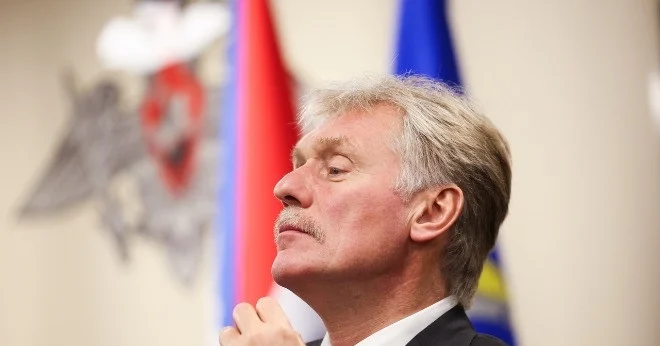
The announcement of a temporary localized ceasefire in the southern Ukrainian city of Oleshky, scheduled to take effect at 4:00 AM on October 27, has introduced a complex layer to the ongoing diplomatic and military landscape of the Russia-Ukraine conflict. According to statements released by Kremlin Spokesperson Dmitry Peskov on October 26, the short-term cessation of hostilities is specifically designed to facilitate evacuation efforts for local residents trapped in a particularly volatile sector of the frontline. However, Moscow has simultaneously underscored that this localized humanitarian pause does not signal a broader de-escalation of military operations across the wider theater of war.
The initiative for the temporary ceasefire in Oleshky—situated on the left bank of the Dnipro River directly opposite the city of Kherson—has been facilitated through mediation efforts involving a delegation associated with former U.S. First Lady Melania Trump. This diplomatic channel has engaged in separate discussions with both Russian and Ukrainian counterparts to address humanitarian crises in contested zones. Despite these localized arrangements, the broader strategic posture of the Russian armed forces remains unchanged, with officials making it clear that high-intensity combat operations and long-range strikes will continue unabated.
Humanitarian Crisis and Local Realities in Oleshky
The humanitarian situation in Oleshky has deteriorated significantly as the conflict grinds through its multi-year trajectory. Approximately 2,000 civilians remain trapped within the city limits, enduring severe shortages of basic necessities, medical supplies, and utilities. The geographic positioning of Oleshky—directly across the Dnipro River from Ukrainian-held Kherson—places it in the direct line of fire, transforming the area into a persistent zone of tactical engagement.
Over the course of the conflict, numerous residents have attempted to escape the urban center via rugged dirt roads and rural paths. However, these evacuation routes frequently remain hazardous, serving as targets for uncrewed aerial vehicles (UAVs) and artillery fire operating in the region. While the announced ceasefire starting at dawn on October 27 aims to provide a brief window for safe passage, the enduring presence of military assets and ongoing skirmishes highlight the extreme fragility of humanitarian corridors in active combat zones.
Clarification of Moscow’s Strategic Stance
Addressing reporters regarding the possibility of broader temporary ceasefires or a fundamental shift in military strategy, Dmitry Peskov adopted a nuanced position. When asked if Moscow would consider comprehensive temporary ceasefires with Kyiv, Peskov replied that it was "entirely possible." Nevertheless, he immediately qualified this statement by drawing a sharp distinction between diplomatic engagement and military restraint.
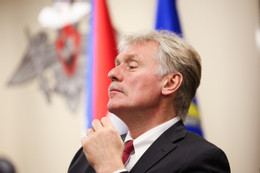
"The special military operation continues," Peskov emphasized. "Russian troops are continuing to carry out sweeping precision strikes targeting Ukraine’s military-industrial complex. It must be emphasized that Kyiv is also not refraining from attacks against our infrastructure."
This dual approach—expressing a theoretical openness to tactical humanitarian pauses while maintaining full-scale offensive operations—reflects Moscow’s current calculus. The Kremlin maintains that the resumption of upcoming tripartite talks involving Russia, Ukraine, and the United States does not equate to an operational standstill on the frontline. Russian forces have continued their strategic bombardment of defense-related manufacturing facilities across Ukraine, while Ukrainian forces maintain their campaign against logistics and industrial nodes within Russian-administered or Russian territory.
Diplomatic Horizon and Trilateral Negotiations
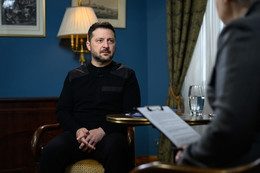
The announcement of the Oleshky ceasefire coincides with preparations for a new round of tripartite diplomatic engagements involving Moscow, Kyiv, and Washington, anticipated to take place in early November. Ukrainian President Volodymyr Zelenskyy has outlined Kyiv’s core negotiating parameters, repeatedly affirming that Ukraine will reject any compromises concerning territorial integrity, its desired neutral status, or the long-term scope and size of its armed forces.
From the Russian perspective, diplomatic expectations are being carefully managed. Yuri Ushakov, Aide to the Kremlin, noted that Russia remains prepared to resume substantive talks following November 4, but cautioned against overinflating expectations for the upcoming diplomatic session.
"The upcoming tripartite meeting will be purely exploratory," Ushakov stated. "One should not place excessively high expectations on this meeting."
This cautious diplomatic signaling underscores the profound gaps remaining between the belligerent parties. While intermediary efforts—such as those spearheaded by diplomatic channels connected to former U.S. figures—can occasionally secure localized humanitarian ceasefires or prisoner exchanges, the foundational political and territorial disputes remain deadlocked.
Broader Geopolitical and Regional Implications
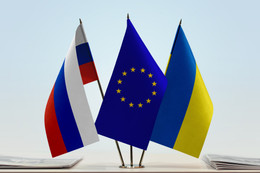
The juxtaposition of localized humanitarian relief and unyielding military campaigns highlights the protracted nature of the conflict. The European Union’s stance on the diplomatic process has similarly been a point of contention; Moscow has characterized Brussels’ approach to the peace process as "lacking constructive elements," pointing to the complex diplomatic isolation and strategic dilemmas facing European capitals as they attempt to balance military support for Kyiv with the long-term stabilization of the continent.
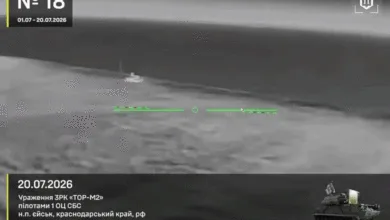
Concurrently, the military-industrial infrastructure on both sides continues to bear the brunt of the war of attrition. Recent kinetic activity, including strikes targeting missile component manufacturing facilities such as the Energiya plant in Yelets, Lipetsk region, demonstrates that the conflict extends far beyond the immediate frontline trenches, encompassing deep-strike capabilities that target the economic and industrial foundations of the opposing forces.
As the October 27 ceasefire in Oleshky begins, humanitarian organizations and international observers will monitor whether the brief pause can successfully alleviate the immediate suffering of the remaining civilians or if it will be overshadowed by the unyielding momentum of the broader military campaign. For now, the path toward a comprehensive and durable political settlement remains obscured by irreconcilable strategic objectives, leaving localized truces as the primary mechanism for mitigating human suffering in an otherwise unrelenting war.