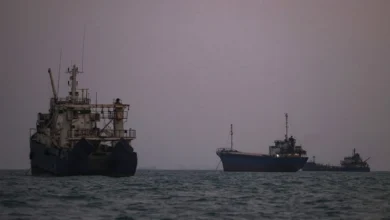
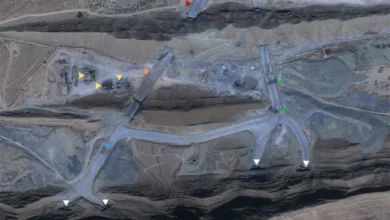
US military forces in the Middle East have prepared for a major strike against Iran and are awaiting orders from President Donald Trump.

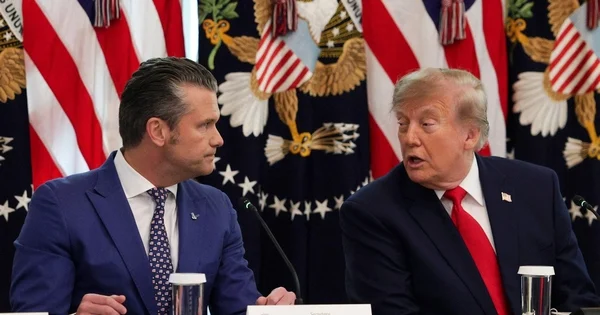
The regional security landscape has shifted dramatically in recent days, with reports emerging on October 26 that the United States military has completed preparations for a significant offensive operation against Iran. According to two senior US officials, the current deployment of American assets across the Middle East is designed to facilitate a rapid and decisive strike, should the commander-in-chief authorize the mission. The window for such an operation, according to intelligence assessments, is estimated at approximately 96 hours from the moment an order is received, highlighting the high state of readiness currently maintained by the Department of Defense and Central Command (CENTCOM).
Strategic Repositioning and Operational Scope
The military buildup in the theater is not merely a posturing exercise or a deterrent measure intended to maintain the status quo. Sources familiar with the internal deliberations indicate that the scope of the potential campaign exceeds previous limited engagements. While earlier strikes were often characterized by surgical, retaliatory actions against specific proxies or localized threats, the current planning involves a comprehensive list of targets.
This target set includes critical infrastructure, energy facilities, military command-and-control centers, and key radar and air defense installations within Iranian territory. The objective is to degrade the Islamic Republic’s capacity for sustained regional projection by neutralizing assets that could be quickly restored if left intact. One official described the proposed operation as "a significant force deployment," emphasizing that the planning has reached an advanced stage of maturity.
The Decision-Making Process and Timeline
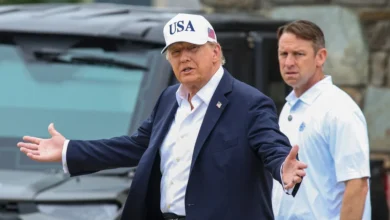
The central question among policymakers and military analysts is not whether the capacity for such an attack exists—it clearly does—but rather when, and if, President Trump will issue the directive. While the administration has remained tight-lipped regarding specific tactical timelines, several observers suggest that the coming days are critical.
The timing of a potential strike is complicated by the upcoming midterm elections in the United States, scheduled for November 3. Some analysts speculate that the White House may prefer to hold any kinetic action until after the electoral cycle, while others argue that the administration could act preemptively to address perceived threats before the political landscape shifts. President Trump has historically demonstrated a tendency to favor high-stakes military posturing while reserving the right to cancel operations at the final moment, a characteristic that keeps both allies and adversaries in a state of constant, heightened vigilance.
Chronology of Escalation
The current state of affairs is the culmination of months of rising tensions in the Persian Gulf and broader Middle East. Since the beginning of the year, a series of incidents has systematically eroded the fragile stability of the region:
- Early 2026: Increased maritime incidents in the Strait of Hormuz lead to a surge in US naval presence in the region.
- Mid-2026: Reports of increased Houthi attacks on regional assets, including strikes in Yemen, force a re-evaluation of US defensive and offensive postures.
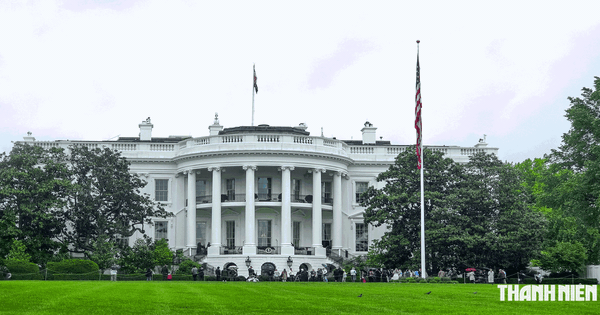
- October 21, 2026: President Trump meets with the Secretary of War (Defense) at the White House to discuss regional strategy and potential response options to Iranian provocations.
- October 26, 2026: Confirmation that CENTCOM has finalized a target list and moved assets into position, marking a significant escalation in readiness.
Intelligence Assessments and Regional Risks
The intelligence community has provided detailed reports suggesting that both Tehran and its primary proxy, the Houthi movement in Yemen, are aware of the increased US readiness. Defensive posture updates from the region suggest that Iranian commanders have implemented measures to protect critical assets, expecting that any US-led or US-supported operation would also involve Israeli coordination.
The primary concern among military planners is the potential for a "symmetrical response." Intelligence indicates that while Iran and the Houthis may currently lack the capacity to launch a full-scale, multi-front war, they are highly prepared to engage in asymmetric warfare. This includes targeted strikes on US bases in Iraq, Syria, and other parts of the Gulf, should they perceive an imminent threat from the United States or Israel.
Furthermore, analysts point out that Iranian forces have evolved. Having observed US tactical maneuvers in previous years, Iranian commanders have adjusted their defensive strategies, making the identification and neutralization of mobile assets more difficult than in previous decades. This necessitates a more complex and larger-scale operation, which in turn increases the risk of collateral damage and unintentional escalation.
Implications for Global Energy and Security
A major military engagement involving Iran would have immediate and profound consequences for global energy markets. The Strait of Hormuz, a critical artery for the world’s oil supply, would likely see significant disruption. Even the mere threat of a conflict has already begun to influence oil futures, with markets pricing in the potential for prolonged supply chain instability.
Beyond the economic impact, a large-scale US strike would fundamentally alter the geopolitical map of the Middle East. It would likely force regional players—including Saudi Arabia, the United Arab Emirates, and Israel—to consolidate their positions, potentially accelerating the formation of a unified anti-Iran coalition. However, such an outcome also carries the risk of deepening the divide between the West and the "Axis of Resistance," leading to a protracted period of regional instability that could last for years.
Official Responses and Diplomatic Silence
As of this report, there has been no official statement from the White House regarding the potential for military action, nor has there been a public response from Tehran. The silence from both capitals is interpreted by many as a sign that back-channel communications may be ongoing, or that both sides are waiting to see which party blinks first.
The Department of Defense has consistently maintained that it keeps "all options on the table" regarding Iran, a standard but ominous phrasing that has taken on new weight given the recent troop movements. Pentagon officials, speaking on condition of anonymity, reiterate that the goal of the current deployment is to ensure that the United States is prepared for "any contingency" and to provide the President with the widest possible range of options.
Analysis: The Path Forward
The situation remains fluid. The decision to commit to a military operation of the scale currently being discussed involves a cost-benefit analysis that extends far beyond the tactical destruction of radar stations or energy facilities.
A successful operation could potentially cripple Iran’s regional influence for a generation. Conversely, a failed or limited strike that fails to achieve its objectives could embolden Tehran, leading to a surge in proxy attacks and a loss of American credibility in the region. The history of US engagement in the Middle East is marked by moments of extreme tension that have sometimes resolved through diplomacy and other times through conflict.
As the world watches the Persian Gulf, the international community remains largely focused on the potential for de-escalation. However, the military reality on the ground—with ships in position, strike packages prepared, and target lists finalized—suggests that the window for diplomacy is narrowing. Whether this is the final phase of a pressure campaign or the prelude to a new chapter of conflict in the Middle East remains a question that only the occupants of the White House and the leadership in Tehran can answer.
For now, the region remains in a state of uneasy calm, waiting to see if the rhetoric of the past few months will manifest into the most significant military confrontation in the region since the turn of the century. The coming 96 hours, and the days immediately following the US midterm elections, will likely determine the trajectory of security in the Middle East for the remainder of the decade.