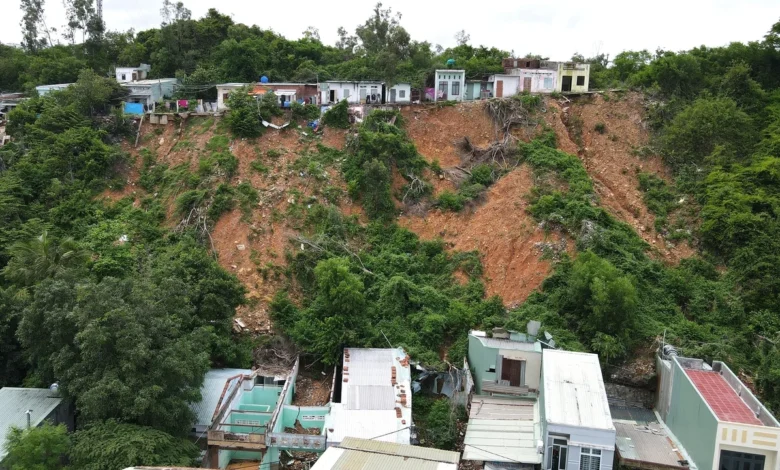
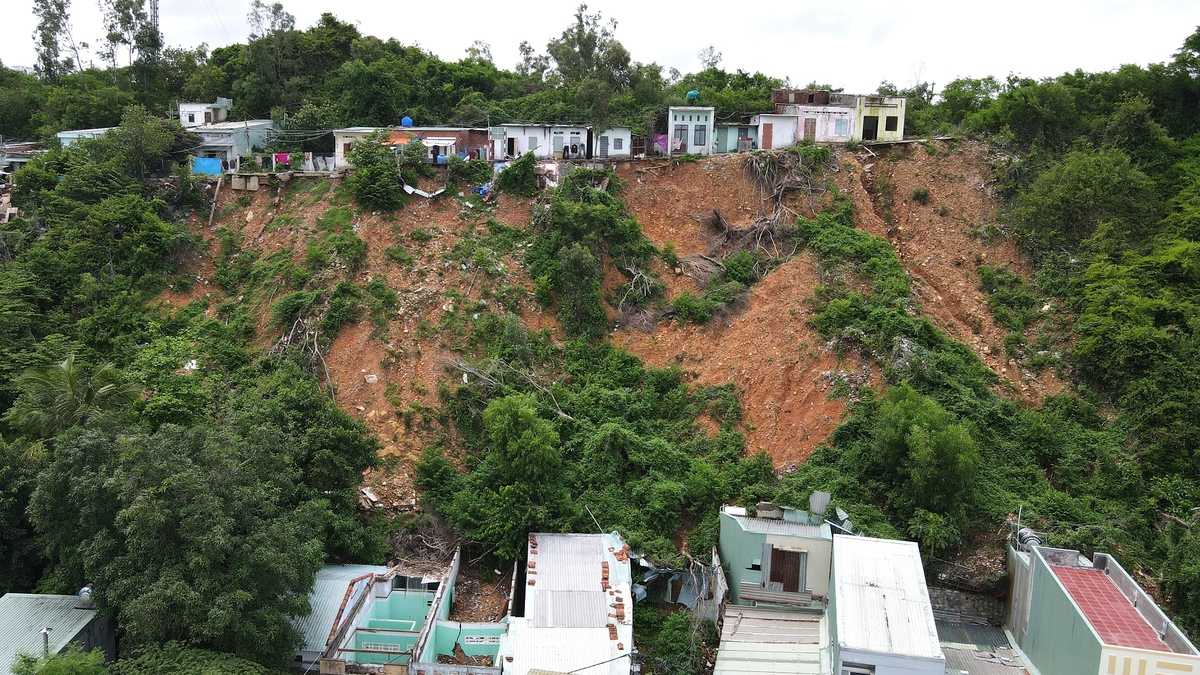
The residents of the Nui Mot area in Quy Nhon City are currently living in a state of perpetual anxiety as their homes teeter on the edge of geological instability. Recent bouts of inclement weather have exacerbated the risk of landslides, leaving 52 households—comprising nearly 200 individuals—facing the constant threat of their dwellings being swept away by shifting terrain. For these families, the arrival of the rainy season is no longer just a meteorological event but a harbinger of potential catastrophe.
The Geologic Crisis at Nui Mot
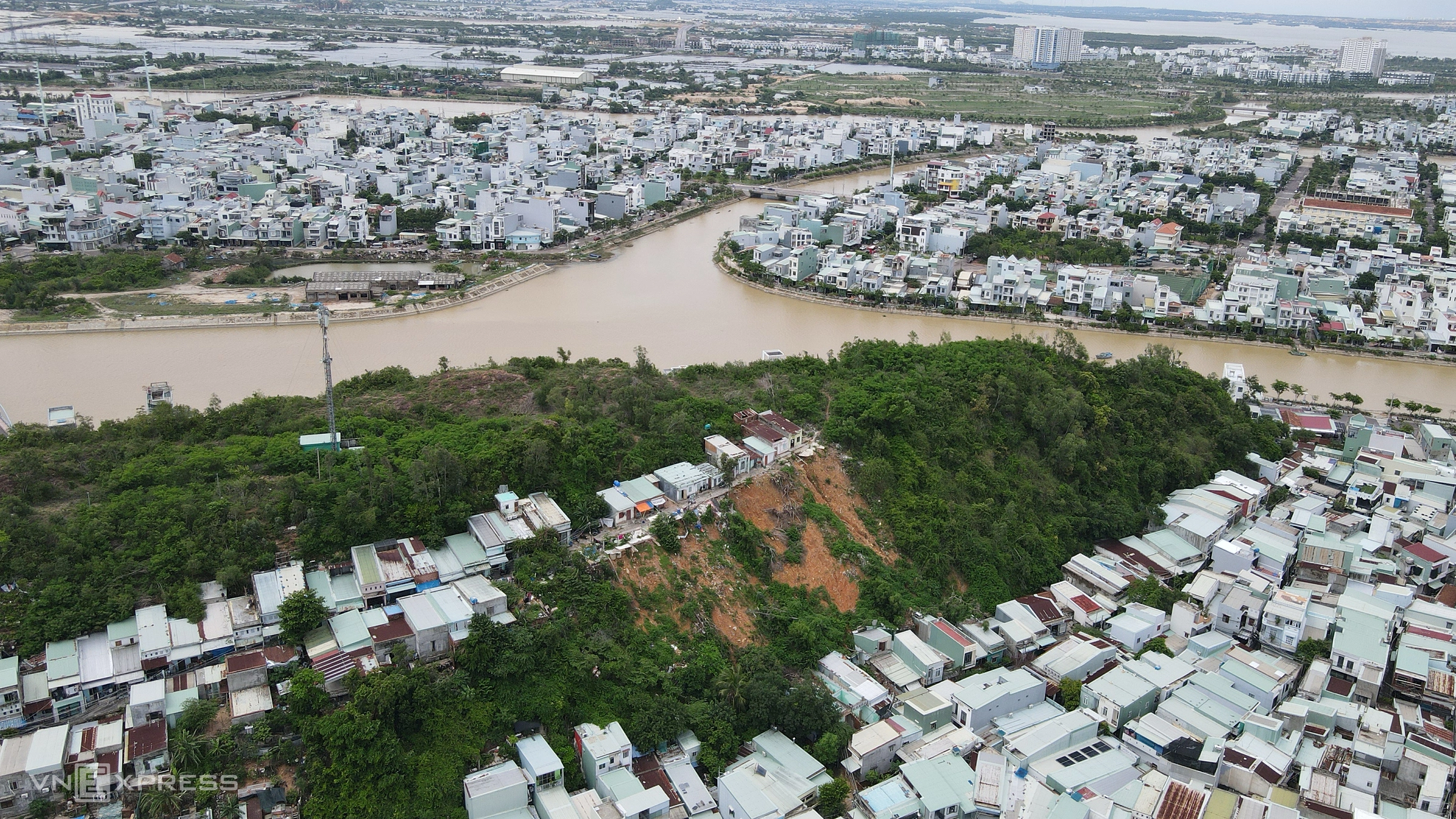
Nui Mot is a prominent topographical feature situated alongside the Ha Thanh River, stretching from the Doi Bridge to the Cho Y Bridge in Quy Nhon. Over the past two decades, a dense residential community has taken root along its slopes. The area is divided into two distinct clusters: Group 19, located at the upper reaches of the mountain, and Group 20, situated at the base.
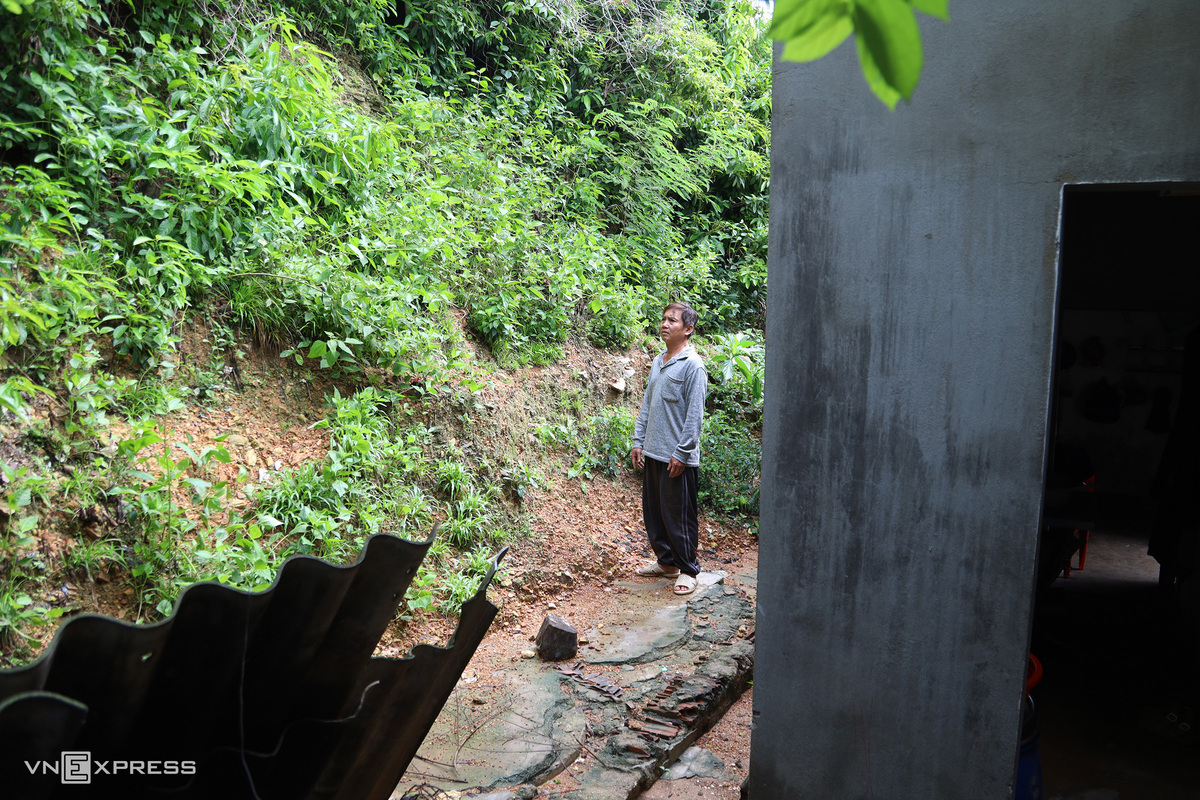
The vulnerability of this area is a combination of natural geography and decades of unplanned expansion. The soil composition, prone to saturation during intense rainfall, has become increasingly unstable. In recent years, the intersection of rapid urbanization and extreme weather patterns has rendered the area a high-risk zone for slope failures. The topography, characterized by steep inclines and loose sedimentary layers, poses a lethal risk when water runoff reaches critical thresholds.
Chronology of Disasters and Near-Misses
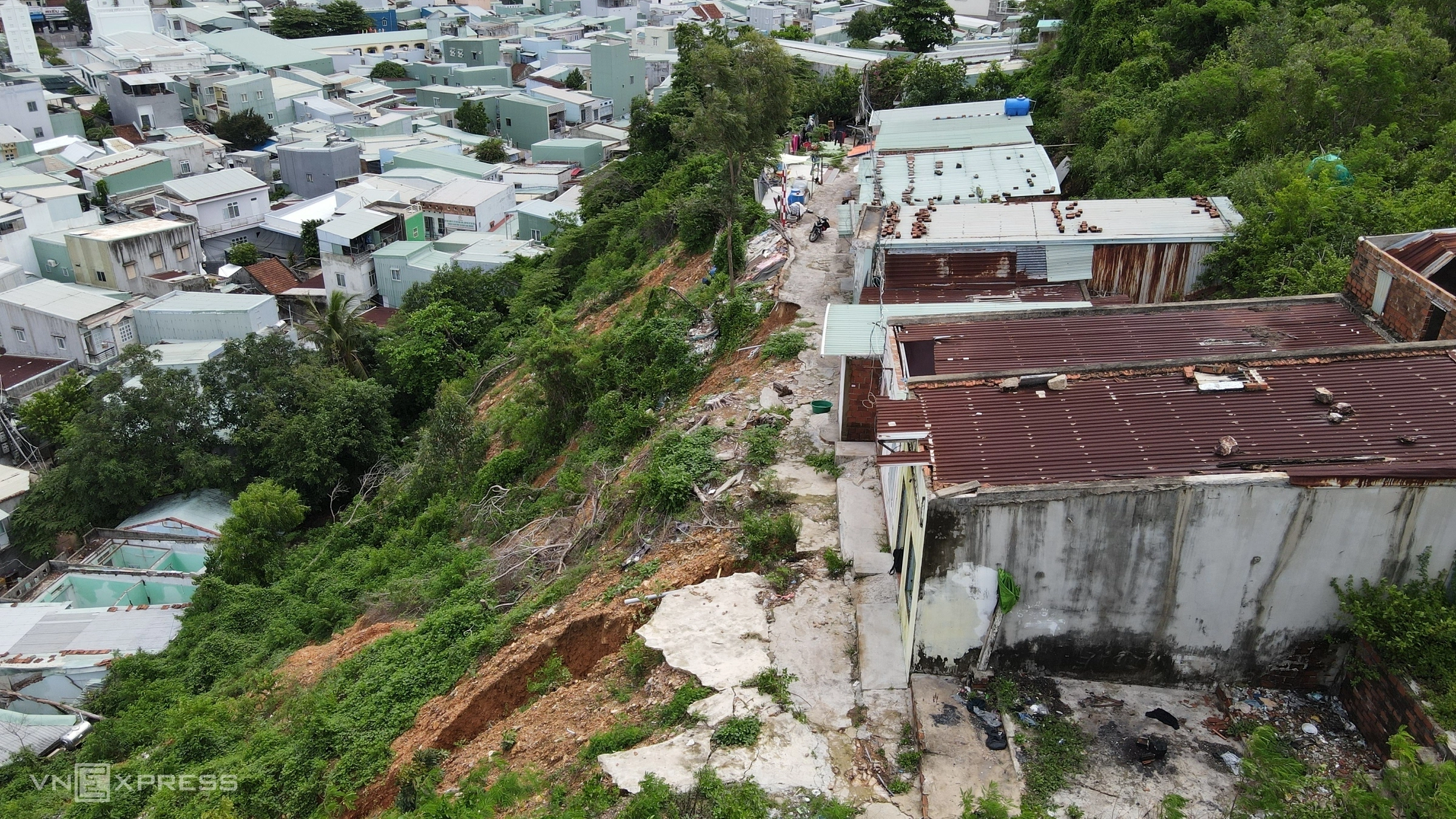
The situation reached a critical inflection point last year, when a severe weather event triggered significant landslides, causing several houses to collapse entirely. While government intervention provided emergency relief and facilitated the relocation of the most affected families to the Quy Nhon Dong resettlement area, the scars of that event remain visible.
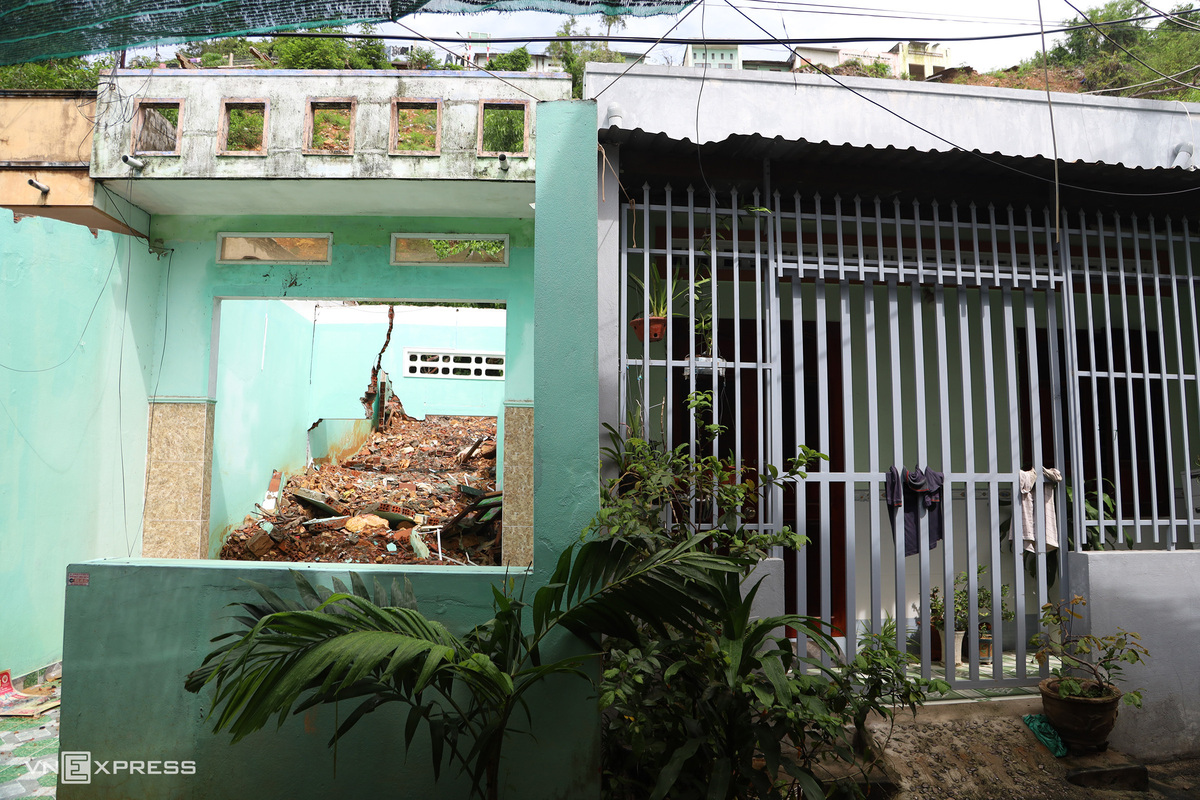
For the families who stayed behind, the remnants of the destruction are a daily reminder of their precarious existence. Structures that were not completely leveled now show alarming signs of structural fatigue: walls are tilted at dangerous angles, foundations have cracked under the pressure of shifting earth, and roofs have buckled or been dismantled as a safety precaution. Mud, debris, and sediment from previous landslides have seeped into living spaces, destroying property and creating unsanitary conditions.
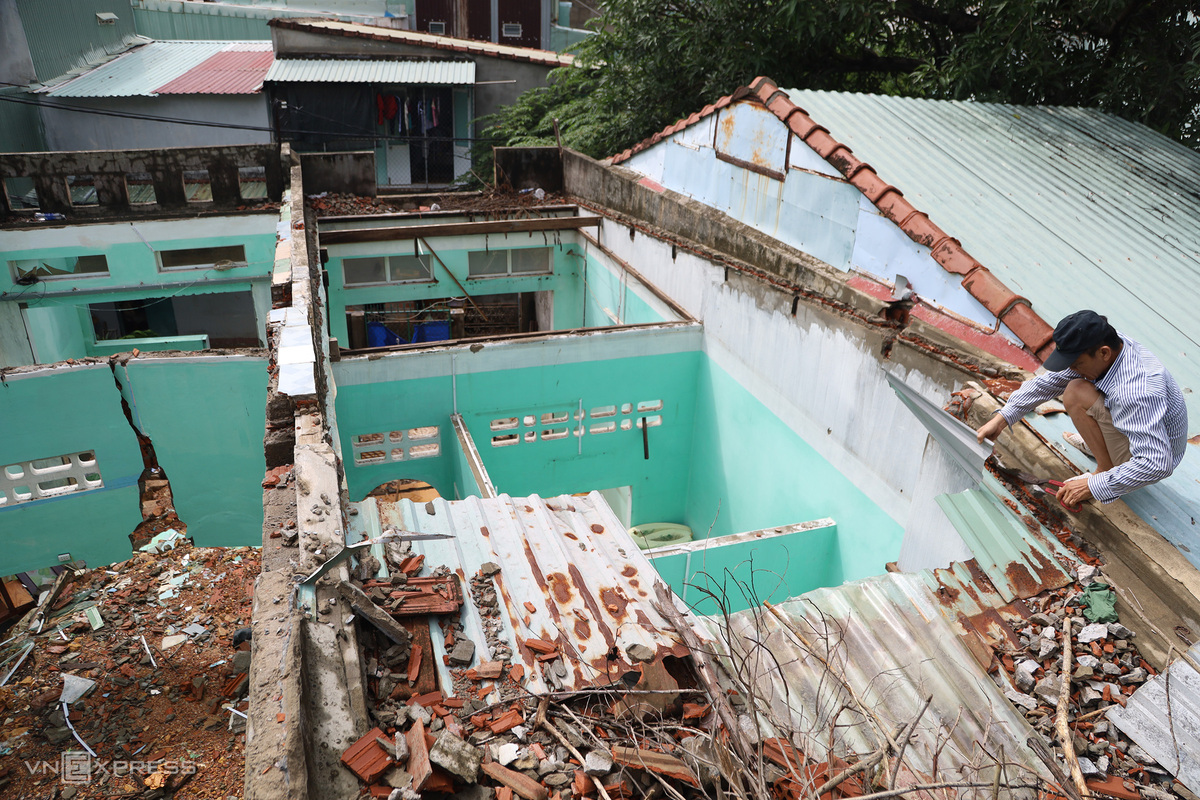
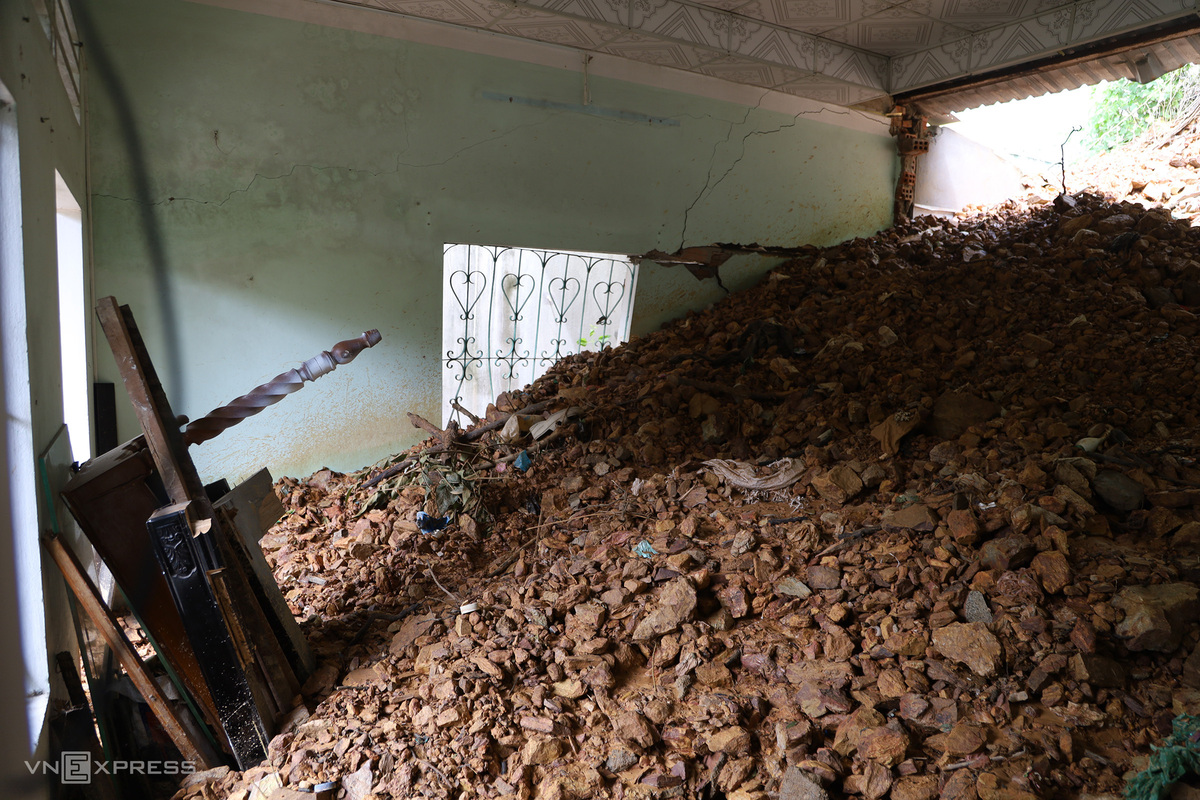
In the most recent series of storms, residents like Lam Minh Suong, a 36-year-old resident of Group 20, found themselves forced to flee their homes once again. Upon returning after the rain subsided, Mr. Suong discovered that his residence had suffered a partial collapse, with mud and heavy debris inundating the kitchen and living areas. Although his family has been slated for relocation to the new housing project approximately four kilometers away, the transition has been fraught with financial hardship. Many residents are currently forced to take out high-interest loans to bridge the gap in funding required to complete their new homes, leaving them in a cycle of debt while they wait for official assistance to materialize.
The Human Toll and Economic Strain
The narrative of Nui Mot is not merely one of environmental risk, but of profound economic struggle. For individuals like 55-year-old Doan Quang Tuan, the loss is incremental but constant. Mr. Tuan’s home, once a stable structure, has seen its kitchen and sanitation facilities compromised by repeated slope failures. He has been forced to retreat to the safer sections of his property, using corrugated iron sheets as makeshift barriers to prevent mud from encroaching further into his living quarters.
The psychological impact on the elderly and children in these 52 households is significant. Families live with a "go-bag" mentality, constantly monitoring weather forecasts and listening for the telltale sounds of cracking earth or shifting rocks. The financial inability to move independently has trapped these families in a state of paralysis, where they are neither able to repair their homes permanently nor afford the full cost of relocating elsewhere.
Official Response and Mitigation Strategies
Nguyen Duc Toan, Chairman of the Quy Nhon Ward People’s Committee, has acknowledged the gravity of the situation, confirming that all 52 households remain in a high-risk zone. The local government has adopted a two-pronged approach to manage the crisis: immediate emergency response and long-term strategic planning.
In the short term, the local administration is actively monitoring the geological evolution of the slope and has established an early warning system to ensure that residents can evacuate to designated emergency shelters—typically local government buildings—when weather conditions deteriorate. Residents have been instructed to prioritize the safety of life over property and to initiate self-evacuation procedures at the first sign of abnormal geological activity, such as deep cracks in the soil or the sound of shifting stones.
Long-term, however, the solution is more complex. The Ward People’s Committee has formally petitioned for a comprehensive rezoning and resettlement project for all 52 households. This involves securing funding for full relocation and providing compensation that reflects the market value of the land, rather than just the structural value of the homes. The challenge remains the fiscal capacity of the local government to execute such an extensive operation without external provincial or national support.
Broader Implications and Urban Planning Lessons
The situation at Nui Mot serves as a poignant case study for urban planners and disaster management authorities across Vietnam. The encroachment of residential zones onto unstable mountainous slopes is a systemic issue born of rapid economic growth and insufficient land-use regulation in the early 2000s.
The environmental implications are twofold. First, the deforestation and removal of vegetation to make room for housing have stripped the slopes of their natural anchors, significantly increasing the velocity and impact of runoff. Second, the lack of proper drainage infrastructure in these informal settlements means that water is often diverted directly into the soil, acting as a lubricant that triggers landslides.
The case of Quy Nhon underscores the urgent need for a national audit of high-risk residential zones. As climate change continues to increase the frequency of extreme precipitation events, the cost of inaction—measured in both humanitarian aid and the potential for tragic loss of life—will far outweigh the investment required for proactive, planned resettlement.
For the residents of Nui Mot, the wait for government-led relocation is a race against time. As the monsoon season continues, the community remains in a state of fragile equilibrium, watching the slopes above their homes with a vigilance that has become, by necessity, a way of life. The resolution of this crisis will serve as a bellwether for the city’s ability to protect its most vulnerable citizens in an era of increasing climate uncertainty.