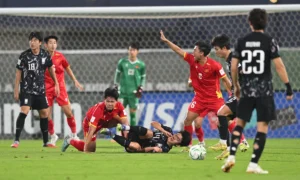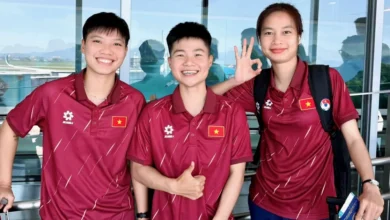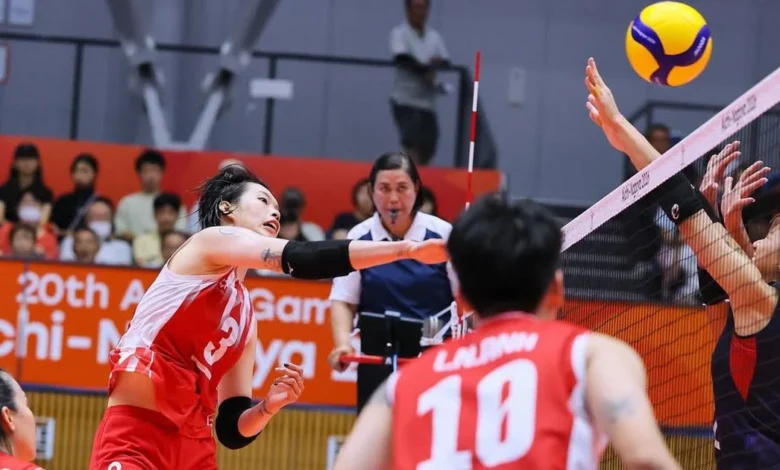
The year 2026 marked a stark and unexpected downturn for the Vietnam women’s national volleyball team, a squad that had previously captured the hearts of Southeast Asian and continental fans with historic breakthroughs. Entering the season with ambitious goals—including a targeted top-four finish at the 20th Asian Games (Asiad 20)—the team ultimately settled for a seventh-place overall ranking, symbolizing a turbulent campaign filled with tactical stagnation, physical exhaustion, and squad attrition.
A Chronology of Decline: From Continental Highs to Major Stumbles
The regression of the Vietnamese team across major 2026 tournaments shocked analysts and supporters alike. Just one year prior, in 2023, 2024, and 2025, the team had achieved unprecedented milestones, winning consecutive AVC Challenge Cup titles, securing podium finishes at the SEA V.League, and holding their own against world-class powerhouses at the FIVB Volleyball Women’s Challenger Cup.
However, the momentum evaporated rapidly as the 2026 international calendar unfolded:
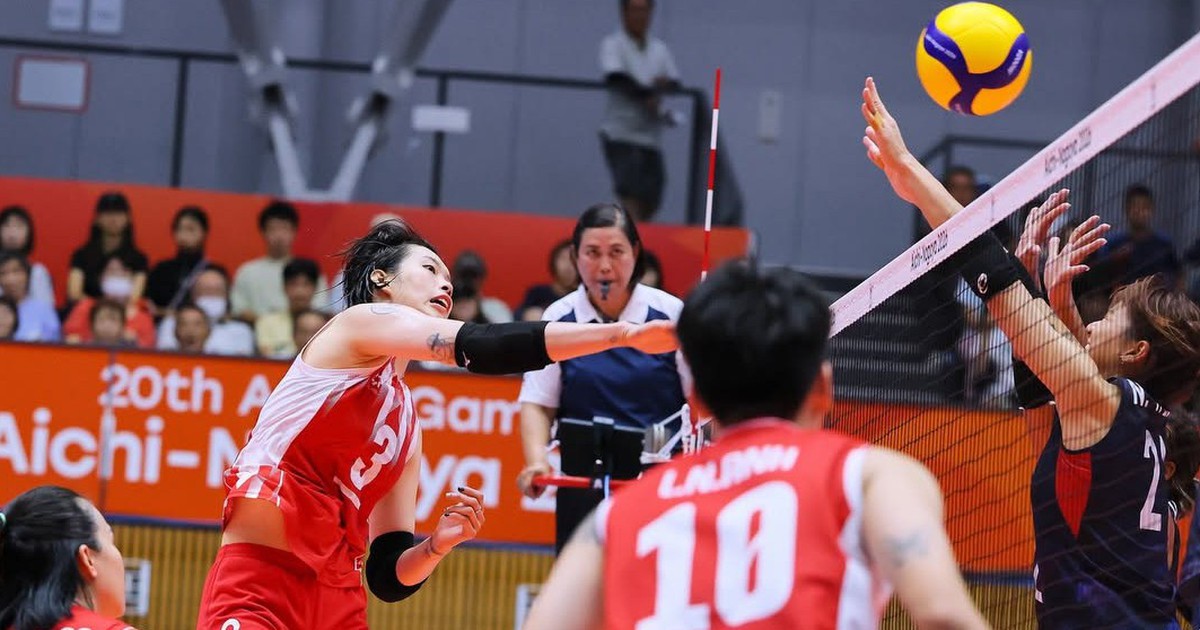
- AVC Cup: Having won the tournament or reached deep finals in preceding years, Vietnam stumbled to a third-place finish early in the season, failing to secure a spot in the championship match.
- SEA V.League: The squad labored to a runner-up finish in the first leg through narrow, grueling victories, before suffering a complete collapse with three consecutive losses in the second leg.
- Asian Women’s Volleyball Championship 2026: The team managed only a single victory throughout the competition, exposing deep structural vulnerabilities against both traditional giants and rising regional competitors.
- Asiad 20 (Asian Games): The campaign culminated in a disappointing seventh-place finish, sealed by a demoralizing defeat to Indonesia—their second loss to the same opponent within a single calendar year.
Beyond expected losses to continental powerhouses such as China, Japan, and South Korea, the team’s vulnerability was underscored by unexpected setbacks against regional and developing programs including Indonesia, the Philippines, and Kazakhstan. While these nations have undoubtedly invested heavily and improved their programs, the core issue for Vietnam lay in its predictability on the court.
Tactical Predictability and Coaching Limitations
Throughout the Asian Games, tactical rigidity became glaringly apparent. Vietnamese outside hitters operating on the wings (positions 2 and 4) consistently ran into well-organized blocks established by opposing defenses. This forced the team to heavily rely on quick-tempo combination plays through the middle (position 3), leading to heavy reliance on opposite hitter Hoàng Thị Kiều Trinh and middle blocker Bích Thủy, who frequently found herself among the match’s top scorers simply out of tactical necessity.
Head coach Nguyễn Tuấn Kiệt faced mounting criticism for his inability to implement timely tactical adjustments or reactive substitutions during critical junctures of high-stakes matches. When opponents adapted to Vietnam’s primary offensive schemes, the coaching staff struggled to introduce effective Plan-B strategies, leaving the team exposed during crucial set points and tie-breaks.
Roster Instability and Physical Burnout
Compounding these tactical shortcomings was a severe lack of roster depth and continuity—a stark contrast to the robust, versatile lineups that defined Vietnam’s success between 2023 and 2025.
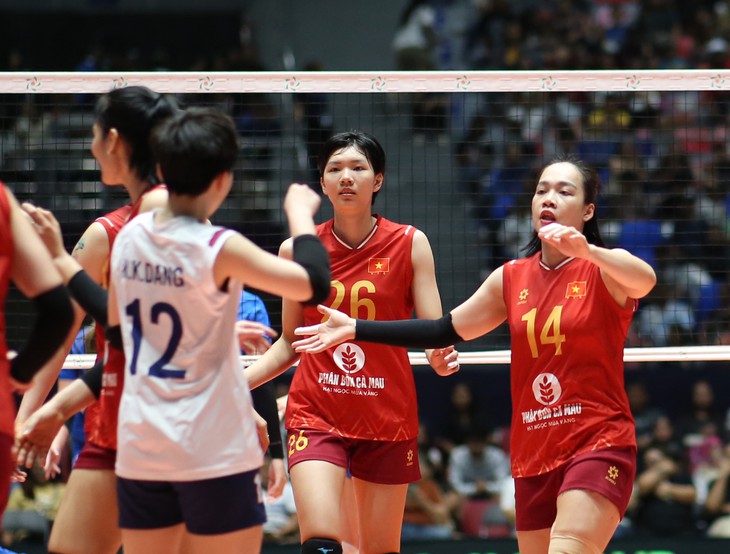
The squad’s turbulence began late last year at the 33rd SEA Games, where they missed the crucial services of veteran middle blocker Nguyễn Thị Trinh due to personal family commitments. The injury crisis deepened in May during national team call-ups when opposite hitter Hoàng Thị Kiều Trinh was sidelined with a lingering physical injury. During the AVC Cup, Coach Nguyễn Tuấn Kiệt was forced to improvise by deploying Đoàn Thị Xuân or shifting core outside hitters Trần Thị Thanh Thúy and Nguyễn Thị Uyên out of position to cover the opposite role.
As the season progressed into the Asian Championship and Asiad, the roster suffered further blows. Star outside hitter Vi Thị Như Quỳnh stepped away from the squad due to personal matters, and Nguyễn Thị Uyên subsequently suffered a severe injury. For the first time in years, the national team coaching staff was unable to field a stable, cohesive starting lineup for two consecutive tournaments, severely disrupting team chemistry and on-court communication.
Compounding this instability was the severe physical and mental exhaustion experienced by key players, most notably team captain Trần Thị Thanh Thúy. Having shouldered an unrelenting workload since January—spanning competitive stints with Japanese club Gunma Green Wings, domestic club VTV Bình Điền Long An, and four major international tournaments with the national team—Thanh Thúy was forced to carry the offensive burden virtually alone. At Asiad 20, despite managing 36 points, her overall scoring efficiency dropped noticeably, reflecting the undeniable toll of year-round competitive fatigue.
Supporting cast members—including setter Kim Thoa, opposite Bích Thủy, and libero Khánh Đang—similarly experienced erratic form. While capable of brilliant individual performances, none maintained peak athletic form consistently across tournaments. Secondary players such as Lê Thanh Thúy, Lê Như Anh, Lê Thúy Yên, Vi Thị Như Quỳnh, and Nguyễn Thị Uyên encountered similar cycles of fatigue and intermittent performance.
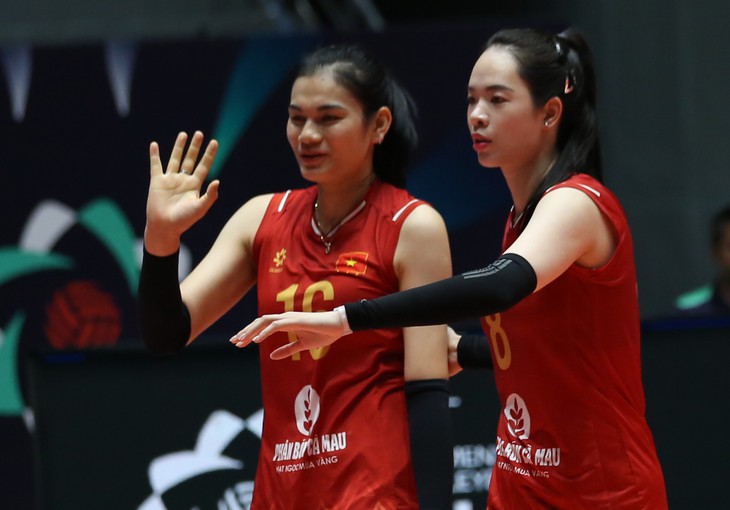
Broader Implications and Lessons Learned
The seventh-place finish at Asiad 20 serves as a crucial wake-up call for the Vietnam Volleyball Federation (VVF) and the national coaching staff. After a year defined by underperformance, missed podiums, and vulnerability against developing programs, the federation faces an urgent need to reevaluate player management, youth development pipelines, and workload distribution.
With major continental and regional qualifiers on the horizon, Vietnamese women’s volleyball must transition away from over-relying on a fatigued core group of athletes. Expanding the talent pool, implementing modern sports science to manage player loads, and diversifying tactical playbooks will be essential prerequisites if the team hopes to regain its competitive edge and fulfill its long-term ambitions on the international stage.