Decades of Abandonment: Bac Ninh Luxury Villas Sit Vacant and Overgrown While Prices Continue to Soar

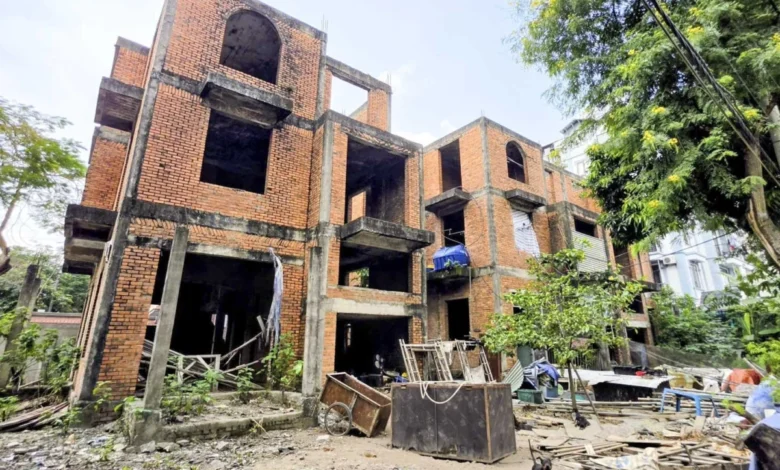
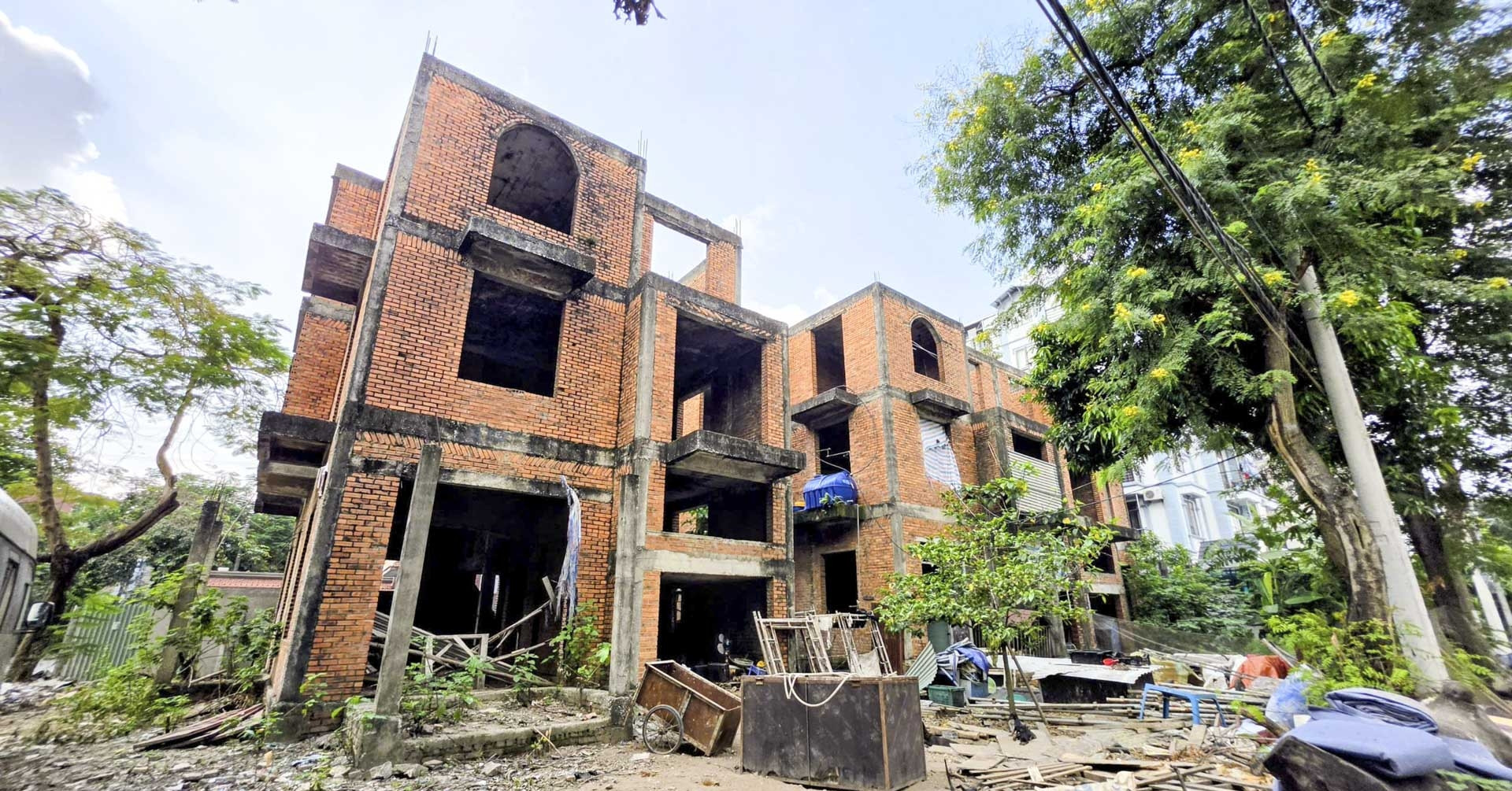
Two decades after heavy capital injection and master-plan approvals, several prominent urban development areas in Bac Ninh Province present a stark and jarring paradox. High-end villas and contiguous townhouses, originally envisioned as bustling centers of modern suburban prosperity, remain unfinished, structurally compromised, and abandoned to nature. Instead of housing affluent professionals and families, parts of these multi-million-dollar developments have devolved into overgrown pastures where local residents casually graze livestock or raise poultry. Yet, defying logic, spatial degradation, and basic real estate fundamentals, properties in these ghost towns continue to command astronomical secondary market prices, often reaching tens of billions of Vietnamese dong per unit.
The phenomenon underscores deep-seated structural inefficiencies within Vietnam’s secondary real estate markets, highlighting a persistent disconnect between speculative asset valuation, urban planning enforcement, and actual housing demand.
The Scale of Decay: Hoan Son and Nam Tu Son Urban Areas
The situation is acutely visible in two major developments located strategically within Bac Ninh Province: the Hoan Son Urban Area and the Nam Tu Son Urban Area. Both projects were greenlit during a wave of industrialization and urban expansion in the early 2000s, aimed at absorbing the population spillover from nearby Hanoi and establishing modern residential corridors along key transport arteries.
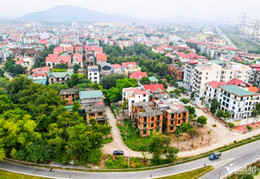
The Hoan Son Urban Area, situated in Dai Dong Commune within Bac Ninh City, spans approximately 7.5 hectares and comprises 234 residential land lots designated for townhouses and villas. Developed by the Hoan Son Housing Investment and Development Joint Stock Company pursuant to Decision No. 259 issued on March 18, 2003, by the People’s Committee of Bac Ninh Province, the project boasts prime geographical positioning. It sits immediately adjacent to the Hanoi–Bac Giang expressway, a vital logistics and transportation lifeline connecting the capital to Vietnam’s northern industrial heartlands.
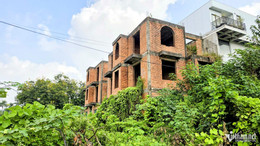
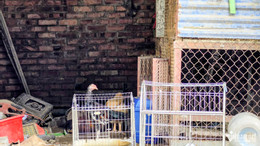
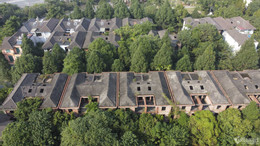
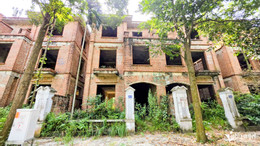
Despite this infrastructure advantage, the project has languished for nearly 20 years. Field inspections reveal that scores of villas and townhouses remain in a skeletal, unfinished state. Weeds stand taller than a person, creeping vines envelop second-story balconies, and several empty lots and uncompleted ground floors have been repurposed by locals to shelter dogs and raise poultry. The urban landscape resembles a rural outpost rather than an integrated commercial and residential community.
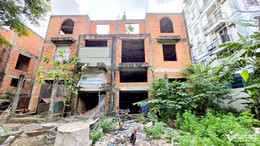
A short distance away, the Nam Tu Son Urban Area tells a similarly sobering story. Sprawling across an expansive 200-hectare master plan in the Tu Son region near National Highway 1B, this project was undertaken by the Thien Duc Investment Joint Stock Company. Positioned roughly 18 kilometers from downtown Hanoi, the development was designed to anchor the high-value urban corridor linking the capital with Bac Ninh. However, after more than ten years of implementation, vast sectors of the project remain silent. Rows of grey-concrete villas stand shoulder-to-shoulder with shuttered doors, overgrown courtyards, and neglected infrastructure. The grand vision of a dynamic, modern urban nucleus has given way to an eerie, sparsely populated enclave.
Chronology of Stalled Ambitions and Real Estate Speculation
The roots of the current malaise trace back to the early and mid-2000s, a period characterized by aggressive land speculation, loose credit conditions, and ambitious municipal expansions across northern Vietnam. Driven by expectations of rapid industrialization and an influx of foreign direct investment (FDI) into Bac Ninh’s industrial zones, provincial authorities approved dozens of residential and urban schemes.
During the 2003–2005 window, developers like Hoan Son and Thien Duc broke ground with strong political backing and optimistic market absorption forecasts. However, systemic headwinds—including the global financial crisis of 2008, subsequent credit tightening by the State Bank of Vietnam, and localized legal or financial bottlenecks—stalled construction across numerous projects. Many developers exhausted their liquidity or shifted focus to more lucrative greenfield developments elsewhere, leaving investors stranded with raw land or half-built structural frames.
Astonishingly, despite the physical decay and lack of municipal vibrancy, asking prices for these abandoned properties remain remarkably resilient—and in many cases, inflated. Real estate listings and brokerage channels indicate that secondary buyers are paying staggering sums for concrete shells that require millions of dong in renovation.
At the Hoan Son project, a raw villa spanning approximately 312 square meters is routinely listed for around 11 billion VND, translating to unit prices of 35 million to 36 million VND per square meter. Similarly, brokers operating in the Nam Tu Son Urban Area report that corner plots or uncompleted villas of roughly 160 square meters command asking prices starting at 7.5 billion VND, while prime boulevard-facing units scale upward from 10 billion to 20 billion VND.
This pricing dynamic highlights a persistent quirk in Vietnam’s property culture: land and real estate are frequently treated as purely financial stores of value rather than productive, consumable assets. Investors who purchased properties decades ago often hold sufficient financial liquidity or owe negligible holding costs, allowing them to sit on vacant assets indefinitely rather than cutting losses or liquidating below their desired threshold. Consequently, nominal prices continue to climb in tandem with broader macroeconomic inflation and historical land price appreciation, completely detached from the actual utility or rental yield of the structures.
Broader Economic and Urban Planning Implications
The persistence of abandoned urban areas across Bac Ninh—and similar developments in Ho Chi Minh City, Dong Nai, and Binh Duong—carries profound economic and social consequences.
First, it represents a severe misallocation of societal capital. Billions of dong are locked up in dormant concrete structures that generate zero economic output, provide no housing to the pressing urban demographic, and contribute minimally to local commercial activity. At a time when affordable housing supply for the working class remains critically scarce, vast swathes of prime land are effectively paralyzed by speculative hoarding.
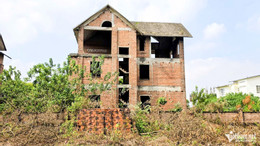
Second, the environmental and aesthetic degradation harms local communities. Abandoned construction sites often become dumping grounds, breeding grounds for mosquitoes and disease vectors, and hazards for public safety. The presence of unlit, overgrown enclaves diminishes the quality of life for neighboring residents who legitimately inhabit the surrounding areas.
Third, these projects present regulatory and governance challenges for municipal authorities. Provincial and local governments face mounting pressure to balance property rights with the public interest. Under Vietnamese land and housing laws, projects that experience prolonged delays or fail to operationalize face the risk of administrative sanctions, license revocation, or compulsory reclamation. However, untangling the complex legal webs involving secondary investors, original developers, bank mortgages, and land-use right certificates is a notoriously sluggish bureaucratic process.
Expert Perspectives and Market Outlook
Real estate economists and urban planners point out that addressing the issue of abandoned urban zones requires a multi-pronged policy intervention. Stricter enforcement of implementation timelines, progressive taxation on vacant residential properties, and enhanced transparency in secondary transactions are frequently cited as necessary remedies to discourage speculative land banking.
Market analysts suggest that while primary infrastructure in Bac Ninh—such as industrial parks, expressways, and high-tech manufacturing plants—remains exceptionally robust due to heavy investments by global conglomerates like Samsung, the residential property segment requires a thorough restructuring. As regulatory frameworks tighten and credit policies become more discerning, developers and speculators alike will face increasing pressure to either complete their projects or relinquish land to more capable entities.
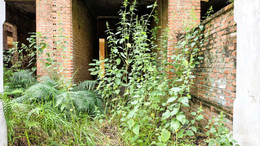
Until structural reforms take root, the incongruous spectacle of multi-billion-dong villas serving as shelters for stray animals and overgrown weeds—while commanding astronomical price tags on digital bulletin boards—will likely remain an enduring symbol of the contradictions within Vietnam’s rapid urbanization journey.
Related posts: