Hanoi proposes strict criteria for regularizing over 18,000 unauthorized apartment units developed by Muong Thanh Group

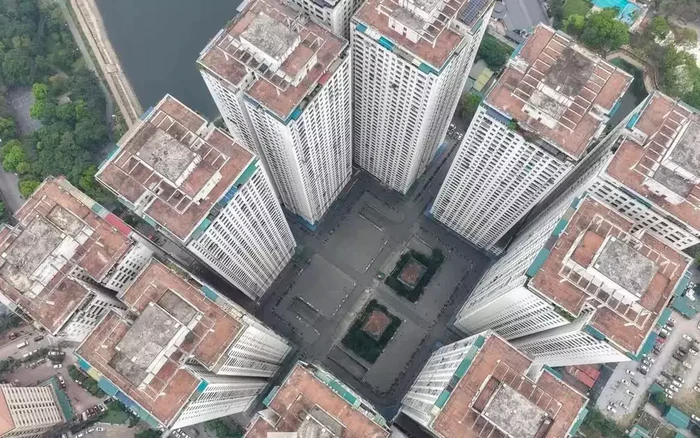
The Hanoi People’s Committee has officially submitted a proposal to the City People’s Council regarding the implementation of a resolution aimed at addressing long-standing violations involving land use and construction order at 12 major projects developed by the Muong Thanh Group. This legislative move marks a critical turning point in a multi-year effort to resolve one of the most complex urban planning crises in the Vietnamese capital, impacting thousands of residents who have lived in legal limbo for years.
The proposed resolution outlines a framework for potential legalization—referred to as “permission to exist”—contingent upon meeting rigorous safety, infrastructure, and urban planning standards. The 12 projects identified in the proposal include prominent developments such as CT6 Kien Hung, CT5 Tan Trieu, VP3, VP5, VP6, HH1, HH2, HH3, and HH4 Linh Dam, CT8 and CT10 Dai Thanh, CT11 and CT12 Kim Van Kim Lu, and the Xa La housing complex.
A Legacy of Urban Expansion and Regulatory Breach
The Muong Thanh Group, led by businessman Le Thanh Than, became synonymous with rapid, low-cost housing expansion across Hanoi over the last decade. However, this expansion was frequently characterized by significant deviations from approved architectural designs, including the unauthorized addition of extra floors, the conversion of public spaces into commercial units, and the aggressive partitioning of apartments to increase unit density.
According to official data provided in the draft resolution, the total number of residential units across these projects was originally planned to be 6,759. In reality, the actual figure stands at 24,943. This equates to an unauthorized increase of 18,184 units, a density spike that has placed unprecedented strain on local infrastructure, including water supply, electricity, sewage, and social amenities such as kindergartens and schools. The resulting pressure has significantly degraded the living standards for residents and challenged the urban management capabilities of local administrative districts.
Chronology of the Crisis
The friction between the Hanoi municipal authorities and the Muong Thanh Group dates back several years, escalating as residents moved into these buildings without proper ownership certificates (pink books) due to the underlying construction violations.
- 2015–2017: Initial inspections by the Hanoi Department of Construction reveal systematic violations in floor area, building height, and fire safety compliance across several Muong Thanh projects.
- 2018–2019: Legal proceedings intensify as the Ministry of Public Security initiates investigations into alleged tax evasion and violations of housing regulations.
- 2020–2022: Efforts to audit the physical safety of these structures begin, with the Hanoi People’s Committee repeatedly calling for a mechanism that balances the legal enforcement of urban codes with the protection of the legitimate rights of thousands of homebuyers.
- 2023–2024: The municipal government moves toward a finalized policy framework, culminating in the current draft resolution submitted to the People’s Council.
The Five Pillars of Regularization
The draft resolution stipulates that high-rise projects will only be granted permission to remain if they satisfy five stringent criteria simultaneously. These benchmarks are designed to ensure that while the government seeks a practical solution for residents, it does not compromise public safety or urban standards.
- Operational Status: The project must have been completed and already be in operation. This recognizes the reality of existing occupancy, focusing on structures where thousands of people are already living.
- Safety and Fire Prevention: The buildings must meet all current structural load-bearing requirements, fire safety regulations, and search-and-rescue accessibility standards. Critically, these structures must not negatively impact neighboring developments.
- Infrastructure Compliance: The projects must ensure that essential technical infrastructure—including water supply, power grid capacity, and parking space—is adequate. Furthermore, social infrastructure, such as the proximity and capacity of local schools and community centers, must align with the approved area plan or be supplemented by an approved mitigation plan.
- Spatial Clearance: Each building must demonstrate that it meets national technical regulations on urban planning. This includes maintaining specific distances between building blocks to ensure light and air circulation. Specifically, the distance between the long sides of building blocks must be at least 17.5 meters, while the distance between gable ends, or between a gable end and a long side, must be at least 10.5 meters.
- Roadway Compliance: The project must not violate existing road boundaries, technical infrastructure corridors, or traffic safety zones.
The resolution allows for a degree of flexibility: if a building fails the third criterion (infrastructure) but possesses a remediation plan deemed technically and legally feasible by competent authorities, it may still be granted permission to exist.
Addressing the Need for Demolition
Not all violations can be saved. The resolution provides a clear mechanism for the partial demolition of structures that are deemed hazardous or fundamentally non-compliant with safety regulations. For projects where specific parts are ordered to be torn down, the municipal government has outlined strict procedures for the relocation of residents and their assets.
The local People’s Committees at the commune level are tasked with the delicate process of notifying residents, creating a transparent list of affected units, and facilitating the relocation. This process includes public consultations and the provision of information to ensure that the rights of property owners are acknowledged even as illegal structures are removed.
Crucially, the responsibility for the financial burden of these actions lies with the developer. The Muong Thanh Group is mandated to coordinate with local authorities to support the relocation, provide compensation as required by law, and cover the costs of demolition and infrastructure restoration. Should the developer fail to fulfill these obligations, the city reserves the right to use the developer’s assets or security deposits to perform the necessary remedial work.
Implications and Public Sentiment
The move to regularize these units is a pragmatic approach to a long-standing impasse. By prioritizing the interests of residents who purchased apartments in good faith, the Hanoi government aims to stabilize the local housing market and resolve thousands of pending ownership certificate applications.
However, the implications go beyond mere administrative record-keeping. The strict five-point criteria send a strong message to other developers: the era of "build first, apologize later" is effectively over in the capital. The case of the Muong Thanh Group has become a landmark lesson in urban governance, highlighting the necessity of stricter oversight during the construction phase rather than relying on retroactive legalization.
For the thousands of residents in the HH Linh Dam or the Dai Thanh complexes, this proposal offers a potential path to legal security. For the broader public, it represents the city’s attempt to reconcile the chaotic, rapid growth of the past decade with the need for a safe, well-planned, and sustainable urban future. The upcoming debate in the City People’s Council will likely focus on the technical feasibility of these standards and the city’s capacity to enforce the demolition of non-compliant sections, ensuring that the resolution does not merely become a "blanket pardon" but a robust instrument for urban order.