Investigation into High Risk Ghost Company with 200 Billion VND Revenue Operating Without Offices or Warehouses in Can Tho

The tax authority of District 11 in Can Tho City has recently issued an urgent dispatch to various tax units across Ho Chi Minh City, Can Tho, and Vinh Long Province, warning of a business entity exhibiting severe irregularities and high-risk indicators regarding tax compliance and electronic invoice usage. The entity at the center of the investigation, Gia Dang Manufacturing Trading Service Co., Ltd. (referred to as Gia Dang Co., Ltd.), has reportedly generated nearly 200 billion VND in revenue despite possessing no physical infrastructure, no operational headquarters, and no logistical facilities. This case highlights a sophisticated pattern of "ghost company" activity that has prompted a multi-jurisdictional coordination effort to safeguard the national budget and ensure the integrity of the corporate tax system in Southern Vietnam.
Discovery of the Anomalies
The investigation into Gia Dang Co., Ltd. began following a routine risk analysis performed by the tax authority’s centralized management system. According to the General Department of Taxation’s established protocols, businesses are evaluated against a set of nine specific risk criteria designed to identify potential tax evasion, illegal invoice trading, and money laundering. When the automated system flagged Gia Dang Co., Ltd., human auditors conducted a deep dive into the firm’s tax filings, electronic invoice data, and centralized tax management (TMS) records.
The findings revealed a stark disconnect between the company’s financial reporting and its physical existence. Based on the verification results, the tax authority concluded that Gia Dang Co., Ltd., located in Dai Hai Commune, Can Tho City, represents a high-risk entity. The company was officially established on January 9, 2023, by Mr. Dang Huu Tam, born in 1983 and residing in Can Tho. Mr. Tam serves as the Director, legal representative, and sole owner of the enterprise, which boasts a registered charter capital of 20 billion VND. While its primary registered business activity is poultry farming, the company’s invoice history tells a vastly different story of large-scale multi-commodity trading.
A Chronology of Rapid and Suspicious Growth
Since its inception in early 2023, Gia Dang Co., Ltd. experienced an exponential surge in transaction volume that is rarely seen in legitimate startup enterprises within the agricultural sector. From January 9, 2023, to June 30, 2026, the company recorded total sales of goods and services exceeding 197.11 billion VND. However, during the same period, its reported total purchases reached 197.67 billion VND.
This financial structure—where input costs consistently exceed output revenue—is a hallmark of entities designed to generate "input" Value Added Tax (VAT) credits to offset "output" VAT liabilities, thereby minimizing actual tax payments. Indeed, despite the massive flow of nearly 200 billion VND through its books, the actual amount of VAT contributed to the state budget was negligible. Records indicate that as of the first quarter of 2026, the company had paid less than 7 million VND in VAT throughout its entire operational history. This equates to a tax-to-revenue ratio that is virtually zero, triggering immediate red flags for auditors.
Detailed Breakdown of Operational Red Flags
The tax authorities have categorized the irregularities of Gia Dang Co., Ltd. into five primary areas of concern, which collectively suggest the enterprise may be a "shell" or "ghost" entity used for illegal invoice circulation.
1. Lack of Physical Infrastructure and Ghost Operations
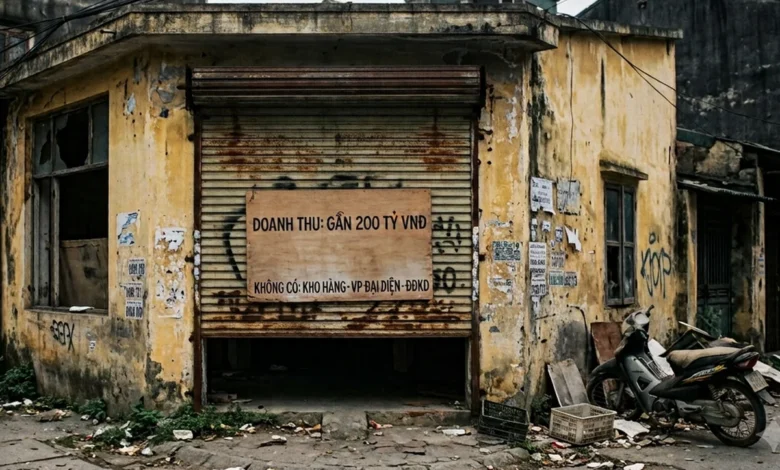
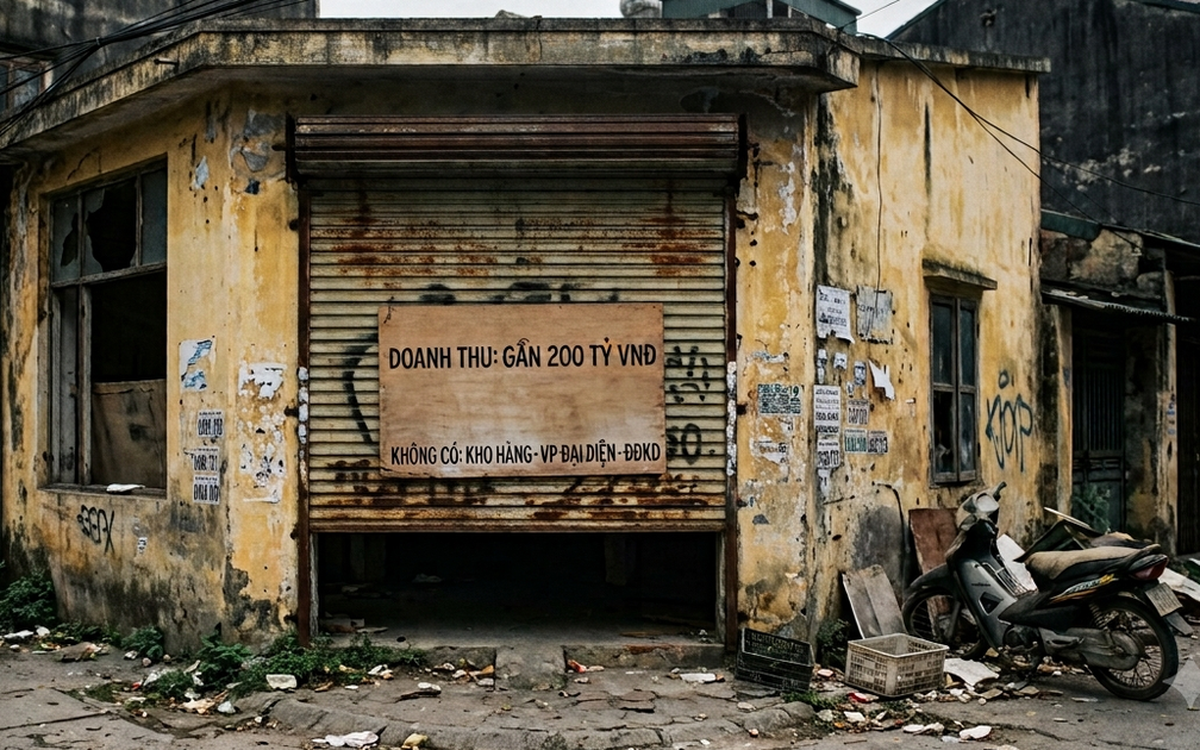
A physical verification conducted by the tax authority in coordination with the People’s Committee of Dai Hai Commune confirmed that Gia Dang Co., Ltd. does not operate at its registered address (Plot 160, National Highway 1A, Ba Rinh Hamlet, Dai Hai Commune, Can Tho). Investigators found no office, no signage, and no personnel at the site. Furthermore, the company has not registered any branches, representative offices, or additional business locations on the national tax system. For a company purportedly handling hundreds of billions of VND in physical goods, the total absence of a logistical footprint is a definitive indicator of fraudulent activity.
2. Disproportionate Revenue vs. Tax Contribution
The sheer volume of trade—spanning commodities such as sand, beverages, flour, and rice—suggests a massive logistical operation. However, the company’s tax payments do not reflect the scale of these transactions. In the Vietnamese tax framework, businesses with such high turnover are expected to contribute significantly to the treasury. The fact that Gia Dang Co., Ltd. managed to offset almost its entire VAT liability through questionable input invoices has led authorities to believe the transactions were fabricated or "cycled" to create a veneer of legitimacy.
3. Concentrated Transactions with High-Risk Entities
Data analysis revealed that Gia Dang Co., Ltd. sourced its goods and services from a very narrow and suspicious pool of suppliers. Specifically, the company engaged in transactions with six entities that have already been blacklisted or flagged as "high-risk" by tax authorities. These six suppliers accounted for nearly 97 billion VND in purchases, representing approximately 50% of Gia Dang’s total input value. More tellingly, the input VAT derived from these risky sources amounted to over 3.5 billion VND, accounting for more than 60% of the company’s total input VAT deductions. This suggests a deliberate strategy of using invoices from "vanishing" or fraudulent suppliers to inflate costs and reduce tax obligations.
4. Absence of Warehousing for Bulk Commodities
The company’s reported sales involve heavy and high-volume materials, most notably river sand and agricultural staples like rice and flour. Moving 200 billion VND worth of such goods requires significant warehouse space, transport fleets, and loading equipment. The tax authority noted that Gia Dang Co., Ltd. has no recorded leases for warehouses or storage yards, nor does it own the specialized equipment necessary to conduct such a trade. This lack of "material basis" for business operations is a primary criterion in Vietnam’s Law on Tax Administration for identifying illegal invoice trading.
5. Geographical Irregularities
While the company is registered in Can Tho, its primary trading partners are scattered across Ho Chi Minh City and Vinh Long. While inter-provincial trade is common, the lack of a central hub or any documented transportation logistics for moving goods between these regions further supports the theory that the "trade" existed only on paper.
Broader Context: The Fight Against Invoice Fraud in Vietnam
The case of Gia Dang Co., Ltd. is part of a much larger trend that the Vietnamese Ministry of Finance and the General Department of Taxation have been aggressively combating. Since the nationwide transition to mandatory electronic invoices (e-invoices) in 2022, the government has gained unprecedented visibility into corporate transactions. However, this has also led to more sophisticated methods of fraud.
"Ghost companies" are typically established using "borrowed" or stolen identities (often from rural residents or low-income individuals) to register businesses with large charter capitals. These entities then issue thousands of e-invoices for non-existent goods and services to "real" companies that wish to artificially inflate their expenses to lower their Corporate Income Tax (CIT) and VAT burdens. Once the ghost company has issued a significant volume of invoices, the owners often disappear or "shut down" the business before a tax audit can occur.
In response, the General Department of Taxation has deployed an AI-driven "risk assessment" system that compares a company’s revenue against its number of employees, its asset base, and the tax compliance history of its trading partners. The 9-criteria system used to flag Gia Dang Co., Ltd. is a product of this technological evolution.
Official Responses and Next Steps
The tax authority of District 11, Can Tho City, has formally requested that tax departments in Ho Chi Minh City and Vinh Long Province conduct immediate reviews of any businesses that have accepted invoices from Gia Dang Co., Ltd. Under Vietnamese law, companies found to be using "illegal invoices" (invoices not backed by real goods or services) face severe penalties, including:
- Disallowance of Deductions: The total value of the suspicious invoices will be removed from the company’s deductible expenses, leading to a significant increase in Corporate Income Tax liability.
- VAT Recovery: Any VAT previously refunded or deducted based on these invoices must be repaid to the state, often with a 10% to 20% penalty.
- Late Payment Interest: A daily interest rate of 0.03% is applied to all unpaid tax amounts.
- Criminal Prosecution: If the value of the tax evasion exceeds 100 million VND, or if the entity is found to be part of an organized invoice-selling ring, the case is typically handed over to the police (C03 – Department for Investigation of Crimes on Corruption, Economy, and Smuggling) for criminal proceedings under Articles 200 and 203 of the Penal Code.
Local authorities in Can Tho have indicated that they are currently coordinating with the police to locate Mr. Dang Huu Tam and determine the true nature of the 200 billion VND in transactions. There is also a focus on identifying the "downstream" beneficiaries—the legitimate companies that bought these invoices to evade taxes.
Implications for the Business Community
This investigation serves as a stern warning to the business community in the Mekong Delta and beyond. Tax authorities are no longer relying solely on periodic audits; they are now utilizing real-time data monitoring to catch anomalies as they happen.
For legitimate businesses, the Gia Dang case emphasizes the importance of "due diligence" when selecting suppliers. The General Department of Taxation has advised companies to verify the operational status of their partners through the National Business Registration Portal and the "high-risk invoice" database. Relying on a supplier that lacks a physical office or warehouse, even if they provide a "valid" e-invoice, can lead to catastrophic financial and legal consequences for the buyer.
As the investigation into Gia Dang Co., Ltd. expands, it is expected to uncover a network of affiliated entities. The coordination between Can Tho, Ho Chi Minh City, and Vinh Long suggests that authorities believe this is not an isolated incident but part of a regional tax evasion scheme. The final resolution of this case will likely involve the cancellation of hundreds of invoices and the recovery of billions of VND in unpaid taxes, further reinforcing the government’s "zero tolerance" policy toward economic crimes in the digital age.