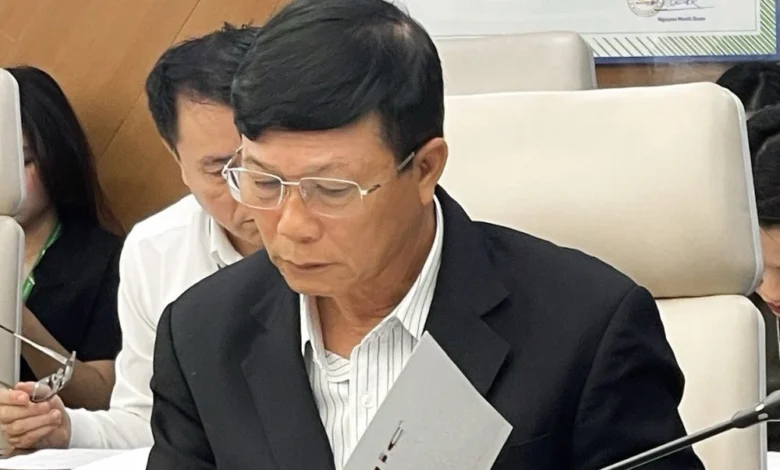
The resurgence of leadership changes at Bamboo Airways continues to capture public and industry attention as the carrier navigates a turbulent operational landscape. According to recent updates from the National Business Registration Portal as of September 30, Mr. Le Thai Sam has officially reassumed the dual roles of Chairman of the Board of Directors and the legal representative of Bamboo Airways, taking over the legal representation mantle previously held by Mr. Truong Phuong Thanh, the airline’s Chief Executive Officer. This high-level administrative shuffle marks yet another chapter in the complex corporate restructuring history of the private Vietnamese carrier, occurring amidst ongoing financial headwinds, tax obligations, and a drastically reduced flight network that reflects the immense pressures currently facing independent commercial aviation enterprises in the region.
A Timeline of Leadership Instability and Ownership Shifts
The trajectory of Mr. Le Thai Sam’s involvement with Bamboo Airways is deeply intertwined with the airline’s broader financial restructuring over the past several years. Mr. Sam initially joined the carrier as a strategic investor in 2022, rapidly scaling his financial commitment to become one of the airline’s largest individual stakeholders during a period when the carrier was attempting to stabilize operations following the departure of its original founders.
His first tenure as Chairman of the Board of Directors spanned from July 2023 to February 2024—a critical window during which the airline sought to restructure its extensive debt portfolio and operational network. In February 2024, he transitioned to the role of Permanent Vice Chairman of the Board, allowing other managerial factions to steer daily executive decisions.
However, corporate developments moved swiftly. By August 2025, Mr. Sam resumed the chairmanship, only for his associated investor group to transfer operational control back to the FLC Group roughly a month later in September 2025. By mid-November 2025, Mr. Sam stepped down from the active chairmanship while remaining a member of the Board of Directors. The latest registry update formalizes his return to the pinnacle of the corporate hierarchy, positioning him once again at the helm as the airline confronts mounting pressure from regulatory bodies and creditors.
Tax Liabilities and Travel Restrictions
Compounding the governance shifts are significant legal and financial hurdles involving tax authorities. In a notable development on September 3, the Tax Department of Gia Lai Province formally issued a notification to the Immigration Department under the Ministry of Public Security, requesting a temporary exit ban for Mr. Le Thai Sam.
According to regulatory filings, Mr. Sam has been identified as the ultimate beneficial owner of Bamboo Airways. The core catalyst for this restrictive legal measure stems from outstanding tax liabilities owed by the airline to the Gia Lai tax authority, which totaled approximately VND 440.6 billion as of September 3. Tax authorities have publicly stipulated that the temporary exit restriction against Mr. Sam will only be lifted upon the complete settlement of these overdue tax obligations through the National Public Service Portal.

This enforcement action underscores the aggressive posture that provincial tax agencies are adopting toward corporate leaders amid persistent compliance challenges within the aviation sector. For Bamboo Airways, resolving this tax dispute is not merely a matter of administrative compliance, but an essential prerequisite to ensure operational mobility and strategic planning freedom for its key leadership figures.
Downscaling Operations and Fleet Rationalization
Parallel to the boardroom reconfigurations, Bamboo Airways has significantly trimmed its corporate scope and drastically reduced its commercial footprint. Alongside the update regarding its legal representative, the carrier streamlined its registered business lines from 130 sectors down to 124, as recorded in the business registry updates of August and September. Despite these strategic contractions, the airline’s primary operational focus remains strictly anchored in passenger air transportation.
Nevertheless, the airline’s operational statistics reveal a stark contraction in market presence. Data compiled by the Civil Aviation Authority of Vietnam (CAAV) indicates that domestic carriers operated a combined total of 27,594 flights in August 2026. Within this broader industry context, Bamboo Airways operated a mere 43 flights during the entire month, representing the lowest operational output among all commercial airlines in Vietnam.
This figure highlights a precipitous decline when viewed against historical output, representing a staggering 94% reduction compared to the 725 flights operated by the carrier just two months prior in June. The physical scale of the airline has contracted in tandem with its flight schedules. At present, the active operating fleet of Bamboo Airways has been reduced to a single aircraft—an Airbus A321-200 bearing the registration number VN-A227, with an operational age of approximately 13.5 years. This minimalist fleet configuration severely restricts the carrier’s route network, passenger capacity, and competitive viability in a domestic market otherwise dominated by larger, well-capitalized competitors.
Industry Implications and Future Outlook
The simultaneous return of Mr. Le Thai Sam to the top executive post, the ongoing shadow of substantial tax liabilities, and the unprecedented contraction of the airline’s operating fleet present a complex outlook for the future of Bamboo Airways. Industry analysts note that while the restructuring of business lines and the return of an experienced stakeholder to the chairmanship reflect active corporate maneuvering, the airline faces monumental structural barriers to recovery.
Operating a commercial aviation business with a single aircraft severely limits revenue generation potential, making it exceptionally difficult to service legacy debts, cover mounting operational overheads, and satisfy multi-billion-dong tax obligations. Furthermore, maintaining air operator certificate compliance and retaining skilled aviation personnel under such constrained circumstances requires substantial capital injections and sustained strategic backing.
As regulatory bodies maintain strict oversight over corporate governance and tax compliance, the immediate priorities for Bamboo Airways under Mr. Sam’s renewed leadership will undoubtedly center on resolving regulatory bottlenecks, addressing outstanding tax liabilities to lift travel restrictions, and securing viable financial partnerships to stabilize its core operations. Whether these administrative adjustments can successfully turn the tide for one of Vietnam’s pioneering private carriers remains one of the most closely watched narratives within the nation’s transportation and corporate sectors.