PetroVietnam Technical Services Corporation Achieves Record Growth in First Half of 2026 as Strategic Pivot Toward Renewable Energy Gains Momentum

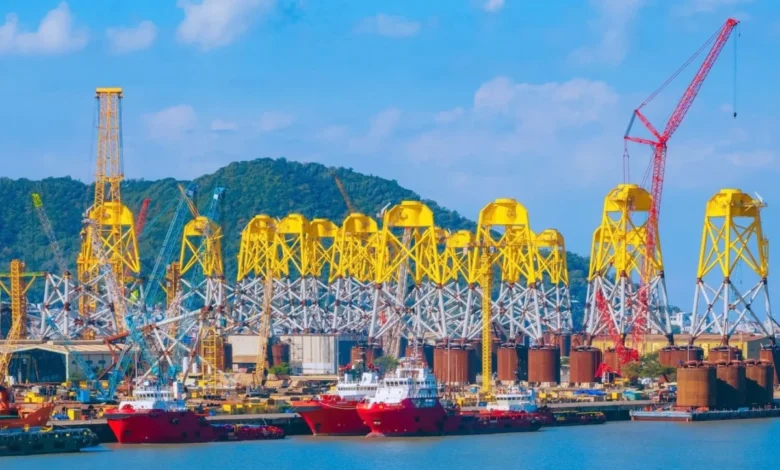
PetroVietnam Technical Services Corporation (PVS), a core subsidiary of the Vietnam National Oil and Gas Group (PVN), has reported a stellar financial performance for the first half of 2026, characterized by double-digit growth in both revenue and net profit. According to the latest figures released by PVN, the corporation’s consolidated revenue for the first six months of the year reached 18,020 billion VND, representing 113% of the semi-annual management plan and a significant 29% increase compared to the same period in the previous year. This robust performance underscores the company’s successful navigation of the evolving global energy landscape and its strengthening position within the regional engineering, procurement, construction, installation, and commissioning (EPCIC) market.
The corporation’s profitability metrics have shown even more impressive gains. Profit before tax for the first half of 2026 stood at 1,012 billion VND, exceeding the six-month target by 43% and marking a 21% year-on-year increase. After-tax profit followed a similar upward trajectory, reaching 820 billion VND, a 33% jump from the previous year’s results. Furthermore, PVS contributed 785 billion VND to the state budget during this period, highlighting its role as a critical pillar of Vietnam’s industrial economy. These results indicate that by the end of June 2026, PVS had already fulfilled nearly 55% of its annual revenue target and a staggering 83% of its full-year profit goal.
Detailed Quarterly Performance and Operational Drivers
A closer examination of the second quarter of 2026 reveals a sustained period of high-intensity activity. During Q2 alone, PVS generated 9,321 billion VND in revenue and 385 billion VND in after-tax profit, reflecting increases of 26% and 21% respectively over Q2 2025. This acceleration in the second quarter was primarily driven by the execution of several large-scale domestic and international projects.
Management at PVS attributes the primary growth engine to the Mechanical & Engineering (M&E), Renewable Energy, and Industrial Construction sectors. This segment alone accounted for 11,385 billion VND in revenue during the first half of the year, a 29% increase year-on-year. The surge is largely credited to the company’s aggressive expansion into the offshore wind sector and the ramp-up of major domestic gas-to-power projects. PVS has transitioned from being a traditional oil and gas service provider into a multi-disciplinary energy infrastructure specialist, a move that is now yielding substantial financial dividends.
Progress on Landmark Projects and EPCIC Milestones
The first half of 2026 was marked by significant milestones across PVS’s project portfolio. The company is currently engaged in a suite of "mega-projects" that are vital to Vietnam’s long-term energy security. Among these are the Block B – O Mon gas pipeline and field development, the Lac Da Vang (Golden Camel) field, and the Su Tu Trang (White Lion) Phase 2B project.

In the second quarter, PVS officially signed the EPCIC contract for the Su Tu Trang 2B project, a move that secures a substantial backlog for the coming years. Simultaneously, the company commenced construction on the Central Gas Facility (CGF) jackets and successfully launched the topside structures for the Lac Da Vang project. In a major operational achievement, the Floating Storage and Offloading (FSO) vessel "PTSC Lac Da Vang" was handed over to begin offshore deployment. These projects not only provide immediate revenue but also demonstrate PVS’s capability to manage highly complex offshore engineering tasks that meet international standards.
Beyond domestic borders, PVS has maintained a strong presence in the regional market. Its fleet of support vessels is currently operating at high utilization rates in the Middle East and Malaysia, generating 1,529 billion VND in revenue, a 66% increase from the previous year. The FSO/FPSO (Floating Production Storage and Offloading) segment remains a stable cash cow, contributing 1,421 billion VND with an average extraction and operation efficiency rate near 100%. Meanwhile, offshore facility operation and maintenance (O&M) services grew by 24%, reaching 1,319 billion VND.
Strategic Financial Management and Provision Reversals
Market analysts from ACBS Securities have noted that PVS’s financial health is expected to receive a further boost from the settlement of long-standing project accounts. Based on investor briefings held in June, PVS is anticipated to sign the final acceptance certificate (PAC) for the Sao Vang – Dai Nguyet project in late 2026. This milestone is expected to trigger a reversal of provisions amounting to approximately 600 billion VND.
Additionally, the resolution of several other smaller projects could bring the total provision reversal to over 630 billion VND for the full year. This "non-core" income will significantly pad the bottom line, providing PVS with additional liquidity to fund its ambitious capital expenditure (CAPEX) plans. The company’s ability to successfully close out these complex contracts reflects a maturing administrative and legal framework within the organization.
The Road to 2030: Expansion and Diversification
Looking toward the end of the decade, PVS has set forth a visionary growth strategy. The corporation aims to nearly double its 2025 revenue levels by 2030. This growth is predicated on several key pillars:
- Subsea Infrastructure and Cables: PVS plans to invest heavily in the production of subsea power cables, catering to the burgeoning offshore wind market in Asia.
- Offshore Wind Exports: A major component of the 2030 vision is the export of offshore wind energy to Singapore and Malaysia. PVS, in collaboration with its parent company PVN, expects to reach a Final Investment Decision (FID) for these cross-border renewable projects by 2029.
- Blue Whale (Ca Voi Xanh) Project: This massive gas project is expected to reach FID by 2027. With an estimated investment of 5 billion USD and reserves 1.5 times larger than Block B, the Blue Whale project represents a decade-long work horizon for PVS’s M&E division.
- Nuclear Energy and National Reserves: PVS is positioning itself to participate in the potential revival of the Ninh Thuan nuclear power project and the construction of national strategic petroleum reserve warehouses.
- Regional Reconstruction: The company is eyeing opportunities in the Middle East for the reconstruction and rehabilitation of energy infrastructure following regional stabilization, leveraging its existing operational footprint in the area.
To support this massive expansion, PVS has outlined a clear capital increase roadmap. The corporation intends to raise its charter capital to 9,000 billion VND in the medium term (a 76% increase) and further scale it to 13,000 billion VND by 2030 (a 155% increase from current levels). This capital injection will be essential for acquiring new specialized equipment, expanding fabrication yards, and investing in high-tech renewable energy manufacturing facilities.

Broader Implications and Industry Analysis
The success of PVS is a bellwether for the Vietnamese energy sector’s transition. As traditional oil and gas reserves in the shallow waters of the East Sea face natural decline, the shift toward deep-water projects like Block B and Blue Whale, combined with a pivot to offshore wind, is essential for maintaining national energy autonomy. PVS’s ability to secure international contracts in the offshore wind space—competing with established players from Singapore, Korea, and Europe—signals that Vietnamese engineering firms have moved up the value chain.
Furthermore, the corporation’s targets for the second half of 2026 are highly ambitious. PVS is striving to achieve a consolidated revenue of 34,000 billion VND and a profit before tax of 1,500 billion VND for the full year. Given the current momentum and the 83% profit fulfillment rate achieved in the first half, many industry observers believe the company is well-positioned to exceed these targets significantly.
The company’s leadership has emphasized that while the global economy remains volatile, the demand for sustainable energy infrastructure is at an all-time high. By integrating traditional petroleum services with cutting-edge renewable technology, PVS is not just surviving the energy transition but is actively leading it within Southeast Asia. The upcoming years will likely see PVS transform from a regional service provider into a global contender in the green energy infrastructure market, provided it can maintain its project execution excellence and successfully navigate the complexities of international large-scale financing.
As the second half of 2026 unfolds, the focus for PVS will remain on the timely delivery of its current EPCIC backlog and the finalization of strategic partnerships for the 2030 vision. With a robust balance sheet, a clear diversification strategy, and the backing of the National Oil and Gas Group, PetroVietnam Technical Services Corporation is entering a new era of industrial prominence.