At the Autumn Economic Forum (AEF) 2026, held in Ho Chi Minh City from October 26 to 29, global experts and policymakers converged to discuss the future of industrial competitiveness in Southeast Asia. A central theme that emerged during the sessions on October 28 was the urgent necessity for Vietnam to transition from traditional physical infrastructure to "smart infrastructure." This shift, according to experts from the World Economic Forum (WEF), is no longer merely an advantage but a prerequisite for nations aiming to sustain growth in an increasingly digitized global economy.
Devendra Jain, head of the AI and Pioneer Technology group at the WEF, delivered a keynote address that underscored the limitations of the current growth model. While Vietnam has successfully positioned itself as a premier global manufacturing hub and a magnet for foreign direct investment (FDI), the next phase of development requires a fundamental upgrade in how the nation integrates its industrial, logistical, and transport networks.
The Paradigm Shift: From Passive to Responsive Infrastructure
The fundamental distinction between traditional and smart infrastructure lies in reactivity. Traditional systems—often termed "static" infrastructure—serve to support physical movement and observation but lack the capability to self-adjust. Mr. Jain highlighted traffic systems as a primary example: in a traditional model, traffic signals operate on fixed, predetermined cycles. In contrast, smart infrastructure leverages artificial intelligence and real-time data to analyze traffic flow, adjust signal timing across an entire network, and optimize transit efficiency instantaneously.
"Smart infrastructure combines physical assets, connectivity networks, data streams, and artificial intelligence to improve productivity, resilience, and attractiveness to investors," Mr. Jain explained. He argued that while basic infrastructure helps us observe systems, smart infrastructure allows those systems to respond effectively to changing conditions.
Global Benchmarks and the Path Forward
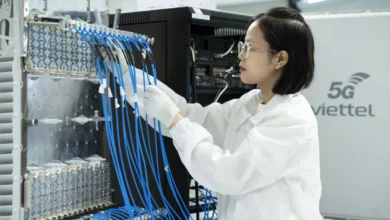
Several nations have already embarked on this transition, providing a blueprint for emerging economies. Saudi Arabia, for instance, has implemented a national industrial network that utilizes defense-grade spectrum to provide dedicated, high-security connectivity for industrial sectors. Similarly, China’s rapid adoption of smart manufacturing—exemplified by over 4,000 smart factories powered by 5G—demonstrates the power of policy in facilitating private sector access to high-speed, low-latency connectivity.
For Vietnam, the WEF expert emphasized that the journey must be collaborative. The development of smart infrastructure requires a robust framework involving four key pillars:

- Government: Providing the overarching policy environment and physical foundations.
- Private Enterprises: Contributing real-world data, capital, and specific application requirements.
- Technology Providers: Developing the foundational digital architecture.
- Standardization Bodies: Establishing the rules of the road to ensure interoperability.
Addressing the Data Challenge
A significant hurdle in this transition is the quality and accessibility of industrial data. Unlike consumer data, which is readily available on the internet, industrial data is often siloed within proprietary systems. Mr. Jain pointed out that the creation of shared data pools would be a game-changer, particularly for Small and Medium Enterprises (SMEs). By lowering the barriers to high-quality data, the government can help smaller firms tap into AI-driven efficiencies that were previously reserved for large multinational corporations.
Strategic Opportunities for Ho Chi Minh City
The forum also addressed the specific implications for Ho Chi Minh City, which is currently finalizing its master plan for 2050. Mr. Jain identified two immediate opportunities for the city:
First, the development of a "smart coordination layer" that connects factories, logistics providers, and seaports along the production-export corridor. This integration would eliminate bottlenecks and reduce the "dead time" currently plaguing supply chain logistics.
Second, the support of SMEs through initiatives like the VSM 70 program—a flagship effort launched by the Center for the Fourth Industrial Revolution in Ho Chi Minh City (HCMC C4IR). This program aims to assist enterprises in adopting smart manufacturing, thereby enhancing their position within the global value chain.
The Technological Corridor: A Six-Pillar Strategy
Complementing the WEF’s perspective, Associate Professor Dr. Le Quoc Cuong, a member of the Scientific and Technological Subcommittee under the Ho Chi Minh City Development Research Institute, presented a bold proposal for a "Technological Corridor." His research argues that the current model of fragmented industrial zones, software parks, and innovation centers is insufficient for achieving comprehensive growth.
Dr. Cuong proposed that Ho Chi Minh City reorganize its spatial and functional management around six specialized pillars to ensure a cohesive, integrated ecosystem:
- Knowledge Pillar: Centered around the Vietnam National University, Ho Chi Minh City, focusing on high-quality research and talent cultivation.
- High-Tech Pillar: Specializing in strategic sectors such as semiconductors, AI, biotechnology, and advanced materials.
- Advanced Manufacturing Pillar: Dedicated to transforming existing industrial zones into high-tech, smart manufacturing centers.
- Finance and Innovation Pillar: Integrating international financial centers with startup hubs and technology commercialization activities.
- Global Logistics Pillar: Serving as the connective tissue between production activities and global supply chains.
- Green and Blue Economy Pillar: Addressing sustainability and the city’s maritime economic potential.
"The value of this model lies in the quality of the connections between these pillars, not just the scale of each," Dr. Cuong stated. "A unified, data-driven governance framework will determine the strength and efficiency of the entire network."

Chronology and Context: A New Era for AEF
The Autumn Economic Forum 2026 marks a milestone in Vietnam’s economic diplomacy. As the second time Ho Chi Minh City has hosted the event and the first in direct partnership with the World Economic Forum, the gathering signifies a maturing relationship between Vietnam and global economic institutions.
The four-day forum, which ran from October 26 to 29, brought together a diverse group of stakeholders, including international science and technology centers, hundreds of global corporations, diplomatic missions, and consulates. The discussions at AEF 2026 signal a clear departure from traditional growth strategies. Policymakers are now looking toward a future where infrastructure is not just concrete and steel, but a digital nervous system capable of driving sustainable, high-value growth.
Broader Implications and Future Outlook
The implications of this shift are profound. By moving toward a smart infrastructure model, Vietnam aims to transcend the "middle-income trap" by increasing labor productivity and attracting higher-value foreign investment.
However, the transition is not without challenges. The requirement for massive investment in digital infrastructure, the need for a highly skilled workforce, and the necessity of harmonizing regulations across different sectors remain significant obstacles. Furthermore, the issue of cybersecurity in a hyper-connected industrial environment cannot be overstated.
Despite these challenges, the consensus among attendees at AEF 2026 was clear: the path to becoming a high-income, digitally advanced nation lies in the ability to harmonize physical and digital ecosystems. As Vietnam continues to integrate into the global economy, the adoption of smart, integrated, and data-driven infrastructure will likely serve as the bedrock of its long-term competitive advantage.
The collaborative approach championed by the WEF and the strategic planning currently underway in Ho Chi Minh City provide a roadmap that other regions in Vietnam can follow. By focusing on interoperability, shared data standards, and the integration of emerging technologies like AI and 5G, Vietnam is signaling its intent to evolve from a global factory to a global innovation hub. The coming decade will be a critical test of this vision, as the nation attempts to synchronize its ambitious policy goals with the realities of the Fourth Industrial Revolution.
Related posts: