Miraculous Survival: 50-Year-Old Man Overcomes Cardiac Arrest and Myocardial Infarction Threat in Ho Chi Minh City

In a remarkable display of advanced medical intervention and coordinated emergency care, a 50-year-old man in Ho Chi Minh City has cheated death following a severe myocardial infarction that triggered cardiac arrest for nearly 30 minutes. The patient, identified as Mr. P.V.T., born in 1976 and residing in Dong Hoa ward, not only survived the initial catastrophic cardiac event but subsequently navigated and conquered a critical secondary threat of ventricular wall rupture. Medical professionals at Thu Duc General Hospital hailed the outcome as a testament to multidisciplinary teamwork, cutting-edge technology, and the relentless pursuit of life-saving measures in critical cardiology.
The alarming sequence of events underscores the unpredictable and merciless nature of cardiovascular diseases, which continue to claim lives globally while increasingly striking middle-aged individuals who may harbor silent risk factors. Mr. T.’s harrowing medical journey serves as both a celebration of modern medical capabilities and a stark warning regarding the silent dangers of unmanaged hypertension, valvular heart disease, and heavy smoking habits.
A Sudden Collapse at the Workplace
The crisis unfolded on the morning of September 11. Mr. T. was at his workplace when he decided to enjoy a cup of coffee, a routine morning ritual for millions of workers worldwide. Shortly after consuming the beverage, he was suddenly struck by an intense, crushing chest pain accompanied by pallor and acute distress. Recognizing the severity of his symptoms, colleagues and workplace associates acted swiftly, arranging immediate transportation to Thu Duc General Hospital in Ho Chi Minh City.
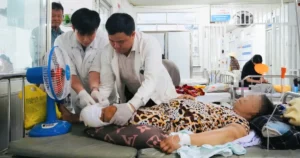
Upon arrival at the emergency department, Mr. T. was in critical condition, exhibiting classic signs of acute myocardial infarction—commonly known as a heart attack. However, the situation deteriorated catastrophically within moments of his entry into the emergency room. Mr. T. suffered a sudden cardiac arrest and respiratory arrest, meaning his heart abruptly stopped beating effectively and he ceased breathing.
The emergency medical team immediately initiated advanced cardiac life support (ACLS) protocols. Doctors and nurses performed continuous chest compressions, executed multiple electrical cardioversion shocks, and administered emergency resuscitation medications. For nearly 30 agonizing minutes, the medical staff fought tirelessly to restore a perfusing heart rhythm. Their persistence paid off when Mr. T.’s spontaneous circulation finally returned, pulling him back from the brink of clinical death.
Emergency Interventions and Coronary Revascularization
With the patient’s heart beating once more on its own, the interventional cardiology team wasted no time in investigating the root cause of the cardiac arrest. Emergency coronary angiography revealed a total occlusion in the proximal segment of the right coronary artery, while other coronary branches exhibited severe stenosis or narrowing.
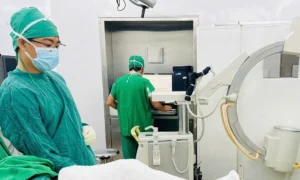
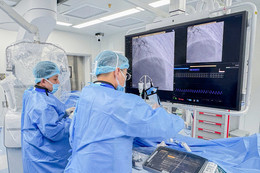
Given the critical state of the patient’s coronary architecture, the medical team executed a high-stakes intervention. Cardiologists successfully deployed a coronary stent to re-open the blocked right coronary artery, restoring blood flow to the starving heart muscle. To stabilize his compromised hemodynamic status further, the team placed a temporary pacemaker and utilized an intra-aortic balloon pump (IABP) to support his blood circulation. Following the procedure, Mr. T. was transferred to the Intensive Care and Interventional Cardiology Department, where he was placed on mechanical ventilation and subjected to intensive, round-the-clock monitoring and therapy.
By September 12, the patient had regained consciousness, and by September 13, doctors successfully removed his endotracheal tube as his respiratory function improved. However, the road to recovery was fraught with perilous complications.
The Secondary Threat: Ventricular Wall Rupture
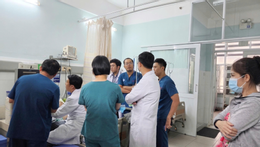
On September 15, just as stabilization seemed within reach, Mr. T. reported renewed chest pain. Bedside echocardiography revealed concerning findings: a moderate amount of pericardial effusion—fluid accumulation in the sac surrounding the heart—accompanied by echocardiographic imagery strongly suggesting a potential rupture of the ventricular wall in the region of the left ventricular apex.
Ventricular wall rupture is one of the most feared and lethal mechanical complications of acute myocardial infarction. It occurs when necrotic heart muscle tissue weakens to the point of tearing under pressure, leading to rapid blood accumulation in the pericardial cavity, cardiac tamponade, and catastrophic circulatory collapse.
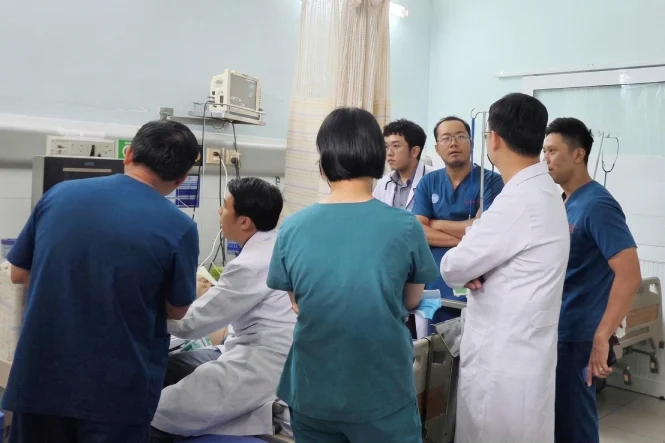
Faced with this immediate threat to the patient’s life, the departments of cardiac intensive care, interventional cardiology, and cardiothoracic surgery convened an emergency multidisciplinary consultation. The medical teams closely monitored the patient’s clinical trajectory with serial echocardiograms, prepared surgical teams for immediate open-heart intervention should his status degrade further, and meticulously adjusted his conservative medical therapy to minimize myocardial wall stress.
Gradual Recovery and Discharge
Through vigilant monitoring and targeted medical management, Mr. T.’s condition began a slow, fragile improvement. By September 28, follow-up echocardiography delivered encouraging news: the suspicious imagery indicative of ventricular wall rupture had disappeared, and the volume of pericardial fluid had significantly decreased to a minimal amount.
Having weathered both a massive heart attack with prolonged cardiac arrest and the terrifying threat of a myocardial rupture, Mr. T. was cleared for hospital discharge. He returned home with strict instructions for follow-up appointments, and subsequent check-ups confirmed that his cardiac function remained stable.
Dr. BSCKII. La Duy Lac, Head of the Intensive Care and Interventional Cardiology Department at Thu Duc General Hospital, emphasized that this successful outcome was the direct result of seamless coordination among emergency resuscitation, coronary revascularization, circulatory support, and vigilant post-infarct complication monitoring.
Uncovering the Root Causes: Lifestyle and Medical History
A retrospective look at Mr. T.’s medical background revealed critical insights into why such a severe cardiovascular event occurred. Despite having a known history of heart valve disease and hypertension, Mr. T. had been inconsistent with his prescribed medication regimen. Furthermore, he maintained a heavy smoking habit, consuming two to three packs of cigarettes daily.
Smoking is a well-documented catalyst for endothelial dysfunction, arterial inflammation, plaque rupture, and thrombosis. Combined with uncontrolled hypertension and pre-existing valvular abnormalities, Mr. T. possessed a high-risk cardiovascular profile that ultimately culminated in the near-fatal event at his workplace.
Medical Warnings and Broader Implications for Public Health
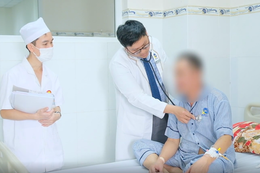
The case has prompted medical professionals to issue renewed warnings to the public regarding the insidious nature of cardiovascular disease. Dr. Lac advised individuals to remain highly vigilant regarding the classic warning signs of myocardial infarction, which include sudden chest pain or discomfort, shortness of breath, cold sweats, nausea, lightheadedness, or sudden, overwhelming fatigue.
When suspicious symptoms arise, medical experts stress that patients must seek immediate emergency medical attention rather than attempting to self-treat at home. Time is muscle in cardiology; every minute saved during a heart attack preserves vital heart tissue and drastically reduces the risk of mortality and severe complications.
Furthermore, healthcare authorities continue to urge individuals with established cardiovascular risk factors—such as hypertension, diabetes, dyslipidemia, smoking, or a family history of heart disease—to undergo regular health screenings, adhere strictly to prescribed pharmacological treatments, and adopt sustainable lifestyle modifications, including smoking cessation, a heart-healthy diet, and regular physical activity.
As the medical community continues to advance its technological capabilities in emergency care, cases like Mr. T.’s highlight both the incredible lifesaving potential of modern hospitals and the vital importance of personal health management in preventing catastrophic cardiac events before they strike.