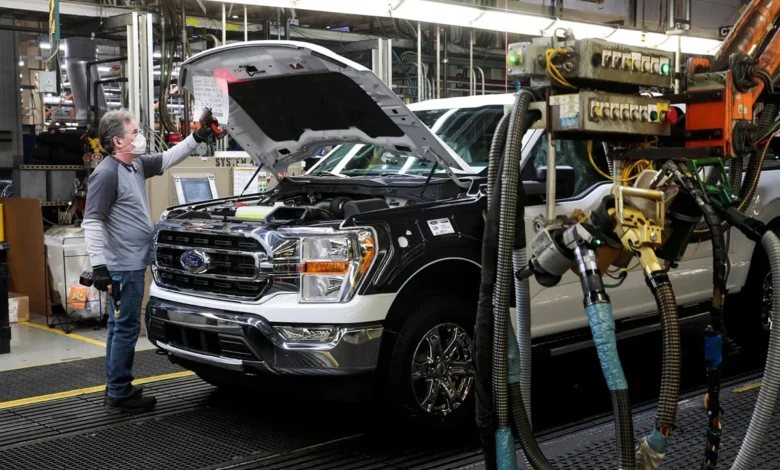
The global labor market is witnessing a paradoxical phenomenon: the rise of the "boomerang employee," a term used to describe workers who are rehired by companies shortly after being laid off or displaced by artificial intelligence (AI). This trend marks a significant shift in corporate strategy as organizations realize that the aggressive automation-driven layoffs of the past two years may have been premature, resulting in the loss of critical institutional knowledge and human expertise.
The Surge of AI-Driven Workforce Displacement
Throughout 2024 and 2025, the narrative surrounding AI was dominated by mass layoffs across the technology and corporate sectors. According to data from Challenger, Gray & Christmas, a leading employment advisory firm, AI was explicitly cited as a primary factor in nearly 40% of all announced job cuts during the peak of this transition in May 2026. Companies sought to streamline operations, reduce overhead, and pivot toward lean, automated workflows.
However, the rapid implementation of these technologies often lacked long-term strategic depth. Many corporations treated AI integration as a simple cost-cutting mechanism, applying the same reductionist logic they had previously used for software transitions or offshoring. This resulted in a hollowed-out workforce that struggled to maintain operational continuity, forcing leadership to reconsider their personnel strategies.
A New Era of the Boomerang Employee
A recent comprehensive study by the talent acquisition firm SHL, which surveyed over 1,000 U.S. employees, revealed that nearly 20% of respondents who were either laid off or displaced by AI were subsequently invited back by their former employers. This cohort represents the modern boomerang employee—a group that left due to corporate downsizing but returned due to a critical shortage of the very skills their former employers had discarded.
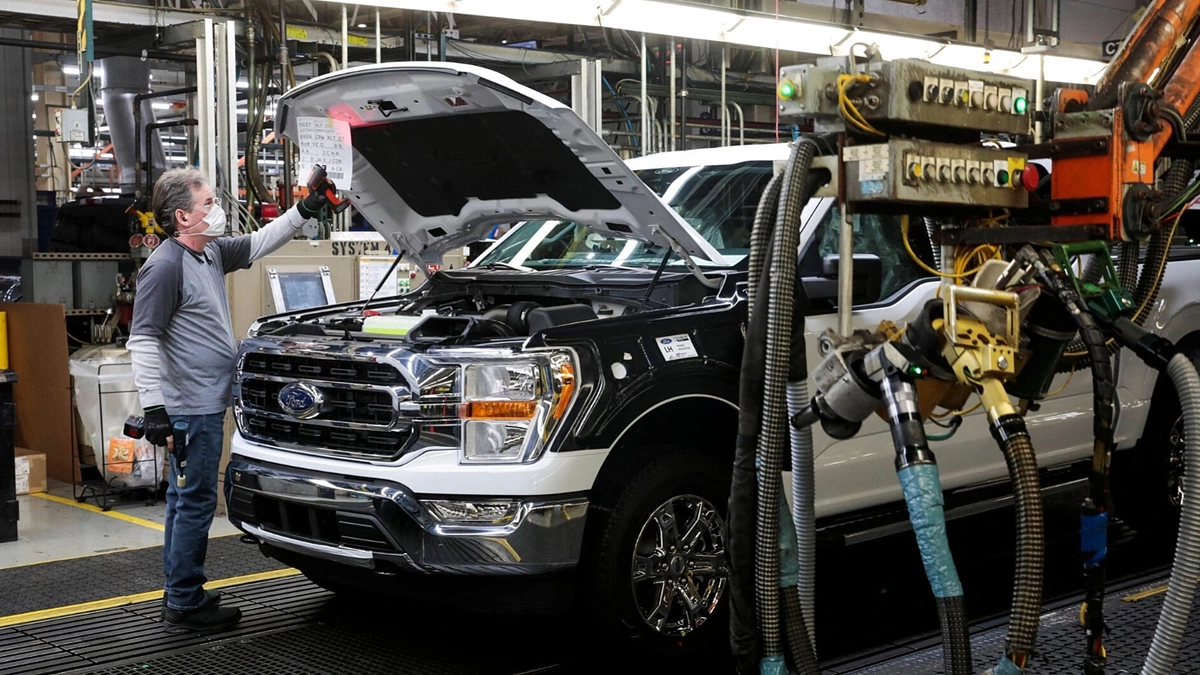
Lucy Beaumont, Vice President of Product and Design at SHL, notes that these results suggest a collective "buyer’s remorse" among global corporations. "Companies are realizing that in their haste to embrace AI, they sacrificed the human element that keeps business intelligence alive," Beaumont explained. Major global entities, including industrial giants like Ford and technology conglomerate Amazon, have been observed recalibrating their hiring stances after realizing that the automation-first approach left them vulnerable to performance gaps. A report by Orgvue published in March indicated that 32% of organizations that conducted AI-related layoffs have since been forced to initiate active recruitment drives to fill the same roles they had previously eliminated.
The Strategic Failure of "Automation-Only" Planning
Joseph Fuller, a professor of management at Harvard Business School, characterizes the current situation as a fundamental misunderstanding of how technology should integrate with human capital. "From a business perspective, when there is significant investment in new technology, there is an instinctive pressure to cut costs elsewhere," Fuller observed. "Historically, companies have achieved this by letting staff go. However, AI is fundamentally different from previous technological shifts."
Fuller argues that AI reaches its peak utility only when it is paired with the "contextual awareness" of the human worker. This includes deep-seated institutional knowledge, an intuitive understanding of customer needs, and the capacity for ethical reasoning—attributes that current generative models fail to replicate fully. The loss of employees who understood the nuances of company culture and client relationships created a vacuum that AI could not fill, ultimately driving the decision to rehire.
The Terms of Engagement: Returning on New Conditions
The power dynamic for these returning employees has shifted. The SHL study shows that only 6.6% of those invited back rejected the offer. However, the employees who do return are entering the workplace with a new set of demands, effectively re-negotiating their contracts from a position of leverage.
Nearly 50% of surveyed employees who returned indicated they demanded a significant salary increase as a condition of their return. Furthermore, 43% insisted on written commitments regarding the long-term stability of their roles, while 40% demanded full transparency from management regarding how AI would be utilized in their specific department. Perhaps most telling is that 30% required formal apologies or direct communication from the leadership team that had previously authorized their dismissal as a prerequisite for their return.
This shift underscores a broader erosion of trust. When a company executes a layoff, it alters the implicit social contract between employer and employee. Re-hiring does not automatically heal this rift; it often results in a workforce that is less engaged and more cynical. As Beaumont points out, "Corporate culture is notoriously difficult to change, and once it has been negatively impacted by layoffs, it is extremely difficult to restore."
The Future of Skill Development
In response to these market fluctuations, the burden of adaptation has shifted toward the employee. To remain viable in an AI-augmented environment, workers are increasingly prioritizing the development of skills that are resistant to automation. The SHL survey highlights that 44% of respondents are self-teaching AI tools to remain competitive, while 42% are focusing on specialized industry skills that are difficult for current models to emulate.
Leadership, too, is changing its approach. The most successful organizations are moving away from asking "How can we cut costs?" toward asking, "What new skills does my staff need, and what new opportunities can AI open up for our existing team?"
Chronology of the AI-Labor Shift
- Early 2024: Initial reports of AI-induced efficiency gains begin, leading to localized pilot programs for automation in administrative and clerical roles.
- Late 2024 – Early 2025: Large-scale layoffs in the technology sector are justified by executives as a "necessary pivot to AI," leading to a temporary decline in headcount.
- Mid 2025: Productivity metrics in several major corporations begin to stagnate. Reports emerge of "innovation bottlenecks" as companies realize that junior staff—who often handle the manual tasks—are not available to manage the output of AI tools.
- Late 2025 – Early 2026: The "re-hiring phase" begins. Companies start reaching out to former employees who possess the required domain expertise to manage and refine AI systems.
- May 2026: Data from employment advisory firms confirms the "boomerang" trend, with AI-related layoffs showing a decline as firms transition to "augmented" rather than "replacement" staffing models.
Broader Implications and Future Outlook
The "boomerang" phenomenon serves as a case study for future industrial transitions. It suggests that the initial wave of AI integration was characterized by a lack of foresight regarding the synergy between human judgment and computational speed. As companies move forward, the focus is likely to shift from "AI vs. Humans" to "AI-enabled Humans."
Experts suggest that the companies that will thrive in the next decade are those that view AI as a tool for upskilling rather than a replacement for headcount. For the individual worker, the lesson is clear: technical literacy in AI is now a baseline requirement, but it must be paired with high-level soft skills—leadership, strategic thinking, and emotional intelligence—that machines cannot replicate.
The ultimate impact on the labor market may not be a reduction in the number of jobs, but a complete restructuring of the nature of work. Organizations that learn from the mistakes of the 2024-2026 period will likely adopt more cautious, iterative approaches to technology implementation, prioritizing the retention of talent and the long-term health of their internal culture over short-term quarterly gains. As the dust settles, the "boomerang employee" stands as a symbol of a market correction, signaling that while AI is an inevitable part of the future, it is not yet, and may never be, a substitute for the human element in complex organizational success.
Related posts: