England and France Face Off in World Cup 2026 Third-Place Playoff Amidst Unprecedented Ticket Price Plunge and Fan Apathy

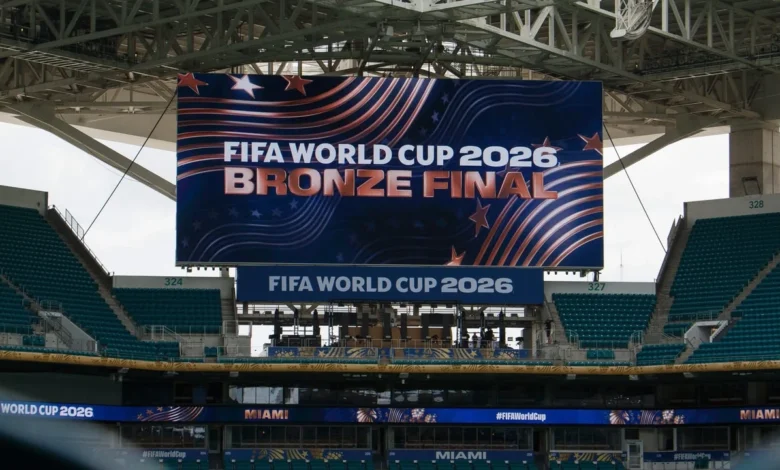
Miami, USA – July 18, 2026 – In an unexpected turn for one of the most anticipated sporting events, the World Cup 2026 third-place playoff between football giants England and France is witnessing a significant drop in ticket prices, signaling a surprising lack of enthusiasm from fans. Set to take place today at Hard Rock Stadium in Miami, the match features an array of global superstars like Kylian Mbappé and Harry Kane, yet the market value for entry has plummeted to levels far below expectations, even falling beneath prices seen for some group stage encounters.
The stark contrast in ticket demand for this consolation match compared to the preceding semi-finals and the upcoming final has become a talking point among sports analysts and fans alike. Just days before the highly anticipated clash, the cheapest tickets for the England-France encounter were reportedly trading at an astonishingly low $492 on secondary markets like SeatGeek, a substantial decrease from $692 just 24 hours prior. This price point stands in stark relief against the soaring costs for the semi-final matches, where tickets commanded upwards of $1,390 for France’s clash against Spain and an astounding $2,930 for England’s dramatic encounter with Argentina. The grand final on July 19th, featuring Argentina and Spain at MetLife Stadium, continues to see prices starting at a staggering $8,000, underscoring the perceived hierarchy of matches within the tournament.
The Disappointment of the Playoff: A Psychological Hurdle
For teams and supporters, the third-place playoff often represents a bittersweet conclusion to a World Cup journey. Having reached the penultimate stage of the tournament, only to fall short of the ultimate prize, the psychological toll on players and coaches is immense. French sports newspaper L’Equipe succinctly captured this sentiment, describing the match as a "consolation game" that "never truly consoles anyone." Reports from both the English and French training camps ahead of the Miami fixture noted a palpable lack of the usual competitive fervor. Players, still grappling with the recent elimination from their World Cup dreams, were observed to be training with noticeably diminished enthusiasm, a factor that undoubtedly contributes to the subdued fan interest. This emotional hangover from semi-final defeat is a recurring theme in the history of the tournament, making the third-place match a challenging fixture to motivate for.
Unusual Market Dynamics: A Deep Dive into Ticket Pricing
The unprecedented drop in ticket prices for a match involving two of football’s most commercially valuable national teams is a phenomenon that warrants closer examination. According to data compiled by New York Post and Yahoo Sports, the sub-$700 price point for the France-England match is not only significantly lower than the semi-finals but, in some cases, even cheaper than tickets for certain group stage matches that might have featured less prominent teams. This suggests a disconnect between the star power on display and the perceived value of the fixture itself.
Typically, World Cup matches, particularly those in the knockout stages, see an exponential increase in demand and price. Factors such as the rarity of the event, the global appeal of the teams, and the limited availability of tickets usually drive prices sky-high. However, for the third-place match, the emotional investment from fans often wanes once the dream of winning the trophy is shattered. While the opportunity to see world-class players like Mbappé, Kane, and their respective teammates in action remains, the absence of the ultimate competitive stakes appears to diminish its appeal as a premium event. Ticketing platforms, operating on dynamic pricing models, swiftly adjust to these shifts in demand, leading to the rapid price depreciation observed.
A Tournament of Contrasts: Semifinals and Final Price Points
To fully appreciate the anomaly of the third-place playoff’s ticket prices, it is crucial to compare them with the other high-stakes matches of the tournament. The semi-finals, which saw France pitted against Spain and England against Argentina, generated immense excitement and corresponding ticket demand. The lowest entry price for France vs. Spain was reported at $1,390, while the England vs. Argentina semi-final commanded an even higher minimum of $2,930. These figures reflect the intense desire of fans to witness their teams vie for a spot in the final, a chance at eternal glory.
The World Cup Final on July 19th, an Argentina-Spain showdown, further illustrates this pricing disparity. With tickets starting at an eye-watering $8,000 for a direct view of Lionel Messi and other footballing legends at MetLife Stadium, it solidifies the final as the undisputed pinnacle of the tournament, both in sporting significance and commercial value. This tiered pricing structure clearly delineates the perceived importance of each stage, with the third-place match unfortunately occupying the lowest rung in terms of market desirability.
Journey to Miami: England and France’s World Cup 2026 Campaigns
Both England and France arrived in Miami for this playoff having endured agonizing semi-final defeats. England, under Gareth Southgate, had navigated a challenging path through the tournament, showcasing a blend of youthful exuberance and seasoned experience. Their semi-final clash against Argentina was reportedly a hard-fought battle that ultimately saw them fall short, extending their long wait for a second World Cup title. Harry Kane, their talismanic captain, had led from the front, but even his goal-scoring prowess could not secure a place in the final.
France, the defending champions from 2022, also had a formidable campaign, with Kylian Mbappé once again proving to be one of the tournament’s most electrifying players. Their semi-final against Spain was a highly anticipated tactical battle, which they narrowly lost, denying them a chance to defend their title. The defeat was a bitter pill for Didier Deschamps’s squad, who had consistently demonstrated their quality throughout the competition.
Historical Context: A Rematch of Rivals
The meeting between England and France in Miami carries additional historical weight, as it marks a relatively quick rematch of their thrilling quarter-final encounter in the 2022 World Cup. In that match, France emerged victorious with a 2-1 scoreline, thanks to goals from Aurélien Tchouaméni and Olivier Giroud, despite Harry Kane converting a penalty for England. That game was a fiercely contested affair, remembered for its high stakes and dramatic moments. This third-place playoff, while lacking the same ultimate prize, offers a chance for both teams to settle a score and end their World Cup campaigns on a winning note, however small the consolation.
The Enduring Tradition: Why FIFA Maintains the Third-Place Match
Despite the apparent lack of enthusiasm from some quarters, FIFA has steadfastly maintained the third-place playoff as a fixture in the World Cup calendar since 1934. The primary reason cited by the governing body is the necessity to definitively rank the top four teams of the tournament. Without this match, the third and fourth positions would effectively be shared, or determined by less direct metrics, which would compromise the integrity of the overall tournament standings.
Beyond sporting integrity, the third-place match holds significant commercial value. It provides broadcasters with an additional high-profile event to televise, generating further advertising revenue. For corporate sponsors, it offers another opportunity for brand visibility on a global stage. Furthermore, for FIFA itself, it represents an extra match day, contributing to overall tournament revenue through ticket sales (even at reduced prices), merchandise, and licensing agreements. In an expanded 48-team World Cup format like 2026, every match contributes to the financial success and operational scale of the event.
Perspectives from the Pitch and the Stands
For the players, while the sting of semi-final defeat is fresh, there is a professional obligation to perform. Coaches, while potentially experimenting with squad rotations, are likely to emphasize ending the tournament with a victory. An inferred statement from a coach might acknowledge the disappointment but stress the importance of professional pride and the opportunity to represent their nation. "It’s not the final we dreamed of," a coach might say, "but it’s still a World Cup match, and we owe it to our fans and ourselves to play our best and secure third place."
Fan reactions on social media have been mixed. Many express sympathy for the players, suggesting the match is an unnecessary burden. Others, however, maintain that any opportunity to see their national team compete at a World Cup is valuable, especially given the global reach and star power on display. The lower ticket prices, ironically, might make the game accessible to a different segment of fans who were priced out of the semi-finals or final.
Economic Implications for Host Cities and Organizers
For Miami, hosting a World Cup match, even a third-place playoff, brings considerable economic benefits. Hotels, restaurants, and local businesses experience a surge in activity from visiting fans, media, and team delegations. While the ticket revenue might be lower than anticipated for this specific match, the overall economic impact of being a World Cup host city is substantial and extends far beyond gate receipts. Local tourism officials would likely downplay the dip in ticket prices for this single game, emphasizing the broader positive economic ripple effect across the region throughout the tournament. The infrastructure, logistics, and global spotlight associated with hosting any World Cup fixture are invaluable.
The Broader Debate: Relevance in a Modern World Cup
The fluctuating interest in the third-place playoff fuels an ongoing debate within the football community about its continued relevance in the modern era. Critics argue that with the increasing demands on elite players, adding an extra high-stakes match after a grueling tournament is an unnecessary physical and mental strain. They propose that the focus should solely be on the final, allowing the losing semi-finalists to rest and recover.
Conversely, proponents highlight the historical significance and the aforementioned commercial advantages. They also point to moments of genuine drama and excitement that have occurred in past third-place matches, where teams, free from the ultimate pressure of the final, sometimes play with more attacking flair. As FIFA moves towards an expanded World Cup format with 48 teams, the conversation around player welfare, tournament structure, and the overall fan experience is likely to intensify, potentially leading to future reviews of such traditional fixtures.
Looking Ahead: The Future of Consolation Matches
As England and France prepare to battle for the bronze medal, the World Cup 2026 third-place playoff stands as a testament to the complex interplay of sporting aspiration, commercial realities, and evolving fan sentiment. While it may not carry the gravitas of the final, it remains a unique fixture, offering a final opportunity for two of the world’s best teams to leave their mark on the tournament. The unprecedented dip in ticket prices serves as a potent reminder that even in the grand spectacle of the World Cup, not all matches are created equal in the eyes of the market, prompting ongoing reflection on the format and traditions of football’s biggest showpiece event.
Related posts: