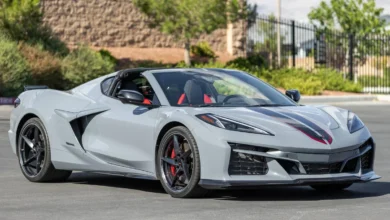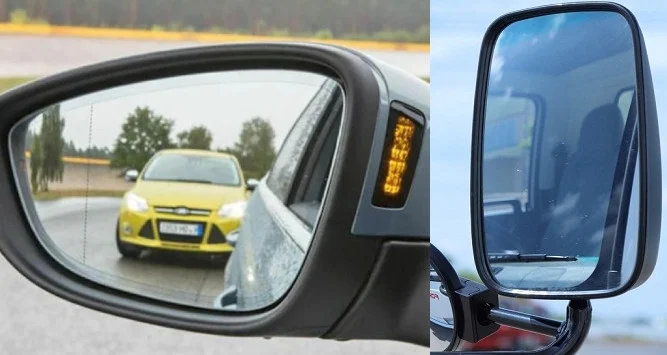
The automotive landscape is defined by countless design choices that blend aesthetic appeal with strict functional engineering. Among the most noticeable yet frequently overlooked distinctions on modern vehicles is the shape and orientation of the exterior rearview mirrors. While sedans, hatchbacks, and crossover utility vehicles typically feature wide, horizontally oriented mirrors, large commercial trucks, transit buses, and heavy-duty haulers rely on tall, vertically positioned mirror assemblies that often incorporate multiple distinct glass panels.
This striking divergence in automotive design is far from arbitrary. Rather than stemming from random stylistic choices by vehicle manufacturers, the physical geometry of rearview mirrors represents a carefully calculated balance between human ergonomics, aerodynamics, vehicle dimensions, and specific operational safety requirements. To understand why passenger cars utilize horizontal mirrors while heavy trucks employ vertical configurations, one must examine the fundamental interaction between driver positioning, vehicle body geometry, and the physics of fluid dynamics on the open road.
The Ergonomics of Passenger Cars and Horizontal Mirror Design
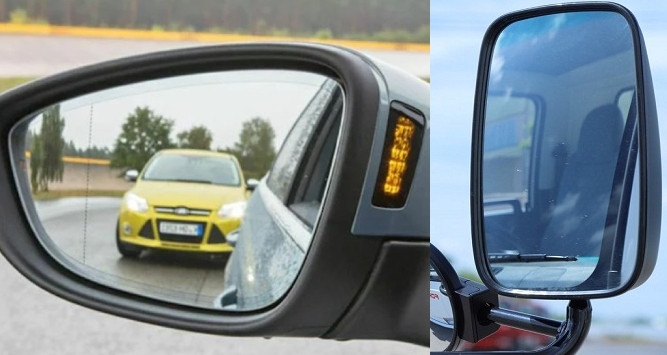
The primary driver behind the horizontal layout of passenger car mirrors lies in the spatial constraints and viewing needs dictated by seating posture and body width. In sedans and hatchbacks, the driver sits relatively low to the ground, and the overall width of the passenger compartment is modest compared to commercial vehicles.
Because of this low seating position and sleek body contour, the critical area requiring observation is predominantly spread horizontally. Drivers primarily need to monitor adjacent traffic lanes and the immediate rear zone flanking both sides of the vehicle. Consequently, the mirror glass is engineered with a greater width than height to maximize the horizontal field of view.
However, expanding a mirror’s dimensions indefinitely introduces engineering compromises. As automotive designers push for enhanced aerodynamics, overly large mirrors significantly increase aerodynamic drag along the flanks of the vehicle. When traveling at highway speeds, turbulent airflow around bulky mirror housings can generate severe wind noise, mechanical vibration, and even micro-buffeting that disturbs the stability of the ride. Therefore, passenger car mirrors must strike a delicate equilibrium: they must be large enough to fulfill wide-angle surveillance requirements while maintaining a streamlined, aerodynamic profile that minimizes wind resistance.
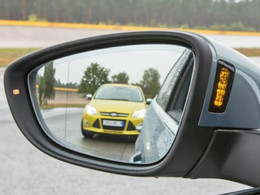
Furthermore, the structural architecture of passenger cars heavily influences mirror placement. Modern passenger vehicles feature side doors and window frames that taper inward significantly as they rise toward the roofline, with mirrors typically mounted high on the door panels or A-pillars. If a passenger car mirror were designed with a vertical, tower-like orientation, a substantial portion of the inner glass surface would be unnecessarily blocked by the tapering vehicle body, severely compromising rear visibility. A horizontal layout optimizes coverage right alongside the car’s exterior walls without expanding the overall frontal area or triggering excessive aerodynamic turbulence.
Overcoming Blind Spots: The Evolution of Passenger Vehicle Glass
Despite the optimization of horizontal mirrors, no exterior mirror configuration can completely eliminate blind spots. Automotive safety engineers have systematically tackled this challenge over the decades through technological and geometrical advancements.
In the early decades of automotive mass production, flat glass mirrors were the universal standard, severely limiting peripheral vision and creating hazardous blind zones. The introduction of convex glass—featuring a slightly curved surface—revolutionized the industry by compressing a wider visual field into the same physical mirror housing. This technological shift dramatically expanded the lateral field of view on passenger vehicles.

Nevertheless, physics dictates that curved mirrors introduce visual distortion, making objects appear smaller and further away than they actually are. To mitigate this perceptual risk, contemporary driving safety standards mandate proper mirror adjustment protocols. Safety experts consistently advise drivers to angle their exterior mirrors outward to capture adjacent lanes rather than the flanks of their own car, effectively minimizing overlapping views with the interior rearview mirror. In addition, mandatory shoulder checks remain an indispensable practice during lane changes and highway merging, as blind spots can never be entirely eradicated by glass reflection alone.
Heavy-Duty Engineering: Why Trucks and Buses Need Vertical Mirrors
For commercial transport vehicles, including heavy-duty trucks and passenger buses, the geometric and operational parameters are entirely different. These vehicles present a completely distinct set of visibility challenges that render standard passenger car mirrors wholly inadequate.
The cabin of a commercial truck sits at an elevated vantage point high above the asphalt, featuring sheer, vertical, and boxy side panels. Because the driver commands a towering perspective, the required field of view expands dramatically not only across the horizontal plane but also vertically down the entire length of the trailer and into the blind zones immediately adjacent to the multi-axle chassis.

To accommodate this expansive visual demand, commercial truck mirrors are engineered with a vertical orientation and significantly larger dimensions. A vertically extended mirror surface allows the commercial driver to monitor multiple critical zones simultaneously: from the elevated upper airspace down to the immediate road surface near the lower tires, the side of the extended trailer, and the rear wheels navigating tight urban corners.
Compounding this complexity, commercial fleets frequently utilize multi-panel mirror arrays rather than a single sheet of glass. In these complex systems, each dedicated pane fulfills a specialized safety function:
- Primary Main Mirrors: Focus on tracking high-speed traffic in adjacent highway lanes and monitoring the lateral clearance of the trailer.
- Wide-Angle Convex Mirrors: Capture immediate side zones to prevent sideswipes during lane merges.
- Down-View and Front-End Proximity Mirrors: Positioned near the upper front edge or lower door frames, these specialized lenses assist drivers in detecting pedestrians, cyclists, and low-lying obstacles situated directly in front of the massive truck bumper—a notoriously dangerous blind spot known as the "front blind zone."
Without this vertical, multi-faceted mirror arrangement, an elevated commercial cabin would leave massive blind spots surrounding the lower chassis, turning routine maneuvers like turning or reversing into high-risk operations.

The Universal Rule: Function Dictates Form
Ultimately, the automotive industry operates under no rigid dogma dictating that passenger cars must exclusively use horizontal mirrors or that commercial trucks must exclusively use vertical ones. The external morphology of a rearview mirror is simply the functional outcome of a rigorous engineering equation.
Across the broader automotive spectrum, crossover SUVs and rugged off-road vehicles often feature taller, squarer mirror profiles to accommodate higher seating positions and boxier body lines, while certain ultra-compact city cars utilize minimalist, streamlined housings. The defining priority remains consistent: the mirror must deliver an uncompromised field of view tailored precisely to the vehicle’s structural architecture and operational dynamics.
By balancing aerodynamics, structural dimensions, seating ergonomics, and multi-directional visibility requirements, automotive engineers ensure that rearview mirrors serve as vital safety instruments. The contrasting shapes observed on sedans versus heavy trucks are not cosmetic preferences, but rather a testament to the precision of functional engineering on modern roadways.